


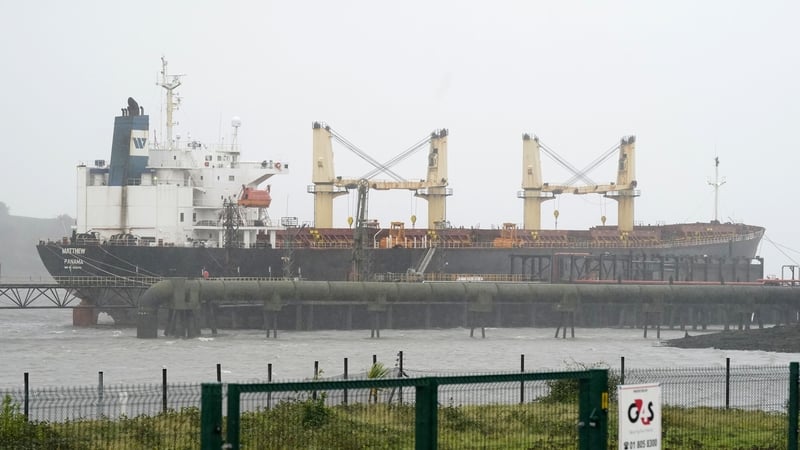
Former Army Ranger and Independent TD for Kildare South Cathal Berry has said drug cartels in South America will adjust their attitude to Ireland based on the operation off the coast of Cork yesterday.
Speaking on RTÉ's Morning Ireland, he said "it's very important that that signal goes out" to drug cartels.
Mr Berry added: "This really is an operation of international significance.
"It won't have gone unnoticed in South America and Latin America as well.
"The cartels will see this, and they will modify their approach to Ireland, but it won't stop them because it's well known at this stage that Irish territorial waters are notoriously unprotected, and they'll just tweak their procedures.
"But they'll continue as before."
He described the Army Ranger Wing as the "Jedi Knights" of the army and said the operation yesterday would have been well within their capabilities.
Mr Berry said it was a very kinetic operation, well within the comfort zone of the Army Rangers.
"They're basically the Jedi Knights of the army, really.
"It's a tier one special forces unit that concentrates on counterterrorism and hostage rescue operations, so their focus will be very niche, very high-risk operations, which have a strategic effect just like the one we saw yesterday."
We need your consent to load this rte-player contentWe use rte-player to manage extra content that can set cookies on your device and collect data about your activity. Please review their details and accept them to load the content.Manage Preferences
He said that this type of engagement has never happened before in Irish sovereign territorial waters.
"But the fast-roping techniques that they used yesterday, that would have been used overseas in the likes of East Timor, in the jungle, or in Liberia as well.
"So, if the helicopter can't put its wheels or its skids down on the ground, you just throw out a rope and you just slide down the rope just like a firefighter's pole really. And that gets you onto the deck. So you can take control of the vessel."
He said that the rangers are so well trained and have such expertise "that they're very comfortable with uncertainty".
Mr Berry explained that normally two helicopters would be used. The first would be full of snipers.
"Basically, they would provide an overwatch element and the second helicopter swoops in there with the assault group, they throw out the ropes.
"They slide down the ropes onto the deck, they overpower the crew, take control of the vessel and seize the bridge. And that's the general tactic that's used," he said.
This type of training is carried out regularly with shipping lines from a maritime counterterrorism point of view, he said.
There are around 100 rangers, he said, but the exact number is classified.
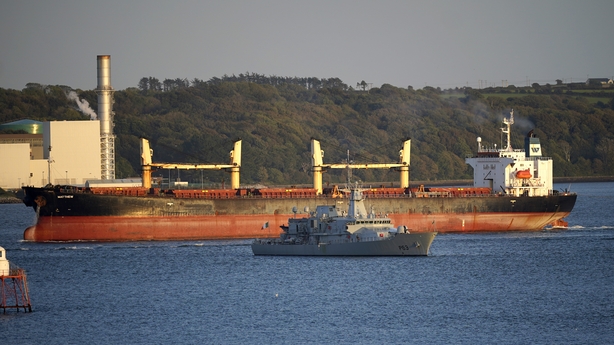
He said that the joint task force has three aspects.
The military leg secured the ship, and once the Defence Forces have done their job, then the law enforcement agencies follow onto the vessel, with gardaí making arrests if necessary, while Revenue and Customs then take custody of any controlled substances.
Mr Berry said: "There's a direct correlation between what's happening in O'Connell Street now and what's happening on our territorial waters and on the high seas as well.
"The drugs are coming in from somewhere, they’re not coming in the wind, they're coming in on sea.
"The big problem in Ireland is, we do actually have the hardware. We have eight naval vessels in Cork Harbour but unfortunately, incredibly, we only have crew for two. So that's about €300m worth of State vessels tied up and lying idle in Cork Harbour."
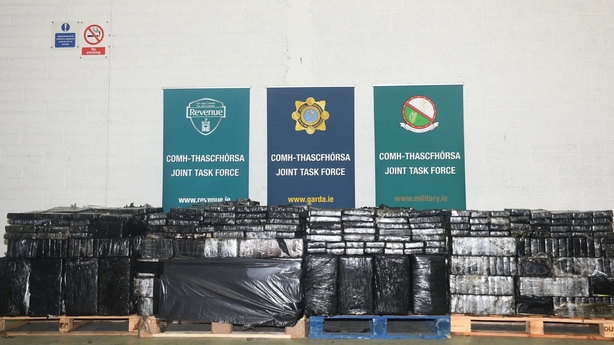
He said another issue is semi-submersibles or so-called narco subs.
Mr Berry said: "They've been found in Portugal and in Spain and these are small submarines, basically. They're moving narcotics from South America and they haven't been detected in Ireland.
"I guess one of the reasons why they haven't been detected is we actually don't have any sonar on our naval vessels, which is incredible, really.
"And I suppose the key message to the public is this is not normal. What Ireland is doing from a security point of view is highly, highly unusual and most international observers would be horrified by how Ireland is doing its business."
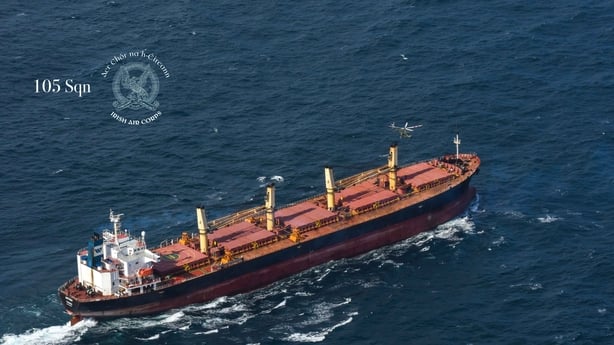
Ship 'would have been tracked'
Retired Naval Service Commander Eugene Ryan said that the seized ship came from Willemstad in Curacao off the coast of Venezuela and like previous drugs hauls, it would have been tracked by authorities along its journey to Europe.
Also speaking on Morning Ireland, he said that the navy may have known about the ship before it sailed into Irish waters based on intelligence by the Maritime Analysis and Operations Centre (MAOC), in Lisbon.
In relation to the inability to detect semi-submersibles due to the lack of sonar on ships he said: "We do need it, and not only do we need it for the semi-submersibles but we also need it to inspect our cables coming across the Atlantic off the Irish coast with Internet for the rest of the world and Europe etc. We just can't police that either.
"But when MAOC was formed, we saw the drug importation into Europe, diminishing and going into Africa, and we were able to work with the African authorities to try and stamp that out.
"But however, we discovered that these semi-submersibles were coming across the Atlantic unmanned and steered by GPS.
"We haven't had any of them in Ireland, but what we have had in Ireland is these ships, big ships like this one, with attachments to their hull attached by magnetic attachments that are released at sea onto the bottom of the ocean off the Irish coast, broken open on a timer, stuff coming to the surface and vessels from the shore coming out to pick up the stuff and bring it to shore.
"It happened recently in Donegal so semi-submersibles and these little torpedo attachments underneath ships are happening all the time. In fact, our naval diving unit search ships in Cork Harbour regularly for attachments like this.
"People should know that drugs are coming in constantly and we need to be able to get more ships, more than one ship. We had only one ship on this operation," he added.
He said that since he left the navy 11 years ago, the service has been reduced from ranks of 1,200 with eight ships to about 700 personnel and two operational ships.
"I have seen the navy being decimated," he added.
"Despite the navy's fleet being the newest and best equipped we have ever had, hundreds of millions of taxpayers' money is lying alongside not being used due to personnel shortages. Yes, it does hurt."
He added: "The Garda Síochána on board the vessel yesterday, when the vessel was firing at this mother ship, the Garda Síochána were on multiples of allowances that our people were on and the naval people were the people doing the firing.
"There's no excuse for this. We've got to pay our people if our naval service is to exist."
