


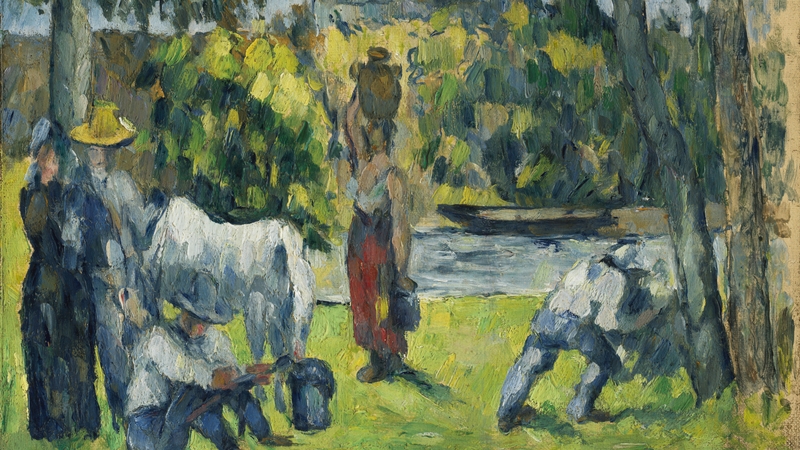
The National Gallery of Ireland has put on display a new acquisition by the French post-impressionist painter Paul Cézanne.
The painting 'La Vie des Champs' (Life in the Fields) has been acquired, according to the Gallery, with support from the Government and a private donor who wishes to remain anonymous.
It is the first oil painting by Cézanne to enter the national collection and depicts an imaginary landscape in the south of France, where the painter lived and worked for much of his life.
The painting was completed in 1877, the year in which Cézanne decided to show his work with the Impressionists again, following an absence of three years.
It dates from a pivotal moment in Cézanne's career, and is an important early example of how he developed what became his signature style.
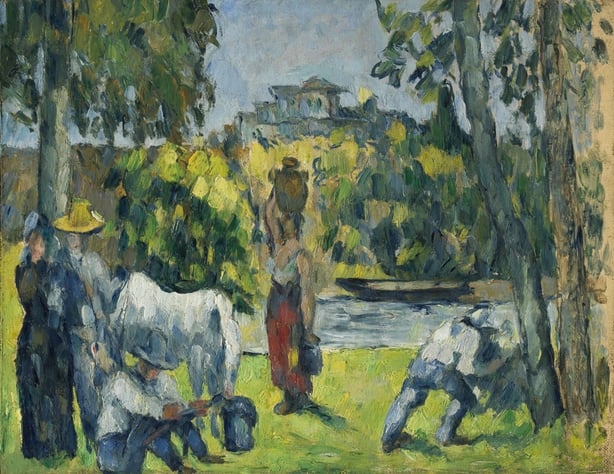
Speaking on RTÉ’s News At One, Director of the National Gallery of Ireland Dr Caroline Campbell said Cézanne concentrated on touches of paint which has inspired generations of artists, thinkers and writers over the last 100 years.
She added that Irish writers he inspired included Samuel Beckett and Seamus Heaney.
The painting itself may capture Cézanne’s family home, and himself sketching in the corner, she said.
"This is an extraordinary act of support. We are indebted to the Government and to a very generous friend of the gallery. Philanthropic support plays such an important role in our national cultural institutions, this is really a landmark acquisition for the gallery because of the significance for Cézanne," she said.
She added that the gallery never discloses what it pays for commercial sensitivity reasons and security, but the work is priceless on public display forever.
