
There has been a steep increase in the number of deer being struck by trains on the country's rail network, according to new figures released to RTÉ News.
Last year, there were 58 such incidents, more than double the number of strikes (24) which occurred in 2018.
There were 36 such incidents in 2019; and 28 in 2020 and 42 in 2021, during years when fewer train journeys took place amid the Covid-19 pandemic.
Among the railways worst affected are the Dublin-Wexford line, Mallow-Killarney and Ennis-Athenry.
All of the incidents led to deer fatalities, but little damage to trains.
A spokesperson for Iarnród Éireann said the incidents led to delays for passengers, however, as trains are forced to stop following strikes.
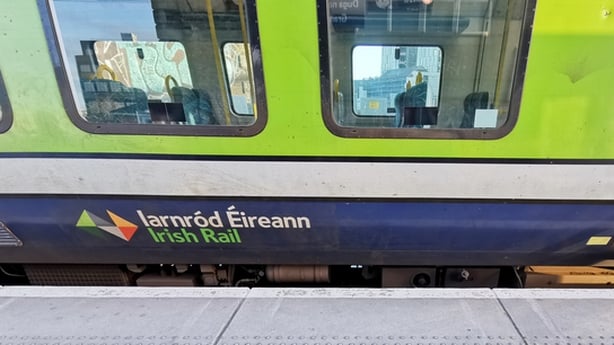
The spokesperson said the company is installing deer-proof fencing where possible and feasible, but said it is difficult to make it 100% effective.
Meanwhile, Mayo County Council’s road safety section estimates there are between 400-500 road collisions involving deer in Ireland every year.
There are numerous reports of collisions in counties where deer populations are large, which generally cause material damage to vehicles but no injuries to passengers of drivers.
Road Safety Authority records show there were ten casualties as a result of collisions with deer between 2017 and 2021, and the role of deer in some fatal road collisions has been raised during inquests in Co Kerry on a number of occasions.
Farmers in some areas have repeatedly raised concerns about deer entering the properties, grazing on crops and grass and possibly spreading TB to cattle.
We need your consent to load this rte-player contentWe use rte-player to manage extra content that can set cookies on your device and collect data about your activity. Please review their details and accept them to load the content.Manage Preferences
One such farmer is Shane O'Loughlin in Aughrim, Co Wicklow.
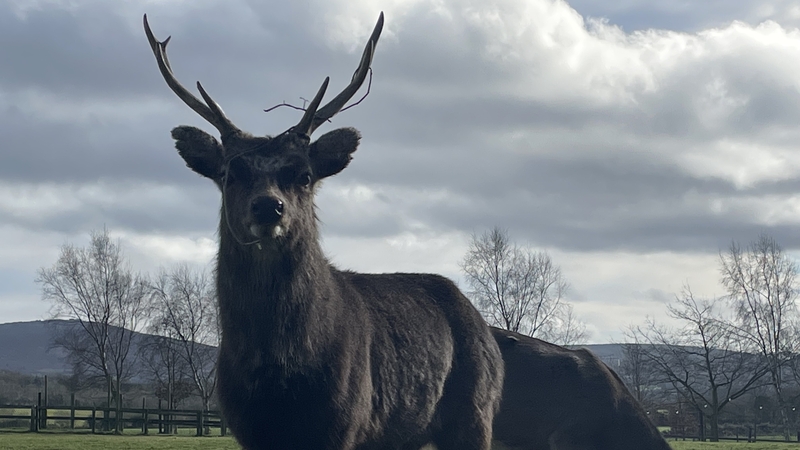
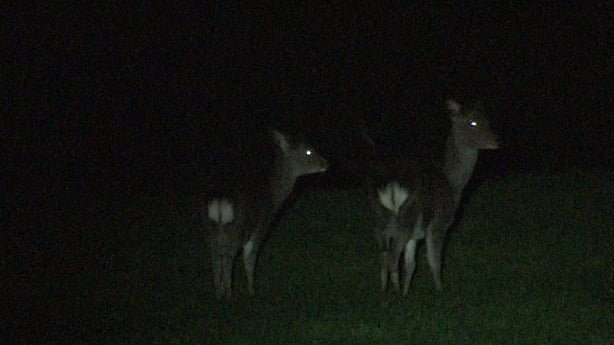
Shane is a dairy farmer and every night as he is milking, sika deer emerge from woods adjacent to his fields and graze his grass.
"While I'm working, the deer are feasting on my grass. We need the grass for our cows, we do everything we can to grow it well, but the cows are not getting to eat some of it." He adds that nobody knows how many deer are in the county.
"There are estimates from 60,000 to 150,000 and there's huge variety there in that estimate. No one really knows, but we do know there are a lot of deer."
Shane says it is possible to fence the deer out, but it is not very practical.
"It’s very expensive to undertake, and difficult to put a 6ft fence around the whole perimeter of a farm".
Bovine TB has also been an issue on Shane’s farm, and those of some of his neighbours. His herd was restricted for a year due to positive TB tests. He believes wildlife and especially deer are the source of the infection. That remains subject to some debate.
The Calary study going back to 2015 found 16% of deer culled for the study were positive for TB, and more recently a TCD study showed a correlation between higher deer populations and incidence of the disease in cattle.
Another study, yet to be published by the Department of Agriculture but seen by RTÉ News, delivers a different message.
The study involved 1,500 deer that were shot over three years and assessed for TB by deer hunters trained to recognise the signs.
Signs were seen in 58 animals, samples of which were sent for lab testing.
Nine came back positive for TB, which is 16.6% of samples lab tested, or 0.6% of all the animals considered in the study.
Against this backdrop, Minister for the Environment Eamon Ryan recently said deer were a problem when it comes to restoring biodiversity across the country. He said no young trees can grow where deer and goats graze. He agreed that a cull was needed.
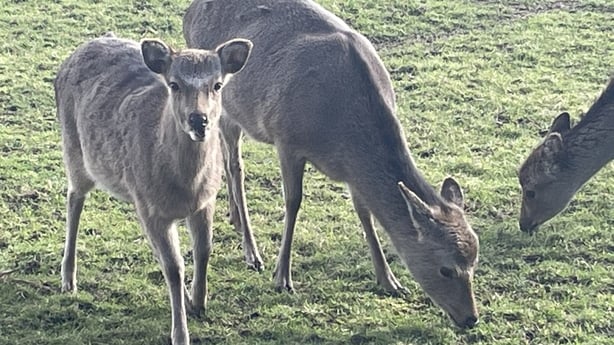
However the Irish Deer Commission, which is a voluntary organisation that argues for sustainable deer management, disagrees with any suggestion of a national approach to culling deer.
Damien Hannigan, the Commission’s PRO, said the data suggests there are issues in certain areas "but in the majority of the country it appears deer are adequately managed at sustainable levels".
"It’s important to note that while we have had calls for national culls, currently in Ireland we cull in excess of 55,000 wild deer annually, and that does not include deer poaching or the growing number of deer that are killed on our roads.
"So we say we already have a significant national cull taking place and we really don't know if we are culling too many, culling enough or needing to cull more, in the absence of a deer population total.
"What we’d like to see is evidence based, local deer management."
Meanwhile, the Deer Management Strategy Group, established late last year by Minister for Agriculture Charlie McConalogue is looking at all deer management issues.
A public consultation conducted around it closed last week, with over 1,500 submissions received.
Those will now feed into the group’s work, which will also involve meeting with interested parties from next month.