


By David McCullagh, Justin McCarthy and Fiachra Ó Cionnaith
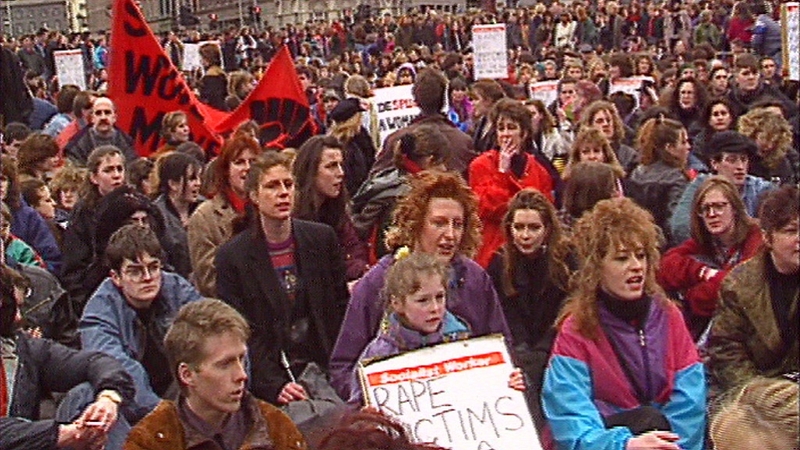
Attorney General Harry Whelehan insisted he had "no choice in the circumstances" other than to intervene to prevent a 14-year-old rape victim travelling abroad for an abortion.
In a defence of his role in the controversial X Case, Mr Whelan said his actions were not a decision of the Government, but a decision by the Attorney General in his role as guardian of the Constitution to provide representation on behalf of the unborn child before the courts.
In a previously unpublished document released under the 30-year rule, Mr Whelehan argued Attorney General Harry Whelehan insisted he had "no choice in the circumstances" other than to intervene to prevent a 14-year-old rape victim travelling abroad for an abortion.
The case arose after a 14-year-old girl who was raped by a neighbour travelled abroad for an abortion in early 1992. Her parents contacted Gardaí to enquire if a DNA sample would help in any subsequent prosecution.
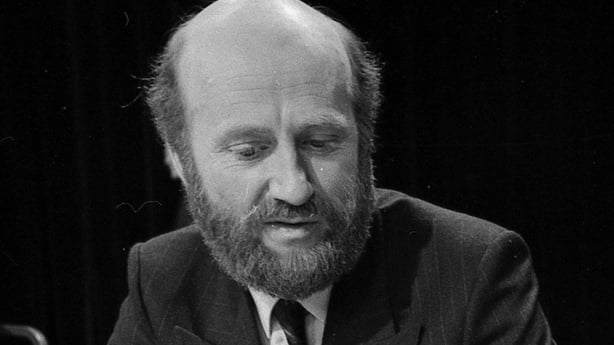
would prevent a recurrence of the X Case
When the advice of the Attorney-General was sought, Mr Whelehan successfully sought a High Court injunction preventing the girl from travelling for an abortion. The injunction was subsequently overturned by the Supreme Court, on the grounds that the girl was suicidal, which represented a real and substantial risk to her life.
Under the terms of the Eighth Amendment to the Constitution, this allowed the girl to have an abortion in Ireland. However, in the absence of a real and substantial risk to a pregnant woman's life, there was no right to an abortion in Ireland, to travel abroad for an abortion, or to access information about abortion services.
The X Case was hugely controversial, raising questions about the Eighth Amendment, and about Mr Whelehan’s actions.
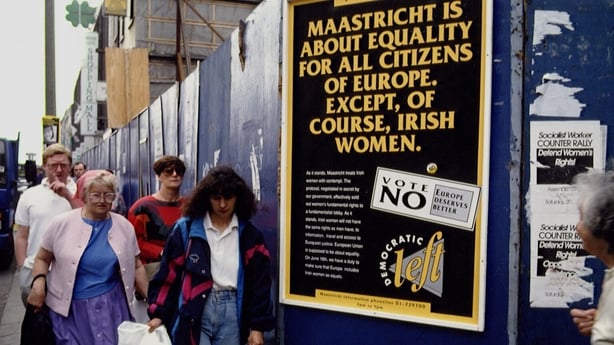
It became even more politically toxic when it became linked to the referendum campaign on the Maastricht Treaty. Ireland had sought a special Protocol to the Treaty which protected the Constitutional ban on abortion.
Now that Protocol could be seen as preventing women seeking an abortion from travelling abroad or accessing information. Unable to reopen the Treaty, Irish diplomats secured a "Solemn Declaration" that the Protocol would not limit freedom to travel or availability of information.
In legal advice to Government in June 1992, Mr Whelehan said if the voters accepted the Maastricht Treaty, including the Protocol and the Declaration, it would amount to a "decision by the Irish People to amend Article 40.3.3. of the Constitution so as to permit women to travel to other countries of the European Community for the purpose of availing themselves of a service lawfully available there, viz. obtaining an abortion."
Significantly, he added that he would regard that decision as binding, and "I would not regard myself as having an obligation to bring to the notice of the courts a proposed journey abroad for the purpose of obtaining an abortion."
In other words, there would be no repeat of the X Case.
The Maastricht Treaty was approved by voters, but despite Whelehan’s legal advice, it became politically necessary later in the year to put three further Constitutional amendments to the voters. In November 1992, they rejected a proposal to remove the threat of suicide as a ground for abortion, but accepted amendments guaranteeing the right to travel and the right to information.
"The ideal situation"
The newly released documents also show that in the run-up to the Maastricht Treaty referendum, a senior Government official suggested removing Ireland's right to hold a referendum on any wide-reaching EU treaties.
Noel Fahey described the possibility as an "ideal situation" but stressed it could lead to "political objections" due to the "defence/neutrality implications" it may risk creating.
In a four-page letter to the attorney general on April 24, 1992, Mr Fahey, assistant secretary of the Department of Foreign Affairs' European Community Division, said the step was one of a number of options the Government should consider.
Mr Fahey said the need for a referendum on all EU treaties of substance could be replaced if voters accepted a constitutional amendment giving the Government the right to make the decision for them.
This would mean that "the Government would no longer be required to have a referendum on every occasion when there is an advance in Community integration - though the Government could choose to have a referendum."
While he saw this as "the ideal situation," he added: "There are likely to be political objections to this broad approach, for example on the grounds that the anti-Maastricht lobby would present it as an attempt by the Government to avoid further referenda, especially in areas which might have defence/neutrality implications."
While it was not ultimately acted on, any change in how Ireland approached EU treaties would have had knock-on effects for the Nice, Lisbon and other EU treaties in subsequent decades.
The discussion took place at a time when the then-Fianna Fail-led Government was coming under pressure from opposition parties and some notable campaigners to address claims its funding of Maastricht information was "slanted".
In a Department of the Taoiseach briefing note from April 14, 1992, officials were advised that while legal action was likely and may receive a "sympathetic ear", it remained the Department's belief that the Government's only requirement to ensure a "level playing field" in referenda was to adequately fund RTÉ.
The note said it would be "entirely inappropriate for the Government to attempt to issue instructions to RTÉ" on referenda and added that regardless of any legal action "the expenditure of public money is entirely a matter uniquely for the Government".
The briefing note was in response to separate letters from Labour senator Brendan Ryan and campaigner Raymond Crotty calling for the Government to ensure impartial information during a referendum and to make funds available for campaigns opposing the Government's view on treaties.
Three years later, in 1995, the issue resulted in Patricia McKenna taking - and winning - a supreme court case on the grounds it was unconstitutional for the Government to only make public money available for one side of a referendum campaign.
The McKenna judgement resulted in the establishment of the referendum commission, which in early 2022 was replaced by the Electoral Commission of Ireland.
