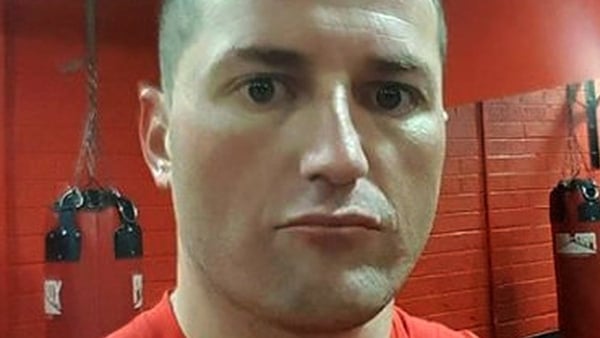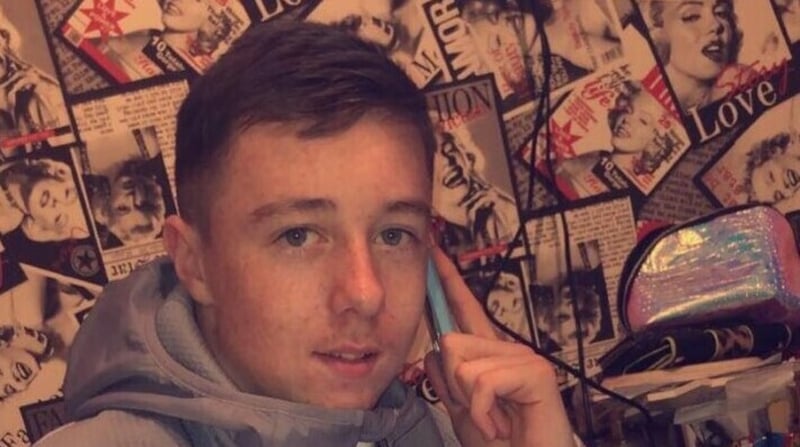

A father-of-eight who cleaned and removed bloodstained evidence from a house in Drogheda where a 17-year-old boy was murdered two years ago had "no inkling" what was going to happen there, the Central Criminal Court has heard.
Gerard McKenna told gardaí that he could not tell them who told him to stay away from the house and clean it after the murder of Keane Mulready-Woods because he would "kill" his "child".
The dismembered remains of the 17-year-old were subsequently found in different locations in Dublin and Drogheda after his family reported the child missing on 13 January 2020.
The 52-year-old, whom the court heard is "genuinely remorseful and ashamed" for what he has done, will be sentenced next week
Keane Mulready-Woods was on bail and subject to a curfew when he went missing in January 2020. His mother reported his disappearance to gardaí on 13 January when he did not come home the night before.
The Central Criminal Court heard today that he took a taxi to the Rathmullen Estate in Drogheda, which a Mr A paid for when he got out.
He then got into Mr B's blue Volkswagen Jetta and was the victim of a "particularly gruesome" murder.
The 17-year-old's remains were subsequently found in a sports bag on a green area in Moatview in Coolock; in a burned-out car in Clonliffe Road in Drumcondra; and at a location in Rathmullen Park in Drogheda.
The cause of death was not ascertained.
Gardaí subsequently searched Gerard McKenna's house at 31 Rathmullen Park in Drogheda, arriving the court heard to "a strong smell of paint" and "part of the floor" replaced.
Forensics identified stains and splashes of Keane Mulready-Woods' blood throughout the house, along the ceiling and walls, under the front window, on the leg of the TV table and the Skybox and at the fireplace.
There were blood spatters on part of the couch in the back yard. The other part of the L-shaped couch had been carried 70 metres to a green area where it had been set on fire.
Keane Mulready-Woods' blood-stained ballistic vest was also discovered at the burn site along with rubber gloves, a box of Swiss army knives and clothing, all of which the court heard were bloodstained.
A car parked in a nearby laneway had "other items" with the child's blood in the boot, including a blood-stained axe and a bone fragment. The keys to that car, a red Toyota Corolla, were found in McKenna's home.
The court heard that Gerard McKenna had met a number of men in cafe in West Street in Drogheda on 12 January and stayed in a friend's house that night. He brought a packet of pink pills and the court heard he was "talking funny" and said " I could have been down there, cut up."
He also said that he had nowhere to go and they would not let him into the bungalow.
The court also heard that McKenna bought a pot of paint and took another pot and three pallets of wooden flooring from his friends' home.
When he was arrested, he took an overdose of prescription drugs in the garda station and spent three days in hospital.
Detective Sergeant Peter Cooney told the court today that McKenna said: "We were told to burn the bags, I didn't know what was in them."
He also said: "I didn't know the child had a vest."
He told gardaí that he was told to stay away from the house and when he returned, he was told to clean it even though it had already been cleaned.
He claimed he carried out his instructions under duress.
The 52-year-old has 14 previous convictions, including drug dealing, burglary and theft.
The detective agreed with his defence counsel Michael O'Higgins that McKenna was not part of the organised crime group that lured Keane Mulready-Woods to his house, and that while he knew "something bad" was going to happen there, he did not know what and he was not in the house at the time it happened.
He also agreed that the person who gave McKenna the orders was "a person of very specific notoriety, with a number of murders attributed to him, including that of a close friend".
"He was not easy to say no to and when they tell you to do something you do it," his defence counsel said. He has since passed away.
The court also heard he was "off his head" when involved in the clean-up, expressed great remorse and was very ashamed of what he had done.
The maximum sentence for the offence is ten years.
Mr Justice Paul Mc Dermott is due to sentence Gerard McKenna next week.