


The Department of Foreign Affairs has said that 145 Irish citizens have registered with the embassy in Kyiv, when Irish citizens there were advised to leave the country immediately.
The department has said that since travel advice changed given the situation in Ukraine, the number of Irish citizens registering with the embassy has continued to increase.
The current number "may rise further over the coming days", it said.
Up until Saturday, the Government had advised against all non-essential travel to the country, however it is now urging people to leave "immediately by commercial means".
A decision to keep the embassy open with a small number of essential staff is being kept under review.
Any Irish citizen requiring emergency consular assistance is urged to contact the Department of Foreign Affairs at +353 1 408 2000.
The department has advised against any travel to Ukraine, but for some people this advice is impossible. Fourteen babies are due to be born to Irish parents via surrogacy there between now and May.
We need your consent to load this rte-player contentWe use rte-player to manage extra content that can set cookies on your device and collect data about your activity. Please review their details and accept them to load the content.Manage Preferences
Read More:
German Chancellor in Kyiv as G7 threatens sanctions
Once a baby is born in Ukraine it can take up four weeks for all the documentation to be place in order to bring that child home.
Annette Hickey, a solicitor who specialises in surrogacy, has urged officials from the Department of Foreign Affairs to do whatever they can to get the families home quicker.
We need your consent to load this rte-player contentWe use rte-player to manage extra content that can set cookies on your device and collect data about your activity. Please review their details and accept them to load the content.Manage Preferences
She said this is "an exceptionally difficult time and the priority must be to get these babies back to Ireland as quickly as possible" and to get the surrogate mothers back to their families.
Ms Hickey said the support from the department has been "absolutely superb since the situation started and I'm sure they will look at every proposals and option to them".
Meetings took place today between representatives of surrogacy support groups and the Department of Foreign Affairs to see what can be done to get them home quicker.
In a statement this evening, the department said it is in direct contact with all of those scheduled to travel to Ukraine for surrogacy purposes.
"Every case is different and there are a number of external factors that can impact how long families need to remain in Ukraine following the baby's birth, including the length of time it takes to obtain vital documents such as the baby's birth certificate," it said.
Ukrainians living in Ireland have expressed concern at the situation in the country.
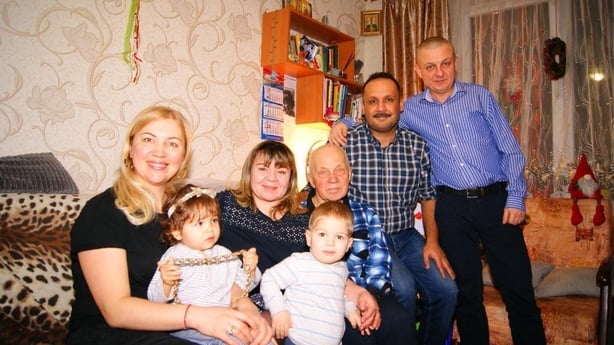
Oleg Chupryna has been living in Ireland for 20 years. He says he is nervous and worried about his family back home.
His father, sister and her family live together on the outskirts of Kharkiv, Ukraine's second largest city.
Their apartment is 25km from the border with Russia.
"I think I'm more nervous than they are. They are used to it. Ukraine has been at war with Russia, or as they call it 'low intensity conflict' for eight years."
Oleg said "they are calm, no panic. There is more nervousness in the West, I think."
He said his family are prepared to leave their apartment if the worst happens. "If shelling happens it will be very dangerous to stay there", he said.
"My sister has a house around 50 or 60kms south, in case something serious happens I hope they will be able to go there".
Just a few kilometres from his family's apartment is a military hospital.
"In the occupied part of Ukraine there is low intensity conflict but people still being killed and injured," he said, adding that the helicopters carrying the injured fly over his sister's apartment building to get to the hospital.
Additional reporting: Dyane Connor
