
There are no parties to mark the event, but Northern Ireland was legally conceived on this day 100 years ago.
The Government of Ireland Act, which formalised partition, gained Royal Assent on 23 December 1920.
It stated that: "Northern Ireland shall consist of the parliamentary counties of Antrim, Armagh, Down, Fermanagh, Londonderry and Tyrone, and the parliamentary boundaries of Belfast and Londonderry."
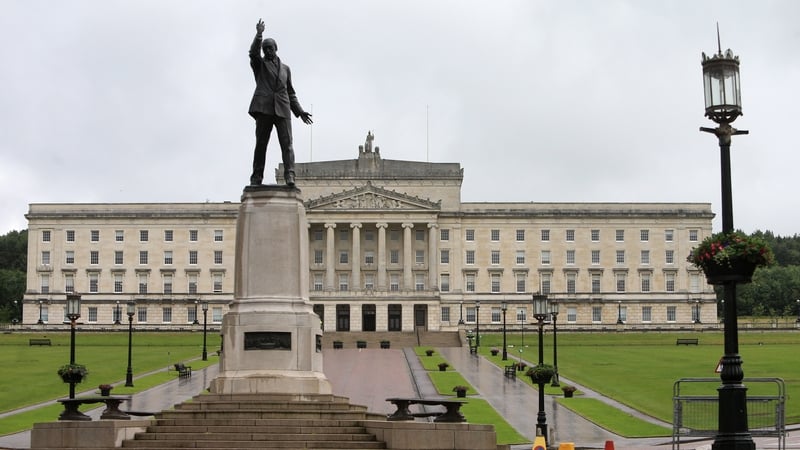
A Northern Ireland Parliament, which first met at Belfast City Hall before later moving to Stormont, was established six months later.
The act divided the island into two separate legal and political entities, and continues to divide those who live in Northern Ireland.
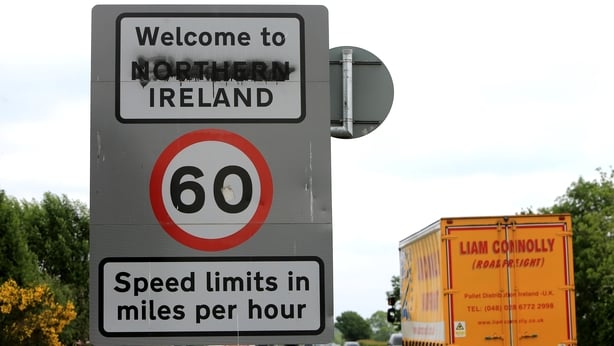
They still cannot even agree on its name.
For Unionists it is Northern Ireland, one of four nations that make up the United Kingdom.
Republicans and many nationalists refer to it as "the North" or "the north of Ireland". For them it is the fourth green field "that will bloom once again".
The refusal to use the term Northern Ireland angers unionists, who view it as part of a policy to reject and undermine its constitutional legitimacy.
The Good Friday Agreement of 1998 stated that the signatories were committed to "partnership, equality and mutual respect as the basis of relationships within Northern Ireland, between North and South, and between these islands".
Likewise, the name of one of the six counties the Government of Ireland Act designed as the territory of Northern Ireland remains divisive.
For the majority unionists it is Londonderry, while for nationalists it is Derry.
David McCullagh - How the prospect of partition played out politically in 1920
Speaking in a virtual debate last week organised by Queens University to mark the centenary, Stormont's Deputy First Minister and Sinn Féin's leader in Northern Ireland (or the north as she would call it) Michelle O’Neill said "partition did not have an upside".
She added: "It created an exclusionary 'Orange State’, the consequence of which was political conflict.
"The political, social and cultural consequences of what happened during the decade 1912 to 1922 continue to reverberate throughout this island to this day."
Stormont’s First Minister and DUP leader Arlene Foster said the 1920 Act as "born of a unique blend of acceptance and denial".
She told the debate: "It assumed firstly that Irish republicanism would be content with the fulfilment of Irish nationalist demands and, second, that the two political institutions would come together in the long term.
"In reality, republicanism would not be sated by devolution and the belief in the union was the settled will of Northern Ireland."
Earlier this month, the British government announced that it spend £3m on a series of events to mark the centenary of Northern Ireland next year.
Unionists say the 100th anniversary is a cause for celebration, while nationalists say there is nothing to celebrate.