


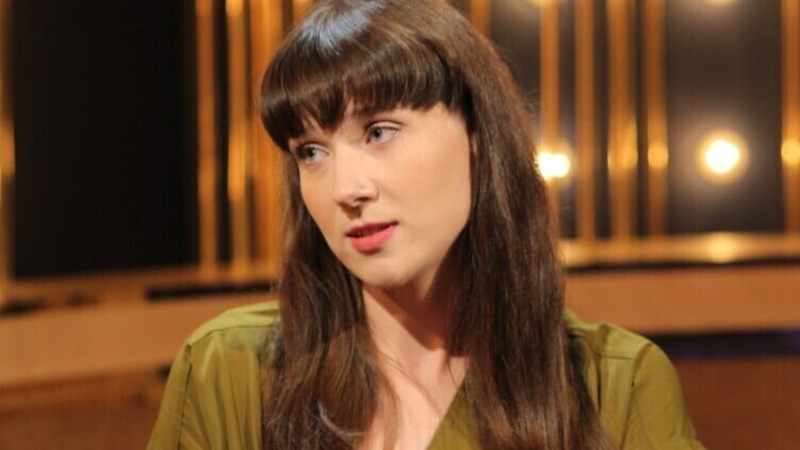
A woman who was raped and sexually assaulted by her then boyfriend multiple times while she slept has been awarded €1 million in damages by a jury at the High Court.
Niamh Ní Dhomhnaill told the jury in evidence she "felt unsafe everywhere" as a result of the actions of Magnus Meyer Hustveit.
She was diagnosed with Post Traumatic Stress Disorder, had been unable to continue her much loved teaching job, left Ireland for several years, and had tried at one stage to take her own life.
She told the jury: "There has never been a part of me that has not been profoundly impacted."
A psychiatrist gave evidence that the impact of the assaults on Ms Ní Dhomhnaill was about nine to nine-and-a-half out of ten on a scale of severity.
Hustveit pleaded guilty at the Central Criminal Court to one count of rape and one count of sexual assault against Ms Ní Dhomhnaill between 2011 and 2012, when both were in their 20s.
He was originally given a wholly suspended seven-year sentence, but the Court of Appeal found it to be unduly lenient and substituted a 15-month prison sentence.
Ms Ní Dhomhnaill took High Court civil proceedings seeking damages against her former boyfriend, for multiple acts of sexual assault on dates unknown between May 2011 to April 2012 at an apartment in Dublin.
She sought damages for personal injuries, loss and damage caused by the assault, battery, rape, sexual assault and intentional infliction of emotional harm on his part.
Hustveit did not enter a defence and the jury today had to assess damages.
They awarded a total of €1m made up of €350,000 in general damages, €400,000 in aggravated damages and €250,000 in punitive damages.
Ms Ní Dhomhnaill told the jury Hustveit had raped and sexually assaulted her repeatedly while she was asleep.
She said he admitted on 29 April 2012 that he had raped her and that this had been going on for some time. In May 2012, he had admitted in an email that he had used her body for his own gratification.
Ms Ní Dhomhnaill told the jury that receiving the email was "extremely shocking" and disturbing as it laid out in a clinical manner how she had been repeatedly violated in her sleep by him.
She had tried to take her own life in September 2013.
Ms Ní Dhomhnaill said she had attended therapy, had issues around food and excessive exercising and abusing laxative tablets, and had at times struggled to leave her bedroom and her home.
She said all her relationships had been affected and she felt frightened about trusting people including her parents.
We need your consent to load this rte-player contentWe use rte-player to manage extra content that can set cookies on your device and collect data about your activity. Please review their details and accept them to load the content.Manage Preferences
Ms Ní Dhomhnaill left Ireland for London and studied psychology and she said she was concerned she began overachieving to compensate for what had happened.
She said she continued to have disturbing nightmares and could not say how she would be in ten years.
Her mother, Josephine McDonald, said she had noticed changes in her daughter over the period.
From being independent, active and very articulate, she had become distant and withdrawn, and she said she could feel an anxiety about her.
Her concerns were confirmed when her daughter told her in August 2012 she had been raped, she said.
While she has achieved a lot since, she said her daughter was "not back to my Niamh yet".
The Director of the Women's Council has commended Ms Ní Dhomhnaill for her bravery, for giving up her anonymity and for opening the door to allow other women to report.
Orla O'Connor said Ms Ni Dhomhnaill's case raised so many questions with regard to rape and the definition of consent.
She said there was a lack of understanding of the impact of rape, the lifelong impact and a lack of understanding of the crime.
"They've awarded a significant amount, which is right in this case, because it indicates the serious the impact it has had on her," according to Ms O'Connor.
