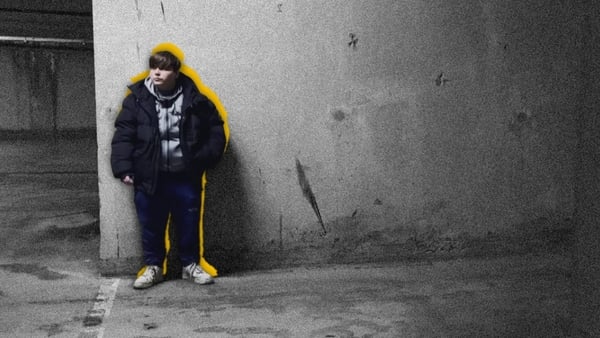
RTÉ Investigates has spent the last year inside the family law court system, documenting an unfolding crisis in the care of Ireland's most vulnerable children.
Described as 'heartbreaking’ and ‘scary’, with the potential to cause lasting damage, the documentary hears directly from young people who have been through the care system — in their own words.
Rarely does the public hear from the young people who have experienced a care system under increasing pressure, from staff shortages to mounting condemnation from the judiciary over its failure to meet its lawful obligations to protect children in care.
They are young people like Malak, who spent months in an adolescent psychiatric unit when he no longer needed treatment there. He had to remain in the unit because Tusla had no residential placement available for him.
"I felt completely isolated," he said. "And because I already had a problem making friends, I couldn’t really click with the other people who were in the psych unit."
Malak was later moved around several care homes. He secretly took an overdose on the way to one of his placements.
"I just couldn't take it. I just didn't want to move to another place again. I ended up in Beaumont [hospital] the next morning."
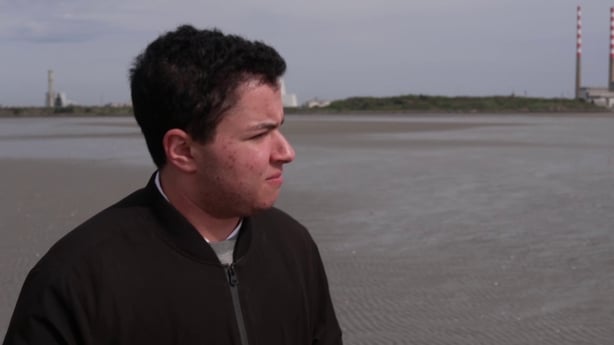
Malak is part of a vulnerable cohort of young people who have ended up in inappropriate placements in recent years because of a crisis in the care system.
There are approximately 5,900 children in the care of the State, the vast majority of whom are placed in foster homes. A further significant portion goes into registered, regulated children’s homes. All of these homes are required to meet HIQA standards.
But there is an acute shortage of these placements, which has led to the emergence of controversial care homes known as Special Emergency Arrangements or SEAs. Such arrangements mean that children are accommodated in care facilities provided by private operators, including rented apartments or houses, B&Bs and hotels.
However, these are unregulated and unregistered privately-run facilities that cannot be inspected by the regulatory authorities.
Yet, remarkably, they are State funded from Tusla’s budget.
Days after Malak was discharged from Beaumont Hospital, he was moved into a Special Emergency Arrangement for the first time, and then another SEA soon after, where he faced a four-hour round trip to school every day.
After two weeks, Malak broke down in class.
"I was in Irish and I just started crying and I couldn't keep going in the class," he said.
Malak was later moved into a registered, regulated service following legal representations by Karen Rogers, his Guardian ad Litem, a court-appointed professional who represents the voice of the child in care cases.
She believes SEAs should have no place in the care system.
"This is a solution that's organised and set up, but it's not care," she said. "I hate calling it part of the care system."
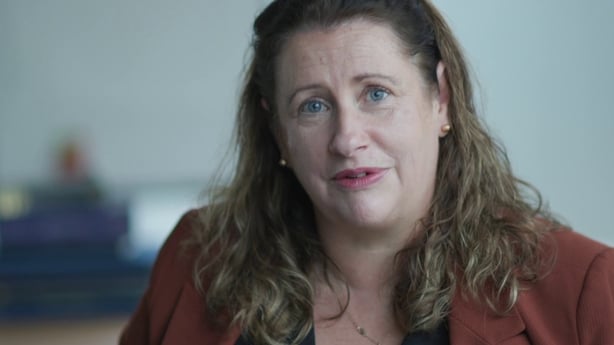
Children are typically placed in these SEAs when foster placements break down or when emergency admissions are required. They are often the children who need the most support, but some find themselves in the least suitable care facilities.
Of the children taken into State care last year, around 1,100 children ended up in SEAs.
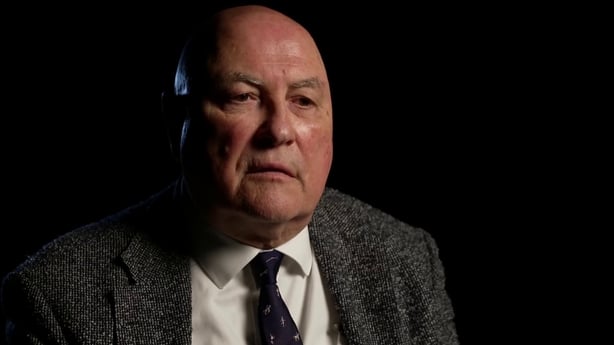
Retired Judge Dermot Simms, who presided over the family law courts for many years, told RTÉ Investigates the care system has only deteriorated further since he tried to raise the alarm about systemic failures three years ago.
In 2023, he sent a letter to four ministers and three government agencies, calling for "immediate and coordinated action" to address the crisis in the care system.
"I think it has got worse. The children in SEAs are being failed by the State because they are not being properly cared for in a properly resourced and regulated environment," he said.
"We've created the agency [Tusla] where the Government can say, well, that's the responsibility of that organisation, and so we leave them to it. And then when the Child and Family Agency has no further resource, it's outsourcing, it's outsourcing to unregulated placements."
Children in SEAs are frequently moved around the country at short notice.
Aaron was moved into care at the age of nine. He says he was placed in 20 different care settings, mostly SEAs that were operating out of hotel rooms.
"I was living in hotels for a whole year, I was getting junk food," said Aaron. "It was lonely and depressing, going from one hotel room, to the next. All my life I've been moving."
"He'd sit there all day playing the PlayStation," his grandmother Catherine added. "His food was just pizzas or Chinese. He was in just a small room with a bathroom all day long.
"Aaron just looked lost - lost inside," Catherine added.
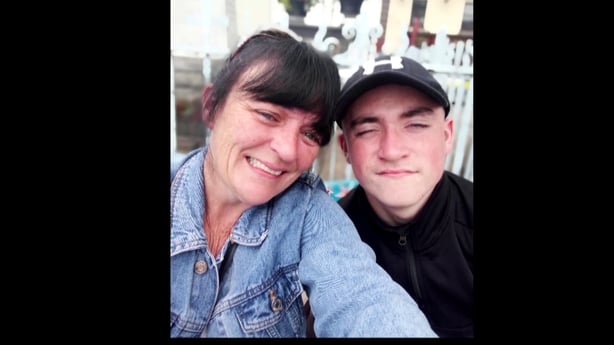
Aaron left care without even a junior cert. He says he was advised by Tusla that he could live in a hostel but fearful of this arrangement, he opted instead to couch surf. He later ended up living on the streets in Dublin and spent some time in a psychiatric unit.
"I'm not even going to talk about it because it's just a lot, man. It was bad, man," Aaron said.
Keeping a child in an SEA also comes with a staggering cost.
Six months ago, Tusla CEO Kate Duggan revealed that SEAs were costing the State an average of €750,000 per child, per year.
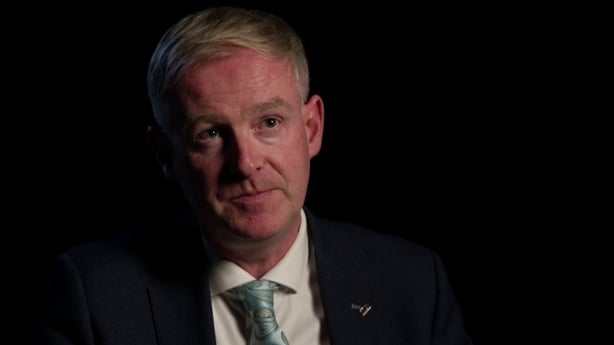
"The people who have come forward to run these systems, unregulated, unregistered, they've been facilitated in doing that by the Child and Family Agency by the lack of governance, the lack of structure and the lack of accountability," child protection solicitor Gareth Noble told RTÉ Investigates.
"And yet, huge money has been spent on them. And for me, that is totally and utterly unacceptable."
In a statement, Tusla said it has publicly communicated its placement capacity challenges having seen the largest ever demand for its services last year with over 106,000 referrals.
"Over the last two years, we have increased placement capacity with the opening of additional beds in our mainstream residential services...
"We are committed to reducing the number of young people in Special Emergency Arrangements."
While many children can have positive experiences in care under difficult circumstances, an increasing number of cases are turning up at the family law courts where Tusla is being severely criticised for failing to keep children safe.
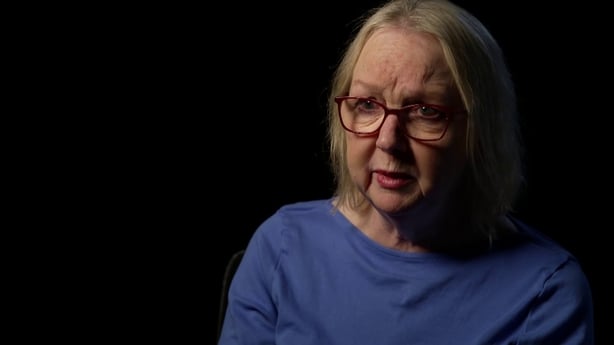
"We are exposing children to a level of risk which can cause them lasting damage," said Guardian Ad Litem Freda McKittrick.
One such case which came before the courts last summer was that of a teenage girl who had just entered an SEA care home. Within a matter of weeks, her situation had spiralled out of control.
According to court testimony, the girl was reported missing from care on 12 occasions and was at risk of serious harm. She had allegedly burned down her SEA and was roaming the streets at night with a second girl who was also reported missing from another SEA. Middle-aged men were reportedly associating with them.
A month later, the girl was reported to have been sexually assaulted by a number of men while again missing from her SEA. However, with no other beds available, Tusla continued to place her in the SEA.
Tusla told RTÉ Investigates it is "...acutely aware of risks with the exploitation of vulnerable young people…" and its Child Sexual Exploitation (CSE) Procedure assists professionals in identifying and protecting children who may be at risk of sexual exploitation.
"It's horrific," Ms McKittrick said. "I know from a career of working with both young people and adults who have been through sexual abuse that leaves its mark. It affects the rest of their lives."
Across the care system, young people interviewed by RTÉ Investigates described personal experiences of a system in chaos.
They recounted a recurring theme of being moved around from one home to the next, without any certainty or security.
Danny was moved between a variety of placements.
"It’s like don't ever get too comfortable," he said, "because you know you’re only a name on the sheet and once that name gets crossed out, it’s ‘where’s the next place we can put them?’"
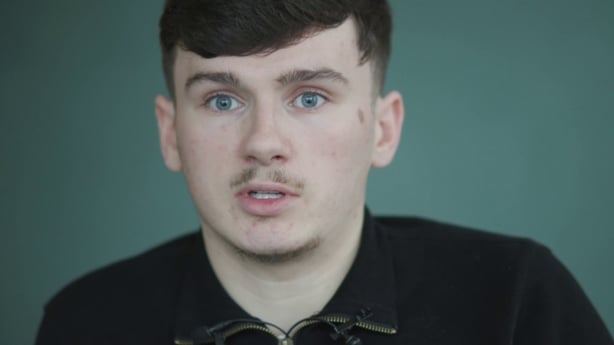
His sister Sarah was also taken into care.
"It's exhausting," she said, "just trying to put this brave face on that nobody truly sees how it really affects you."
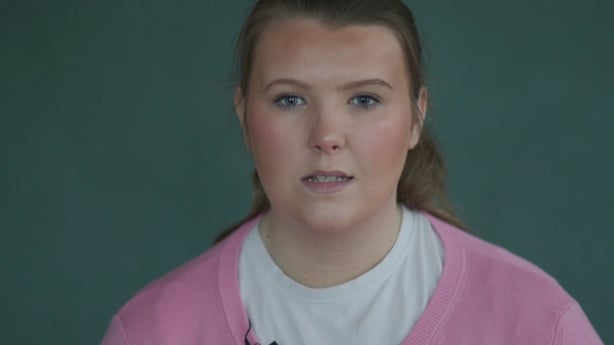
Another care leaver, Olivia, described how she felt like an "Amazon parcel".
"When you are being moved around from house to house, it felt like, we are kind of second choice," she said, adding that the frequent moves take a mental toll.
"I was a very emotional person. I'd been taken away from me Ma. I was very, very angry, and pretty much most of my placements broke down," Olivia said.
Now on the other side of the care system, Olivia says she's still suffering the impact.
"I don't feel good. At the moment I'm a very, very anxious person."
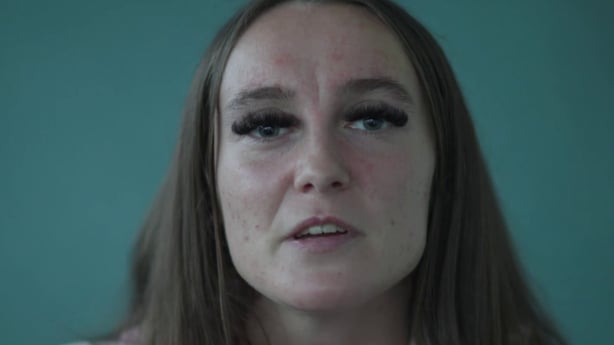
Jess is another young person with few personal items left to associate with her childhood because she too was moved around several different care places.
"I have little to no memories or like, belongings because I've moved so much," she said.
Jamie, who spent many years in care, added: "One of the hardest things growing up was trying to adapt, to just slot in, with strangers, people you don't know."
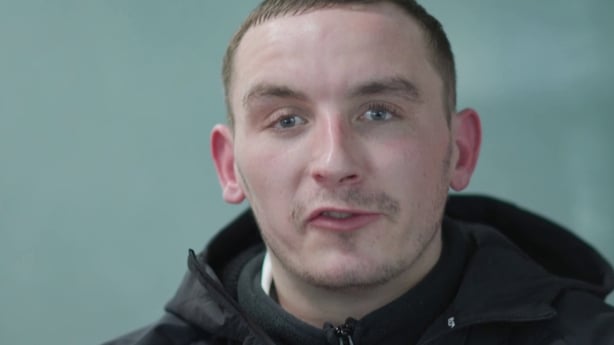
Anthea, another care leaver who went through 11 different placements during her time in care, said she spent years trying to be "perfect" just so she could have some stability.
"It's almost like you were trying to paint yourself as this perfect child just so that you could stay there, because it's like you wouldn't want to be moving around all the time. So, you were almost like putting on a mask," Anthea said.
Some experts say care services, due to a shortage of staff, are also not intervening early enough.
Sister and brother, Jolene and Owen, said Tusla had been in contact with their family for several years before they were taken into care.
Their father was suffering from mental health issues.
"Our father had bipolar disorder, so he'd have multiple manic episodes while we were living with him," Jolene said.
During these hallucinations, he would remove light bulbs late at night, believing they contained spy cameras, according to Owen.
"We got little to no food each day," he said. "We had nits, and our dad shaved all our hair off instead of using some shampoo."
Social workers arrived, with garda support.
"Our dad was in the kitchen, smoking out the window. And he's saying to the social worker, just take them. I don't care anymore. And I'm just sitting there, thinking he doesn't care," Owen said.
Jolene added: "I think Tusla should have stepped in earlier."
When children in care reach their 18th birthday, they can face further potential inequities. Tusla still has a legal duty to transition these children into independent living, but the quality of this aftercare can vary dramatically.
Brother and sister Danny and Sarah had very different outcomes when they each turned 18 years old.
Sarah went to college and received good accommodation. At that time, she was entitled to an aftercare allowance because she was in education. She now lives in a comfortable apartment provided by Fingal County Council.
"I feel like I only had a good outcome because I basically done what they said, go to college, get a degree, you'll come out the good side."
However, in contrast, her brother Danny left college early and so, unlike Sarah, he was not entitled to an aftercare payment allowance. Until recently, he was living in a cramped, one-room bedsit flat provided by a voluntary body funded by Tusla.
"I've been moved around constantly and you never know," he said, "I have this fear of being homeless."

That fear is very real for some care leavers – particularly those who struggle to qualify for aftercare supports by attending further education.
"I had so much going on on the outside that I just couldn't focus on it," said Jamie. "And when that didn't work out, I literally became homeless."
During her first year of college, Jess suffered with mental health problems.
"I done my first year of college and I got student accommodation, but I felt really on my own. So, my mental health got bad, and my attendance was not good at all.
"So, they basically said that I'd have to leave college, so I went homeless."
Some nights she was sleeping on the streets.
"I nearly got into bad situations a lot and like a lot of people try to take advantage of you and your situation. It's scary like, because I'm only young and I don't do drugs or drink or anything like that, like I am an alright young one."
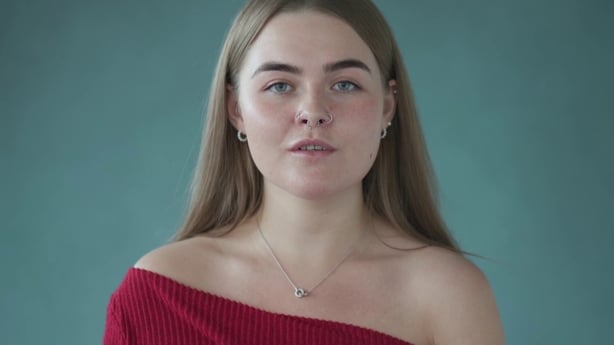
Áine also initially attended college but when she too stopped attending due to mental health difficulties, she lost her allowances. She says she was referred to a hostel for homeless people for just over six months.
"That was crazy. People fighting, getting physical with each other, people taking drugs. I couldn't just be around that anymore. I really couldn't."
Áine was subsequently housed by Fingal County Council. Although now four years out of the care system, she says she is still traumatised and finds it difficult to trust people.
"You can't build bonds, you can't trust the people because you don't know how long you're going to have that social worker for, you don't know how long you're going to be in that placement for," Áine said.

Responding, Tusla CEO Kate Duggan told RTÉ Investigates: "The experiences described by these young people are not acceptable...
"While it isn't appropriate to comment on the specifics of individual cases, unfortunately, there are times where we are challenged to provide the level of support or intervention that we would want for some young people, and this is a great cause of concern for me, and for the dedicated and hardworking colleagues working with these young people every day."
For Freda McKittrick, the stories of these and other young people featured in tonight’s documentary should serve as a wake-up call for Tusla and the Government.
"It's hard to watch, but I'm glad it's out there," she said. "This story has to be told."
Watch RTÉ Investigates: Inside the Care System tonight at 9:35 on RTÉ One and RTÉ Player.
Documentary produced/directed by Lydia Murphy.