



An all-island campaign has been launched to highlight the dangers of silica dust exposure in the construction sector, described as a "hidden killer".
There are serious health risks associated with exposure to respirable crystalline silica dust during work involving concrete, stone, brick and other sand‑based materials.
The Health and Safety Authority (HSA) said: "Exposure to silica dust can cause severe and often irreversible illnesses, including silicosis, lung cancer and chronic obstructive pulmonary disease (COPD).
"Silicosis is an incurable lung disease caused by inhaling fine dust particles that damage lung tissue over time.
"Symptoms include persistent coughing, shortness of breath, fatigue and increased susceptibility to respiratory infections.
"As with other occupational health risks, the long-term effects may not be immediately visible but results in reduced quality of life and increased likelihood of premature death."
Between now and the end of August, the HSA and Health and Safety Executive Northern Ireland (HSENI) will carry out inspections of sites, focusing on high‑risk construction work such as cutting, grinding, drilling and demolition.
These activities are known to generate hazardous silica dust if not properly controlled, the HSA said, and inspectors "will assess whether appropriate control measures are in place to eliminate or reduce exposure".
These methods include water suppression systems, on‑tool dust extraction, containment and isolation steps, appropriate use of respiratory and personal protective equipment, and adequate training and health surveillance for workers.
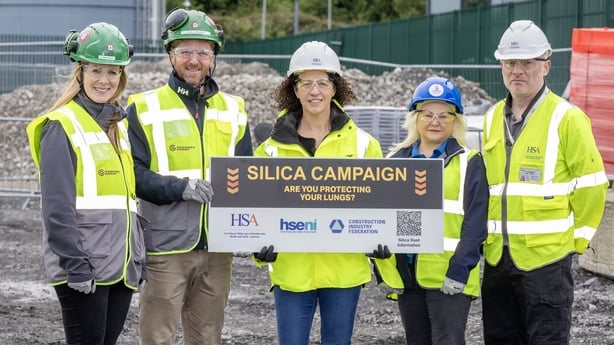
Senior HSA Inspector Joan Flynn said: "This joint all‑island campaign reflects our shared commitment with HSENI to address serious occupational health risks in the construction sector.
"Where stringent control measures are implemented, we can reduce the number of deaths in relation to occupational diseases."
HSENI Principal Inspector Julian Richmond said: "Silica dust remains a significant health hazard within the construction industry.
"Employers must take responsibility for implementing appropriate controls, providing appropriate equipment and training, and ensuring that workers are protected from harm at all times."
The two authorities reminded employers that the most effective way to protect workers is to eliminate exposure to silica dust.
Where elimination is not feasible, exposure must be reduced through engineering controls, safe systems of work, appropriate equipment and ongoing health monitoring.
