


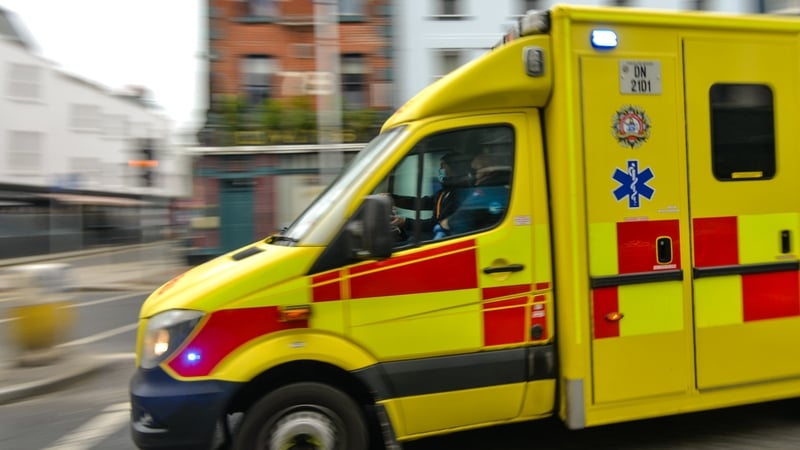
Disruption to road networks and public transport routes caused by ongoing protests is leading to some patients being unable to access medical care they cannnot afford to miss, the Medical Council of Ireland has said.
The regulator said the protests were affecting patients attending hospital and GP appointments, delaying healthcare staff from reaching those in their care and hampering the ability of emergency services to respond to life-threatening situations
"We acknowledge that causing harm to patients or disrupting healthcare access is not the intention of those involved in the protests," it said in a statement.
"However, the reality is that this is the impact being felt on the ground, and we would ask that those involved take steps to ensure that the most vulnerable in our communities are not inadvertently placed at risk," it added.
The Medicial Council of Ireland said it was calling on those involved in the protests to ensure that approaches to hospitals, GP practices, and all healthcare facilities remain clear, and that emergency vehicles are given free passage at all times.
President of the Medical Council Dr Suzanne Crowe said: "We understand that many people are under enormous financial pressure and we recognise the frustration that has led to these protests.
"However, patient safety is our primary concern, and we are deeply worried about the impact that delays to emergency services and healthcare access can have. In medicine, minutes matter, a delayed ambulance or a patient unable to reach hospital can have consequences that are simply irreversible.
"We are asking everyone involved to please be conscious of that."
"Healthcare workers across the country, particularly those commuting to Dublin hospitals, are facing serious difficulties getting to work due to protest related disruptions on major routes including the M50, M1, M7, M4 and M11," she added.
Home care call outs impacted by fuel shortage
Home carers are struggling to carry out their duties due to a lack of fuel, the Chief Executive of Home and Community Care Ireland, Joseph Musgrave, said earlier.
"You're talking about 1,500 people across the country are dependent on their home care coming in. If they can't get their home care, the next stop for them is hospital," he said.
Speaking on RTÉ's Today with David McCullagh, he added: "Yesterday afternoon, I started getting a series of calls and emails that fuel was running out, that carers were struggling to get supplies, and that carers were starting to report that they couldn't attend their normal home care calls because they simply couldn't get fuel, which is pretty serious."
Mr Musgrave said that he felt a "line has been crossed".
"I think many carers sympathise with the goal of the protest, to get fuel prices down," he said.
"But I think a line has been crossed when carers can't get to their calls and carry out an essential healthcare function, which is doing their home care.
"We're a small island. We're all in this together. I think we have to find a better way of reaching a solution than what is happening, which is grinding our home care service to a halt."
Separately, a woman travelling to visit her father in hospital spoke of how the protests impacted her.
Linda got caught up in the blockades on the N11 while travelling from Wexford to a Dublin hospital.
"Yesterday morning, I was going up to St Vincent's Hospital to meet the consultant and the palliative care team in relation to my Dad. My Dad is going to be 87 on Monday but we only have a short time left with him," she said on RTÉ's Today with David McCullagh.
"As we went around the bend on the N11, past the exit slip road, we came to a standstill. There was a very slow 20-kilometre drive, and I noticed on the hard shoulder randomly parked some trucks. The ambulance, fire engines, police wouldn't have been able to use the hard shoulder.
"I was lucky I got to the hospital and my Dad is still with us ... but there are people that were caught on the N11, I'm sure, weren't lucky."
Linda said she was no longer in support of the protests as a result.
"They've made their point ... my support for them has waned," she said.
"I did initially (support them), I thought, yes, good for them, but now it's too long."
The Irish Medical Organisation has said that slower emergency services response times and missed healthcare appointments because of blockades will have a hugely detrimental effect on patient welfare nationwide.
Speaking at the organisation's AGM in Killarney, its incoming president, Professor Matthew Sadlier, said it was unacceptable that the disproportionate actions of a minority are having such a significant negative impact on patients.
He said there should always be room for peaceful protest in this country, but not at the expense of patient welfare due to the deliberate targeting of critical infrastructure.
