
The Covid-19 pandemic was such a difficult and painful time for so many people, it is understandable if some just want to move on.
It began here effectively six years ago, and while that is not a long period of passing, the pandemic experience at the time felt as though it would never end.
The impact of the unprecedented crisis and the scale of the restrictions on public liberty were such that it is essential to identify lessons in case of any similar events in the future.
A big step in that direction came this week.
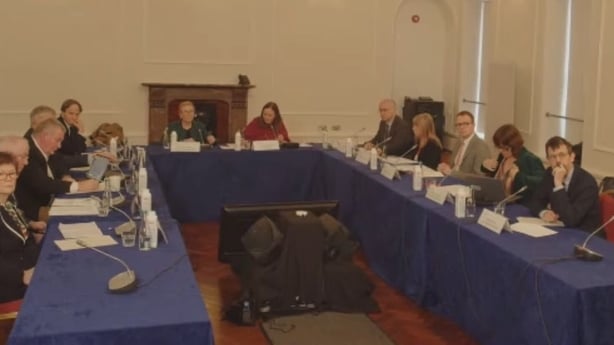
The Government-established independent inquiry - the Covid-19 Evaluation - into how Ireland managed the pandemic held its first live broadcast.
Expert views
It was at times a dramatic and highly revealing 90 minutes, with hugely important contributions from a wide panel of Irish and international experts.
Because some years have passed since the public health emergency ended, it is now possible perhaps to more calmly reflect on those incredibly difficult times, and how prepared, or otherwise we were, and the manner in which key decisions were reached, which affected every citizen in some way.
The National Public Health Emergency Team (NPHET) meetings, which effectively determined so much of people's lives, were never televised. But there were televised press conferences most days, led by the then Chief Medical Officer, Dr Tony Holohan.
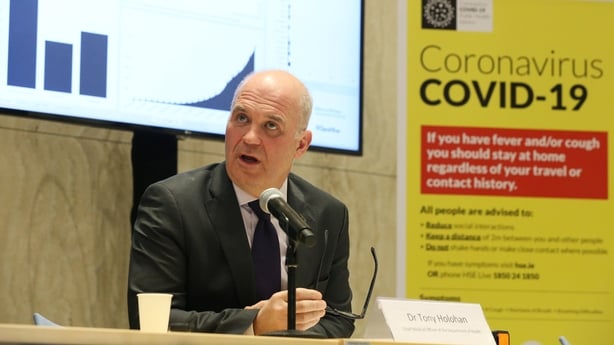
It was from these in-private NPHET meetings that advice was given to the Minister for Health and then passed to government for decision.
What resulted were a raft of directions and restrictions, social distancing, the closure of businesses and hospitality, an end to gatherings and home visits, restrictions on visiting nursing homes, mask wearing, garda checkpoints, and the €9 meal.
The big issues
Among the notable points made by medical experts at the round table meeting broadcast this week were:
- The public was not trusted by those in authority to manage their own risk
- There was no need to close schools
- NPHET was not a good model for managing the pandemic
- Public health measures damaged people’s livelihoods, the economy and mental health
- Access to healthcare was also damaged
- Officials were slow to advise on mask wearing or support home testing
The test and tracing system was completely unprepared in the early stages and HSE staff were overwhelmed
This Covid-19 Evaluation was set up by the Government in late 2024 and is chaired by Professor Anne Scott.
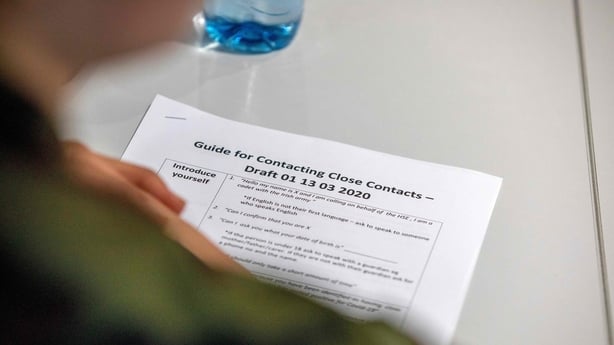
It opened a public consultation in May last year, which received around 7,000 responses. A survey of young people's experiences has also been conducted.
There have been other round table hearings, with economic experts and 'stakeholders' which were not broadcast live, but can be viewed on the covidevaluation.ie website, along with a detailed summary of the public survey and other important data.
Pressure for statutory inquiry
This is not a statutory public inquiry, with the power to compel witnesses and documents.
However, the nature of the live proceedings this week may have added to the campaign by some for a full public inquiry.
Majella Beattie, chairperson of advocacy group Care Champions, said the public proceedings this week strengthened its demand for a full statutory inquiry.
She said the proceedings exposed fatal systemic gaps.
Ms Beattie acknowledged the medical experts who spoke at the hearing, but she also felt the most vital voices still remain silenced - older people and their families in particular and what happened in relation to nursing homes.
A series of private group listening sessions involving bereaved people and the issue of long-term residential care during the pandemic are due to take place soon, with Prof Scott.
The evaluation has been conducting a bespoke consultation in relation to long-term residential facilities, over 600 responses were received, and the data is being analysed.
There were stark standout moments in the live proceedings this week at the Covid review.
Armchair experts and bogus scientists
Professor David Heymann, of the London School of Hygiene and Tropical Medicine, and a member of the evaluation panel, said that in January 2020 there was "confusion and blame".
He said there were many armchair experts, who suddenly developed out of nowhere, and were telling the rest of the world how they could deal with an infection, which nobody really understood.
He added that there were also bogus scientists, promoting drugs that were not effective, and some political leaders trying to show they were in charge, rather than public health.
Dr Anders Tegnell, Sweden's former state epidemiologist during the Covid-19 pandemic, said that in many ways context was more important than the way countries were hit by the virus.
Sweden was affected early and heavily. This was due to the virus arriving at the same time that Sweden was marking its winter holidays.
Many left the country during this time and came back with the disease.
Dr Tegnell said this led to the Swedish health system being very quickly overburdened to the degree that the usual first line of defence, testing and contact tracing, could not be upheld in some parts of the country.
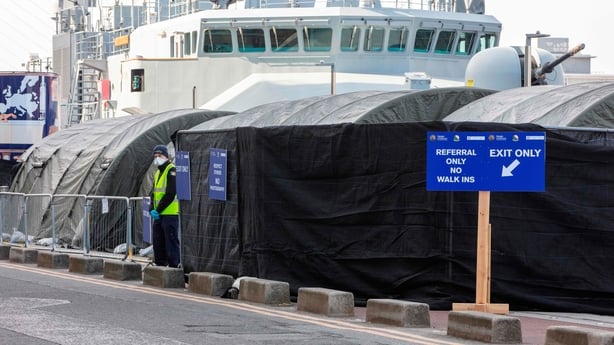
He said Sweden had to move quickly from trying to contain the virus, to mitigating its effects.
This involved trying to find where the biggest risk of getting infected was and trying to regulate those places as much as possible, and minimise social contacts without causing undue harm.
He said big events were closed early on, however restaurants were not forced to close, but instead were regulated and reorganised to minimise social interactions.
That proved to work reasonably well, he said, as Sweden did not see any outbreaks in restaurants.
The third main area of context in the Swedish response was workplaces, where 50% of the Swedish workforce worked from home, which had a huge impact.
Dr Tegnell pointed out that in Sweden, the public has a very high level of trust in the government and public health authorities in general.
School closures unnecessary
Prof Mark Woolhouse, of the University of Edinburgh, said that there was no need to close schools.
He said the public were treated as if they were the problem and he believed that the public should have been trusted and empowered to take measures like self-testing.
Dr Woolhouse said it was wrong for people to have said at the time that the virus did not differentiate and suggest that everyone was at risk.
Sligo-born Dr Mike Ryan, the former World Health Organization deputy director, told the round table it is important not to play the next pandemic like the last one.
He warned that the next pandemic may be a different virus, it may have higher mortality, and there may be different risk groups.
Communities not trusted
Dr Ryan said communities were not trusted enough during the pandemic to manage their own risks, and that in general, people manage their own risk.
"They decide how many times a day they go to the shop, they decide if they get on public transport, they decide if they go to work, all of those are decisions that would increase or decrease your risk of exposure, and we didn't trust communities enough at times to make those decisions," he noted.
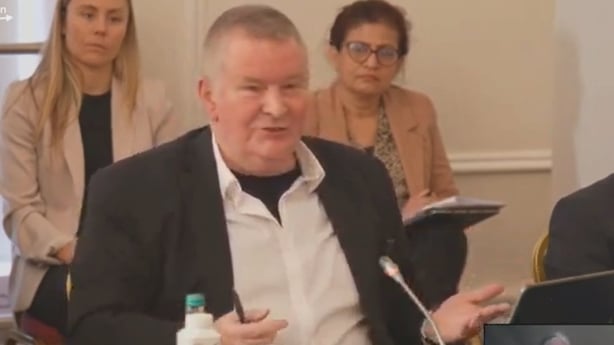
He said he could understand why that approach was taken, as health systems were coming under huge pressure but added "there's no democracy in that".
Dr Ryan said ordinary people need to get on with their lives, and do not need the "Cassandras" of public health "telling them they're all going to die next week".
He said that the role of the public and State service is to work with communities to deal with these issues in advance, prepare communities without "scaring the living daylights out of them".
NPHET limitations
Anthony Staines, Professor Health Systems, Centre for Integrated Care & School of Nursing, Psychotherapy & Community Health, DCU, said that NPHET was not a good model for a pandemic.
He said it would be good at dealing with, for example, a chemical spill.
Prof Staines said NPHET did its best, but when it was set up, there was no one on it with epidemiological expertise and later it had 50 members, which was too many people to do the job.
He also believes Ireland is not ready for the next pandemic.
Prof Staines said that Ireland did okay, but quite a lot of countries did a lot better, and a large number of countries did much worse.
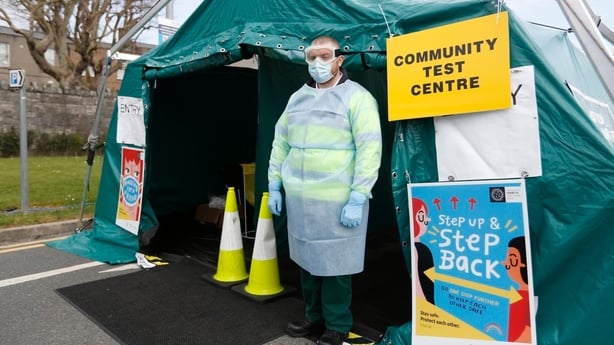
Professor Mary Codd, University College Dublin, spoke about the test and trace programme she led at the university. It was one of nine centres set up at speed in the space of one day, and most of these were set up at academic institutions.
One advantage and strength of this was that it was a centralised system where the individual centres were convened every morning, seven days a week. However, one disadvantage was that the public health operational workforce was not part of this system.
There were separate meetings with the public health operational workforce and she was the bridge between management and public health.
Test and tracing overwhelmed
Prof Codd said that fundamental to contact tracing were the results from testing.
But there was just one site, the National Virus Reference Laboratory, with limited capacity, that quickly began to become overwhelmed with Covid-19 tests.
This led to sometimes long wait times between testing and results.
It got to a stage, she explained, where it became pointless contacting people, as it would be one week or ten days before they could contact someone with their test result.
Ivan Perry, Professor of Public Health at UCC, pointed out that as an island nation, wealthy, politically stable and technologically advanced, Ireland should have been well-placed to respond to the pandemic.
Unfortunately, despite high per capita spending on health, Ireland underperformed at health system level, he said, with significant consequences for illness, deaths and the societal impacts of prolonged lockdowns.
He believed that a failure to invest in the public health infrastructure contributed significantly to these outcomes.
Stephen McMahon of the Irish Patients' Association watched the proceedings online.
He said the discussion identified a consistent pattern where lessons were recognised, but not implemented. He said that gap - between knowledge and action - is where accountability sits, and it is not resolved within this forum.
Mr McMahon said that whether that gap warrants formal investigation is now a legitimate question.
Not a blame game
The Covid-19 Evaluation chairperson has made it clear the work of the group is not about allocating blame or judging things with the benefit of hindsight.
At the end of the public hearing this week, many people were left with a sense of let us have more of this openness and transparency. It was in stark contrast to how many life-changing decisions for people and society were made, behind closed doors, during the two years plus of the public health emergency in Ireland.
The evaluation has also said that there may be future round table or broadcasted events.
This week’s public hearing was revelatory and undoubtedly painful at times, but healthy too, for a better insight into the most significant national crisis in the last 100 years.
Read More: Communities 'not trusted' during pandemic, Covid-19 panel hears