Ireland's Covid inquiry has heard that communities were not trusted enough to manage their own risk during the pandemic.
Dr Mike Ryan, former Deputy Director of the World Health Organization, told a live broadcast roundtable of the Covid-19 Evaluation, that while he understood the huge pressure on health systems, the approach left little room for democracy.
An independent review was set up by the Government in late 2024 chaired by Professor Anne Scott to examine how Ireland managed the crisis.
We need your consent to load this rte-player contentWe use rte-player to manage extra content that can set cookies on your device and collect data about your activity. Please review their details and accept them to load the content.Manage Preferences
Today the Covid-19 Evaluation broadcast its first live roundtable debate with Irish and international experts.
The former deputy director of the World Health Organisation, Dr Mike Ryan said that communities were not trusted enough to manage their own risk during the pandemic.
He said that while he understood the huge pressure on health systems, the approach left little room for democracy.
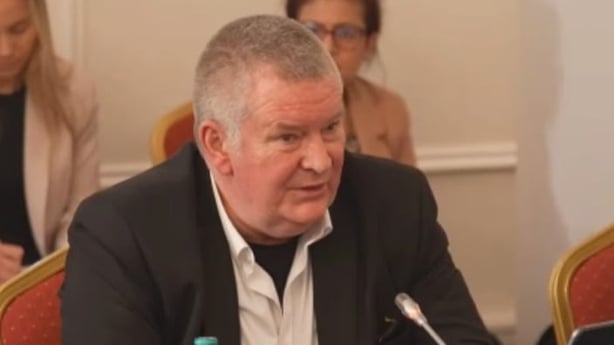
Dr Ryan said: "In general, people manage their own risk.
"They decide how many times a day they go to the shop, they decide if they get on public transport, they decide if they go to work, all of those are decisions that would increase or decrease your risk of exposure, and we didn't trust communities enough at times to make those decisions."
He said he could "understand why" that approach was taken as "health systems were coming under huge pressure", but said "there's no democracy in that".
Dr Ryan said: "It is very important that we don't play the next pandemic like the last one."
Pandemic 'didn't cause lack of trust in the system'
He said while scientific communities are "good" at dealing with rapidly changing advice based on new research, societies "take time to catch up" and communication about changing advice managed to "turn a trust pothole into a trust chasm".
He said the pandemic "didn't cause the lack of trust in the system", but "we really hit the ball out of the park when it comes to that and that's something public health authorities nationally and internationally need to examine.
"How do we communicate with the public, and how do we communicate uncertainty?"
He said, in future, communities need to be "empowered" and "trusted" adding that he feared pandemic preparedness in the future would be too technologically focused.
"Unless we start to invest in community and participatory public health and have communities ready for the next pandemic, we're going to fail, not because of the technological and the innovation solutions, but we have not prepared, supported and involved our communities in preparing for the next pandemic."
The panel heard how the initial global reaction to the pandemic was characterised by "confusion and blame".
Professor David Heymann, professor of infectious disease epidemiology at the London School of Hygiene and Tropical Medicine, said: "with these two words, the world was facing a new epidemic, which turned into a pandemic".
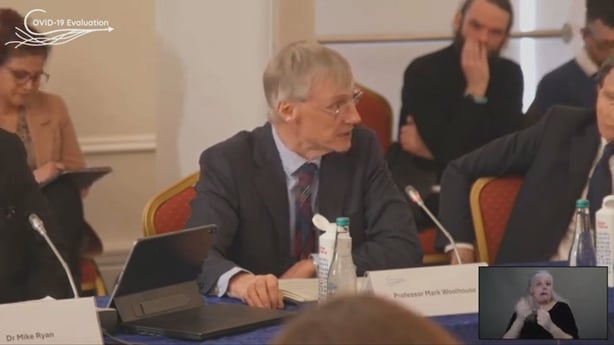
Professor Mark Woolhouse, University of Edinburgh insisted there was no need to close schools.
The advocacy group Care Champions said that today's proceedings have strengthened its demand for a full statutory inquiry.
It said the testimonies from the experts exposed fatal systemic gaps.
It said that without statutory powers, the Evaluation can not compel evidence or demand the whole truth.
It also said that while it acknowledged the medical experts who spoke today, the most vital voices remain silenced - the older people and families who were failed.