
A national analysis of GP shortages shows concerning patterns of workforce pressures in Dublin's commuter belt, and on the western seaboard, according to the Irish College of GPs (ICGP).
Some patients are reporting that practices are closed to new patients and they cannot register with a family doctor, while others face delays in securing appointments.
The ICGP data also reveals pressures on GP services in areas of deprivation, including on Dublin's northside.
It said that as a result, there are patients who experience ongoing difficulties and challenges in securing timely access to their GP.
The College said the data highlights the urgent need for supports for newly emerging GPs, and measures to ensure GP services are retained in low population areas as single-handed GPs retire.
The latest study analysed the distribution of GP practices in local electoral areas (LEA) against the latest demographic data for those areas.
It did not examine whether individual patients can successfully register with a practice.
The College said that there is a significant shortage of GPs in Ireland, with 4,600 in practice but the data shows that over 6,000 are needed.
The population has increased by 9% in the last decade and the GP workforce has grown by 10% in that time, which the College said has just kept pace with the population rise.
The College said that separate research indicates that many GP practices are closed to new patients and working at capacity, with some delays in making appointments.
It said the rapid rise in population in the Dublin commuter belt has created significant pressures on GP access there, particularly in Kildare, north Louth and parts of Wicklow.
"This is due to a lag in the development of primary care centres or GP practices after rapid population expansion, and the time required to recruit GPs and expand existing practices.
By contrast it says that sparse population in rural regions in the North West and the Border point to potential long-term sustainability challenges for general practice.
Areas of Donegal, North Mayo, Leitrim and parts of Cavan have smaller populations spread over large geographic areas, combined with an ageing GP workforce.
The College said this makes recruitment and succession planning difficult.
It said the third category of concern is for GP access in areas of urban deprivation.
ICGP Medical Director Dr Diarmuid Quinlan said the College is very aware of the fact that people are unable to register with a GP when they move to a new area, and it is working closely with the HSE and the Department of Health to expand the number of training places for GPs.
The number of training places is being increased from 350 to 400 over time and he said training places have expanded by 85% since 2017.
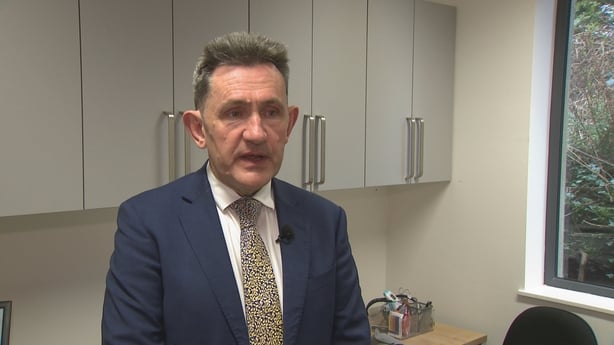
Dr Quinlan said that the College, with the support of the HSE and the department, has 191 trainees in supervised training places at present.
He said that its International Medical Graduate programme (IMG) in which over 170 international GPs have been recruited for rural practices, has already made an enormous contribution to easing the pressures on single-handed rural GPs in particular.
Dr Diarmuid Quinlan said there are three distinct issues.
These are rural and remote areas where there are older patients and older GPs and succession for these GPs is a major challenge.
Areas of urban deprivation and patients in these areas have much greater healthcare needs and while it may look like there are sufficient GPs, this is an illusion
The commuter belts where the pace of expansion vastly outstrips the establishment of new GP practices, particularly due to the infrastructure cost for young GPs setting up a practice
Dr Quinlan said that most GP practices keep appointments available on the day for patients to be seen if they are acutely ill but this is a finite number of appointments.
Newbridge patient unable to sign up with a GP for many years
Chris Pender is a Social Democrats councillor for Newbridge on Kildare County Council.
He says he has been trying for just under six years to get registered with a GP in the area, but without success.
He has lived in Newbridge since he was 15.
"For the last six years I have found it impossible to get my own GP, " he said.
He said that what it means for him is that he can access private services but at a high cost.
Mr Pender said he cannot access out-of-hours GP services, because if he does not have a GP signed up to it, he cannot access it.
Watch: Chris Pender said he has found it impossible to get his own GP
He said he is lucky as he has not been very sick, but it results in him putting off accessing a doctor.
On one occasion he said he had to access an emergency department, but he might have been able to go to a GP instead, if he had one.
He said that Newbridge is a major commuter town and that many people living there work in Dublin.
Mr Pender said he has spoken to a number of families who are still accessing their GPs in Dublin, but live in the Newbridge area.
He said it is not acceptable that people have to move back to where they have moved from, to access basic medical care.
High pressure areas
The analysis by the ICGP Research Hub shows that the GP workforce pressures are highest in:
North West - Donegal, North Mayo & Leitrim
North East Border - Cavan, Monaghan & North Louth
Mid East Commuter belt - especially parts of Kildare
North Dublin - Finglas, Coolock
South East - Kilkenny, Carlow, Wexford
Mid-West - East Clare & East Limerick
The ICGP is the professional body for general practice in Ireland and has 4,500 members and associates.