
Every year, four or five people with a medical complaint enter an Irish hospital, or GP clinic, and get an unexpected diagnosis.
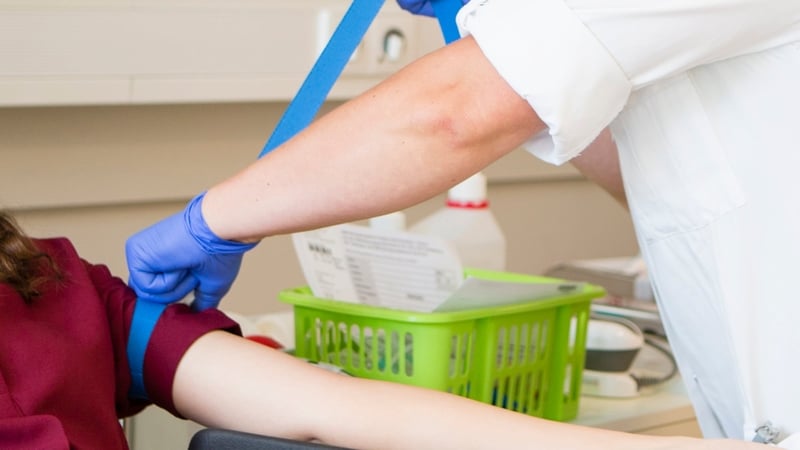
They discover that many years ago they received a blood transfusion and, unfortunately for them, it was infected with the Hepatitis C virus.
If untreated for a long time, the virus can trigger a hardening of the liver, known as cirrhosis, which can be a forerunner of cancer.
The patients are usually advised that one of their first steps should be to contact Transfusion Positive.
This Hepatitis C support group is marking its 30th year in existence - three decades offering medical and legal advice, as well as counselling.
One of those at the other end of the phone is Susan Gaughran, who heads up the organisation.
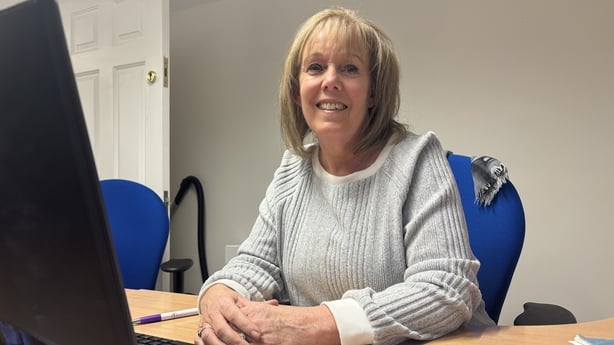
The good news, Ms Gaughran said, was the virus can be treated and cleared.
However, she said it is likely the patient's liver has already been damaged.
"Unfortunately, if a lot of years have passed at that stage, we have got members come in when they would actually be cirrhotic," she said.
"Some of them would be in liver failure," she added.
Transfusion Positive used to have 300 members but now it is down to 180.
A test for Hepatitis C became available in 1991, however, the State did not institute a comprehensive lookback, or search, for people who had received blood transfusions and therefore could have been at risk of infection.
Ms Gaughran said: "It would have been a very good idea to do it ... Unfortunately, a lot of the time now, people go to the hospital or to their GP with another illness.
"Their liver function test might be off, and as a result, they could be tested for Hep C."
This explains how people can be living with the virus but be unaware it is present in their body.
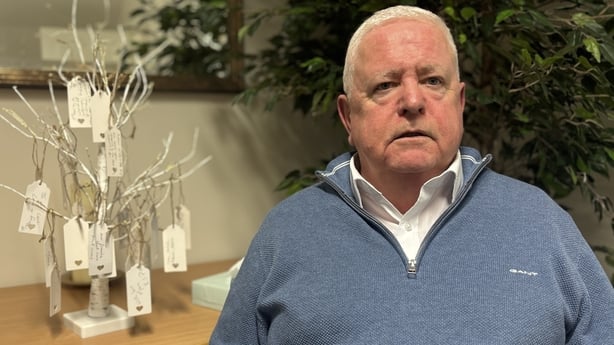
Gerry O'Reilly is on the board of Transfusion Positive as he wants to give back to an organisation which helped his family in its darkest hour.
"In 1982, my mom had a blood transfusion in St Michael's Hospital, in Dun Laoghaire.
"Many years later, in 2008, she started to show symptoms.
"The consultant wasn't too happy with her liver.
"So he said that he would like to give her a test for Hep C.
"It turned out the mom had it."
Mr O’Reilly’s mother had developed liver cancer by the time she was diagnosed and died six years later.
He said: "I'm going to be a grandparent in April.
"That's my first grandchild.
"I'd love my mother to be around for that ... to see that ... but she's not because she got infected [with Hepatitis C] in a State hospital."
The family was advised to contact the support group and it was a lifeline for them.
"Without Transfusion Positive, we were lost," he said.
"We were finished. We wouldn't have known where to turn," he added.
"Nobody was held accountable"
A Tribunal of Inquiry, under former chief justice Thomas Finlay, got under way in November 1996 into the disaster, just a month after the death of Donegal mother Brigid McCole - who contracted Hepatitis C from a blood product called anti-D.
On her deathbed, she felt obliged to discontinue High Court action aimed at discovering the truth of what caused the contamination crisis and secure an apology, and agree a financial settlement with the Blood Transfusion Service Board (BTSB) in order to provide for her family.
Legal proceedings were later initiated against two former members of the BTSB, but the cases collapsed.
It still rankles with Mr O'Reilly.
"There's nobody held responsible. Nobody was held accountable … We don't have the answers," he said.
But why was a lookback not conducted for transfusion patients?
If one had been organised, it would have been possible to identify people with Hepatitis C much earlier and most certainly improve their chances of avoiding cancer.
Cliona O'Farrelly, who is professor for comparative immunology at Trinity College Dublin, told RTÉ’s This Week programme that a lookback had been carried out in relation to women who contracted Hepatitis C from the anti-D blood product.
Professor O'Farrelly said: "I think that was 14,000 women ... of whom then it was found that 1,000 had become infected because of the contaminated anti-D."
She confirmed that a lookback did not happen for people who had received transfusions.
She said: "To do a fully comprehensive lookback on all the transfusions during those times would have been absolutely enormous."
The consequence of that decision was that transfusion recipients were not tested, which meant those infected were not identified, and that meant they unknowingly carried a virus which was, in some cases, damaging their liver and causing cancer.
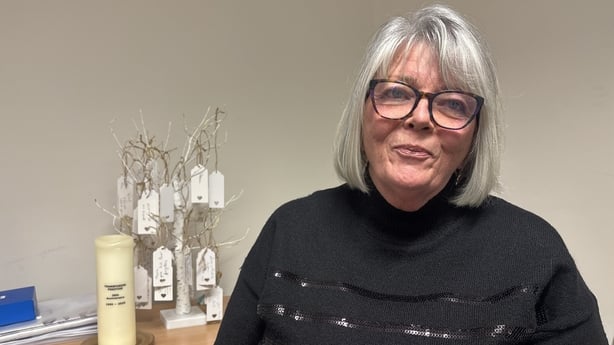
The chair of Transfusion Positive is Laura O'Brien, who found out that she was Hepatitis C positive more than 30 years ago.
Emerging treatment was available, but it cost £1,800 per month.
She said: "And I was saying: We can't do that ... We won't be able to afford to do that.
"I said it to my husband. My husband said: 'I'll worry about it. You take the medicine. I'll worry about the money.'
"I knew we didn't have it."
Thankfully, the State stepped in and refunded patients.
A Compensation Tribunal was established to, in part, pay medical expenses.
After all, these were healthy people who had been given a contaminated transfusion in a State hospital.
What Ms O'Brien did not anticipate was the stigma associated with Hepatitis C in the 1990s.
She said: "I had many friends that turned their back.
"They wouldn't come to my house anymore.
"My children, their little friends, weren't allowed in our house.
"I was gossiped about in the neighbourhood that I had HIV."
"It was very hard"
It was what she described as a "very tough" time, as she battled the illness and prejudice.
"At that time, mentally and physically, I was unable to do it," she said.
"So my husband took over the parenting role. I took over the sick person role," she added.
Ms O’Brien said she "was in hospital more than I was at home".
"We just carried on day to day. It was very hard," she explained.
With her family behind her, and the support from Transfusion Positive, Ms O’Brien was able to make progress.
While the medical system treated her "very badly" in the beginning, she said this improved significantly.
"I went into St Vincent's Hospital, the care I got was second to none," she said.
"The assistance I got in the hospital was marvelous," she added.
Her consultant was aware that people living with Hepatitis C from blood transfusions would need to network and so he facilitated meetings in the hospital.
She said: "We'd all meet there, and that started Transfusion Positive."
Listen: Transfusion Positive marks 30 years since the Hepatitis C scandal
We need your consent to load this rte-player contentWe use rte-player to manage extra content that can set cookies on your device and collect data about your activity. Please review their details and accept them to load the content.Manage Preferences
Today, Ms Gaughran said her organisation has very good relations with the Irish Blood Transfusion Service, which replaced the BTSB, and they have "full confidence" in it.
However, there is a bone of contention - members of Transfusion Positive who have cleared the virus are not allowed to donate blood.
"They [the IBTS] were adamant that, in relation to Hep C, they will not be changing the protocols," she said.
"So it does kind of put a question in your mind as to the validity of being totally cured of the virus even after treatment," she added.
In a statement, the IBTS said the majority of patients who have been treated "remain Hepatitis C antibody positive" and under European regulations such donations "should be discarded".
It noted that UK guidance "changed last year" and that it does "accept donations from patients who test negative for Hepatitis C antibodies".
However, the IBTS reviewed its own processes and concluded that "... the evidence base to accept these donations was insufficient to warrant a change to our current practice".
It also said that implementing the required changes would be "technically challenging".
For Transfusion Positive, it is going to keep lobbying the Government as the needs of its members have changed over time.
One outstanding issue relates to awards from the Compensation Tribunal and members who find they do not have enough contributions to obtain a contributory pension because they had to stop working.
Transfusion Positive also continues to provide an emergency response to the small number of people each year who receive a bolt from the blue and are informed they are Hepatitis C positive.
Ms O'Brien still remembers that shock: "When you have an illness that's a chronic illness, and it's something that affects your main organ, like your liver, it changes you.
"It's different. Every cold you get, you think: 'Oh my god, what is this? What's happening?’"
That is when Ms Gaughran and the Transfusion Positive team step in as they have done for 30 years.