
The Chief Executive of the Health Service Executive has said planned industrial action by healthcare staff is "regrettable" against the background of additional funding for the health service and increasing staff numbers.
Fórsa, the Irish Nurses and Midwives Organisation (INMO) and Unite have served notice of industrial action to the HSE in a dispute over staff shortages.
The unions have accused the HSE of imposing a fixed employment ceiling across all health services, and of suppressing posts.
The industrial action will begin on 31 March following a three-week notice period.
It will initially take the form of a work-to-rule and other non-cooperation actions.
The unions have warned that other phased action, including work stoppages, will be considered should there be a requirement to escalate the dispute.
"INMO members voted overwhelmingly in favour of industrial action last November to send a clear message to the HSE that moratoriums and severely restricting the recruitment of patient-facing posts is in breach of many safe staffing agreements between healthcare unions and the HSE," said INMO General Secretary Phil Ní Sheaghdha.
She said nurses and midwives "on the frontline are crying out for support, and they feel ignored".
"Instead of additional staff, they are being faced with recruitment embargoes and needless administrative obstacles," Ms Ní Sheaghdha said.
Fórsa's Head of Health & Welfare said the HSE's 'Pay and Numbers Strategy’ has led to the loss of loss of thousands of previously sanctioned posts.
Ashley Connolly said: "Ireland’s population is growing and it is also an ageing population.
"These factors demand a more robust approach to workforce planning in our health service."
Unite General Secretary Sharon Graham said that HSE workers have been trying to do more with less while worrying constantly that patients are not getting the care they deserve due to the staffing crisis.
"The ongoing failure to address the issue has left our members with no choice but to take action in defence of patient safety and their own working conditions," Ms Graham said.
Other unions including Connect and the Medical Laboratory Scientists Association have also expressed their opposition to the HSE's Pay and Numbers Strategy.
Health unions have previously said that recruitment restrictions and the suppression of posts in the HSE are putting services under enormous strain and are putting patient safety at risk.
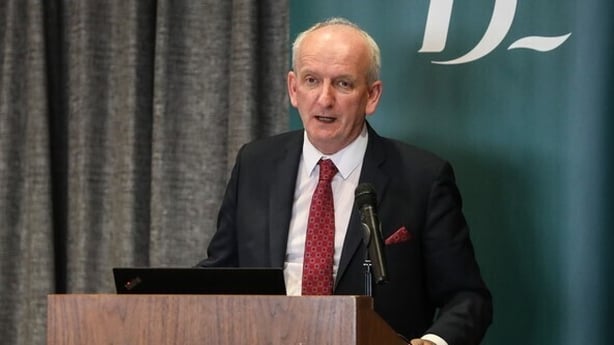
Speaking on RTÉ's Today with Claire Byrne programme, HSE Chief Executive Bernard Gloster said the action "falls outside the terms of the Public Service Agreement which gives us stability".
He added "one would have to be concerned when that reaction is against increasing growing numbers of staff in all of those disciplines and those numbers continue to grow".
Mr Gloster said he expects to recruit 6,800 more people before the end of the year.
The HSE previously said its Pay and Numbers Strategy has enabled it to stabilise its workforce numbers and has allowed it to increase staffing levels.
Mr Gloster said he "absolutely" accepts that when such a strategy is introduced it "gives you a cut-off date on which you reset the number, there's winners and losers in that".
The HSE CEO said: "So, the cut-off date was on the 31 December 2023, on that date as in any day in the health service, you could be carrying somewhere between 2,000 and 3,000 routine vacancies.
"On one hand, some of the unions would argue 'well, they’re lost’, but on the other side of that, on the cut-off date, we were carrying 4,000 unfunded posts, which Government have now funded.
"So, there is room within all of those posts as people come and go, to reprioritise, to address any of the pressures and imbalances and any of the concerns that are there."
Mr Gloster said that this has been explained to the unions.
"There's never yet been a dispute that hasn't been resolved in some fashion and I'm sure over the next few weeks we'll have further discussions, but the fundamental of having a funded number of a workforce applies in every organisation, public and private," he added.
A HSE spokesperson said any industrial action would be seriously disruptive to the provision of services and will lead to increased delays and longer waiting lists.
"The HSE will seek in every way possible to have this action avoided," the HSE said.