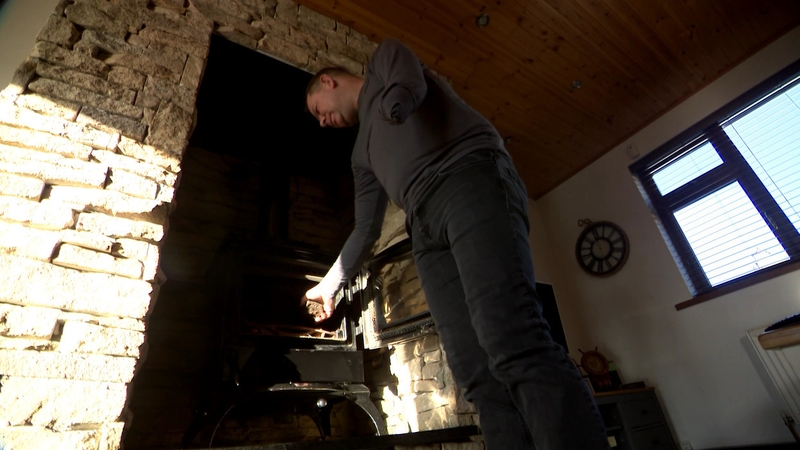

Life changed for David Digan in 2018 when a motorbike crash left him seriously injured.
"Nearly six years ago, I crashed my motorbike into a truck on the motorway between Athlone and Moate. I woke up a long time after that, not knowing what was going on or where I was," he said.
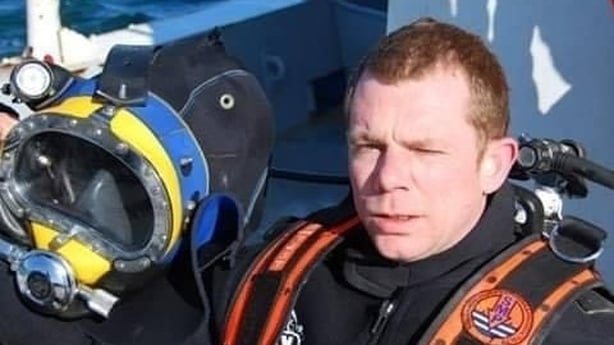
Mr Digan, who worked as a commercial diver, suffered a catalogue of serious injuries, including paralysis of his left arm.
He also broke his neck, several bones in his shoulder were shattered and sustained a brain injury.
"I spent two weeks in an induced coma in Tullamore hospital and then went on to spend three months there before being transferred to the National Rehabilitation Hospital in Dublin for another three months," he said.
Since the accident, Mr Digan has undergone a number of surgeries.
He had his arm amputated below the elbow and several procedures took place in the hope of regaining the use of the rest of his arm.
However, success has been limited and life since the crash has been difficult.
The father of one had to give up work and he deals with chronic pain on a daily basis.
"It has been hard. I've lost a lot of independence and I lost my career as a commercial diver. Everything really. It has been really tough," he said.
"I have chronic pain every day, phantom pain it's called. Basically the brain still thinks the arm is there and that there's something wrong so it's sending alerts and I'm in constant pain."
Despite the challenges he has faced in recent years, Mr Digan is not giving up hope of a better quality of life.
He is taking part in a trial in Vienna, Austria, which it is hoped will eventually see him get a robotic prosthetic and become the first person in Europe to undergo a procedure for a robotic arm prosthetic.
"My consultant, Kevin Cronin, in the Mater Hospital in Dublin, was telling me there was this new technology, a type of wire that was being made in Michigan and it was going to be brought to Europe. He put my name down for the procedure," Mr Digan said.
It involves surgeons in Vienna implanting sensors and wires into his arm that will be joined to the remaining muscles in his left shoulder.
The wiring will come out of the skin, connecting to a control unit that will control the robotic prosthetic.
"The osseointegration surgery on my forearm to secure the prosthetic by bone anchoring will take place first.
"The next step will be to connect the robotic prosthetic to the remaining muscles in my arm," he explained.
The hope is that the procedure will enable Mr Digan to rotate his wrist, as well as being able to open and close his fist.
"With this new technology, even though there's no nerves in my arm, they will use wire to substitute for the nerves," he said.
The first part of the trial was due to take place next month but has been delayed.
It is a small setback but Mr Digan and his family are focused on the outcome and hopeful it will relieve some of the pain that he endures.
"So a prosthetic hand connected to your nerves and muscles could help reduce phantom pain by reintroducing normal sensory feedback to your brain," he said.
"This feedback can restore disrupted neural pathways, allowing the brain to remap and integrate the prosthetic, reducing phantom sensations.
"So many people experience relief as the brain regains a sense of ownership over the limb, that's what we're hoping for," he added.

Ultimately he wants to get on with his life, which has been put on hold since the crash.
"I'm looking forward to being normal again and not waiting for appointments, hospitals and surgeries and thinking and over-thinking everything.
"You know, even the smallest things like cooking, getting dressed, cleaning, it will help with all that," he added.
Mr Digan is waiting for a new date from his medical team in Vienna.
"I'm excited and I'm nervous of course. I'm nervous as the previous surgery failed. That was no one's fault, it was just biology really, but I am excited too. I'm excited because other people might benefit from this too.
"I know plenty of people that are in the same situation as me and if they can see this and see what can be done and maybe there's an opportunity there for them too, that would be great," he said.
While the surgery itself is funded as part of the trial, he needs help to cover the travel and accommodation costs required for the treatments.
An online fundraiser has been set up that will allow him and his partner Avril to stay in Vienna for consultations, surgeries and recovery sessions.
We need your consent to load this rte-player contentWe use rte-player to manage extra content that can set cookies on your device and collect data about your activity. Please review their details and accept them to load the content.Manage Preferences