


Passengers who took a bus from Dublin Airport to Co Tipperary over the weekend may have been exposed to measles, the Health Service Executive (HSE) has warned.
The agency issued a health alert to anyone who travelled on the JJ Kavanagh bus from Dublin Airport to Clonmel on Saturday, following the discovery that a passenger on board had the highly contagious disease.
The bus, number 717, left the airport at 4pm on Saturday.
Public Health Measles Alert
— Department Public Health HSE Dublin & South East (@PublicHealthDSE) August 21, 2024
The Department of Public Health HSE Dublin and South East has been notified of a confirmed case of measles who travelled on JJ Kavanagh bus number 717 from Dublin Airport to Clonmel departing at 4pm on Saturday the 17th of August 2024.
Please read⬇️🧵 pic.twitter.com/D6jIqVOkut
"For any passenger on this bus journey who is a pregnant woman, immunocompromised, or under the age of 12-months-old please immediately contact your GP or hospital clinician for advice," the HSE said in a statement.
"This is because immediate treatment may be beneficial."
Passengers area asked to watch out for "signs and symptoms of measles for the next 2-3 weeks".
These include:
- Cold-like symptoms such as a runny nose, sneezing and a cough.
- Sore red eyes.
- A temperature of 38 degrees Celsius or above.
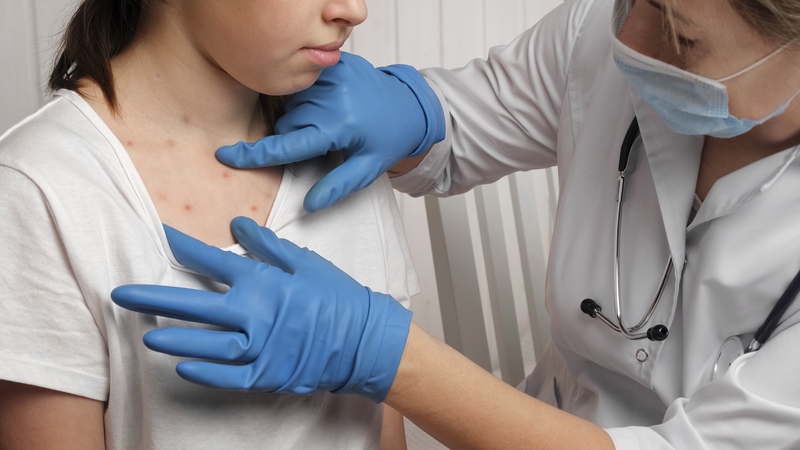
- Rash, which usually appears on head and neck first and spreads to rest of body.
Anyone who develops symptoms is asked to "stay at home in a separate room, and seek healthcare advice".
The HSE emphasises that the "best way to protect yourself and those around you against measles is with two MMR vaccinations".
Cases on the rise
There have been 86 cases of measles this year in the State, a HSE consultant has said.
"Measles are on the rise," Dr Sarah Doyle told RTÉ's News at One.
Dr Power is a consultant in public health medicine with the HSE in its Dublin and South East region.
She revealed that the agency has had great cooperation from JJ Kavanaghs in tracking down passengers.
"It's difficult to identify exactly who these people are, and to make direct contact. Where possible we do make direct contact."
The HSE continues to appeal for people to get their MMR vaccine, "and there is a National Incident Management Team coordinating that," Dr Power said.
Some people are still reluctant to get the vaccine, she said, despite the fact that it is effective and safe.
Those who were born around the time that Andrew Wakefield's now discredited research on the MMR vaccine was published are of particular concern.
WHO urges more vaccination
Measles cases are surging across Europe for a second year and are on course to exceed the already-high number recorded in 2023, the World Health Organization (WHO) warned in May.
It has called on countries to boost their vaccination efforts.
A total of 56,634 cases of measles and four deaths were registered during the first three months of the year in 45 of the 53 countries that make up the WHO European region, which includes Central Asia.
That is just 5,000 cases fewer than for the whole of 2023, when 61,070 cases and 13 deaths were reported in 41 countries.
It is also 60 times more than the 941 cases reported in 2022.
"Measles cases across Europe continue to surge, with the number of measles cases recorded for this year soon to exceed the total number of cases reported throughout 2023," the WHO said in a statement.
