


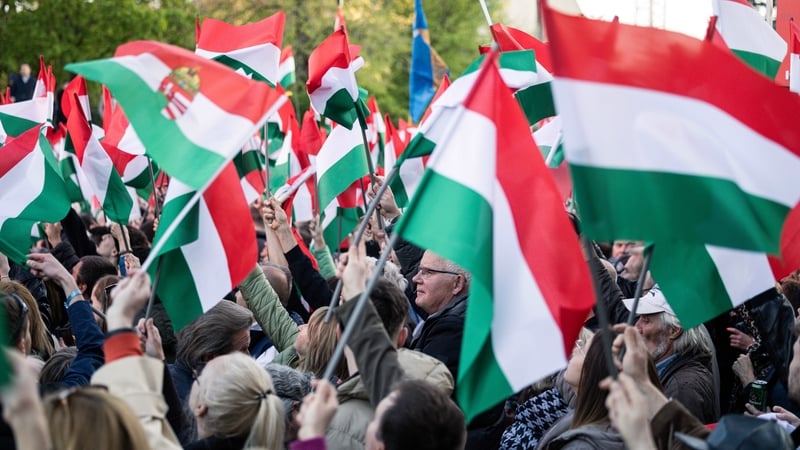
Hungarians will vote in closely watched parliamentary elections that could end nationalist Prime Minister Viktor Orbán's 16-year stint in power as a self-described "thorn" in the EU's side.
US President Donald Trump has thrown his weight behind the EU's current longest-serving leader, who maintains close ties to Russia.
The vote is closely followed abroad, particularly across the rest of Europe.
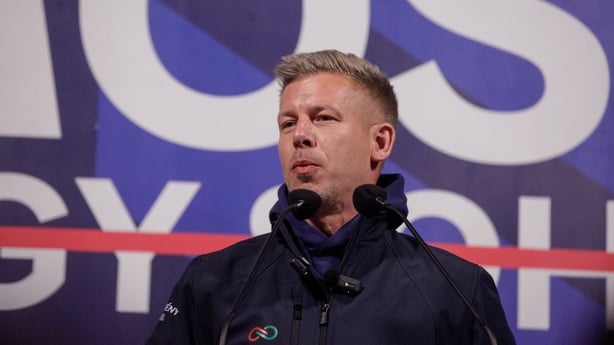
Opinion polls suggest that the party of pro-European conservative Peter Magyar - who has promised a "system change" - is running well ahead of that of Mr Orbán.
Both camps have made allegations of foreign interference during the campaign in the central European country of 9.5 million people.
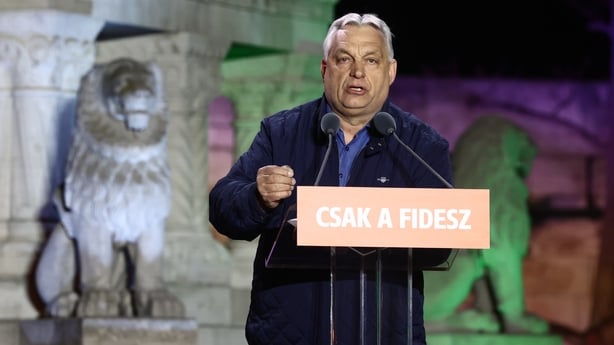
US Vice President JD Vance visited Budapest earlier this week to rally with Mr Orbán.
Mr Vance attacked the alleged interference in Hungary of "Brussels bureaucrats", and Mr Trump has promised to bring US "economic might" to Hungary if the party of Mr Orbán, a "truly strong and powerful leader", secures victory.
Mr Orbán, who is seeking a fifth straight term, has transformed his country into a model of illiberal democracy following Mr Trump in casting migration and "woke" values as a "civilisational" threat.
Former government insider Mr Magyar amassed support against the backdrop of economic stagnation, despite an electoral system skewed in favour of Mr Orbán's Fidesz party.
"This is a pivotal election. If Fidesz wins now, that will clearly mean ... a shift towards authoritarianism," Andrea Szabo, a senior research fellow at ELTE University's Centre for Social Sciences, told AFP.
"This is the last moment in which this process can be halted, and the pendulum can swing back in a democratic direction," she added.
Mr Orbán has increasingly locked horns with Brussels, which accuses him of quashing dissent and eroding the rule of law, and has frozen billions of euros in funding.
"Most member states would be quite happy to be rid of Orbán," one European diplomat told AFP, speaking on condition of anonymity.
"The patience has worn very thin," the diplomat added.
Criss-crossing the country since February, Mr Magyar has called on Hungarians to "take our homeland back" to confirm its place in the EU and promised to crack down on corruption and offer better services.
Hungary is seen as the most corrupt in the EU, together with Bulgaria, according to Transparency International.
"I think it's important that there really be a new era, a new, liveable Hungary," Daniel Pasztor, a pensioner, told AFP at a Magyar rally in Miskolc city in northeastern Hungary on Friday.
Mr Orbán, in turn, in his rallies has warned people to "not put everything at risk" and to "protect what we have achieved".
"It would be really bad for Hungary if (Magyar's party) Tisza win," said Attila Szoke, a 55-year-old taxi driver, at an Orban rally in Hungary's second largest city Debrecen this week.
Mr Orbán has focused on making Ukraine the centre topic of his campaign, portraying the neighbouring country, which is fighting off a Russian invasion, as "hostile" to Hungary.
He has also vowed to continue his crackdown against "fake civil society organisations, bought journalists, judges (and) politicians".
"Fidesz decided to run a purely negative campaign ... What they talked about was war, war, war" Ms Szabo said.
Close race
Polls open at 6:00am local time (5am Irish time) and will close at 7:00pm local time.
Analysts expect a record turnout of around 75%, exceeding the previous record of just over 70%.
Only five parties will be listed - the fewest since Hungary's democratisation in 1990 - after several stood down to bolster Tisza's chances.
The first preliminary results are expected soon after polls close, but if the race is close the winner might not be declared until ballot counting is completely finished next Saturday, according to the National Election Office.
While the opposition fears Mr Orbán may not recognise the election results, the nationalist leader has accused the opposition of "an organised attempt to use chaos" and "colluding" with foreign intelligence.
In the lead up to the vote, a flurry of accusations, counter-accusations and leaks surfaced, including recorded phone conversations causing EU-wide alarm about Mr Orbán's and his foreign minister's close relations with Moscow.
Several whistleblowers from police, military and other state authorities have also come forward to publicly accuse Mr Orbán's government of incompetence and influencing state institutions for political gain.
Reports have claimed an ongoing covert Russian disinformation campaign to help Mr Orbán stay in power, while a documentary has alleged his ruling coalition is engaging in massive vote-buying efforts in rural districts.
