Poland's government is currently posting 17 million copies of a 'Safety Guide' to every household in the country, explaining how to prepare for times of conflict and crisis.
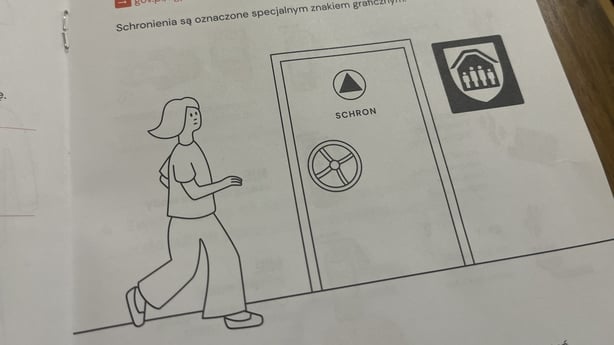
The 48-page booklet contains information on what to do in the event of an air raid, the kind of supplies to buy in case there is a long-term blackout, where to find your nearest shelter, how to administer first aid and the steps to take in the event of biological or nuclear threats.
"The war beyond our eastern border impacts our sense of safety as well," reads the opening page.
The booklet also includes pages for families to jot down a written evacuation plan, listing contact names and numbers and pre-arranged meeting points in the event of an emergency.
How to prepare for extreme weather events such as flooding is also covered.
Reading the printed booklet this week, my wife and I began compiling, almost instinctively, a list of items that families are advised to have stored at home: a wind-up radio and a roadmap of the country in the event of a digital blackout, extra power banks, non-perishable foodstuffs and enough bottled water for a minimum of three days.
All this may seem over-cautious but better to plan for something I hope never happens, than not plan at all, I thought.
A blackout, even a short one, during current nighttime temperatures of -10C would not be pleasant.
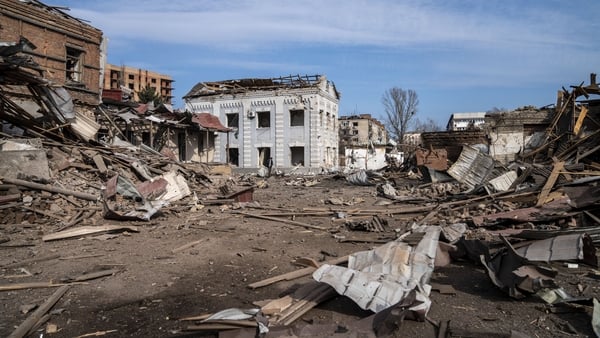
Residents of Kyiv and other Ukrainian cities know this reality only too well.
Few people are expecting war to engulf Poland, but hybrid threats to the country's critical infrastructure are prevalent.
Earlier this week, Poland’s digital minister Krzysztof Gawkowski revealed that the country’s power system was targeted by an unsuccessful large-scale cyber-attack in late December, and that Poland’s energy grid came close to a blackout.
Russian sabotage was to blame, he said.
Public discussion around the country’s ability to defend itself against hybrid threats and open conflict has ratcheted up since last September’s drone incursions from Belarus into Polish territory. Warsaw said Russia was responsible for those incidents.
And, in November, Polish Prime Minister Donald Tusk said that an "unprecedented act of sabotage" was responsible for an explosion that destroyed a section of the main Warsaw-Lublin rail line.
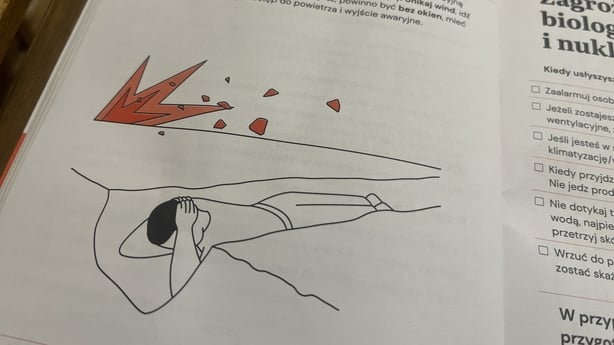
Poland is not the first European country to print this kind of warning manual.
In late 2024, the Swedish government posted its 'In Case of War’ booklet to all households, advising residents how to react if the country is attacked.
Finland and Norway have also published similar content for their citizens.
In Poland’s case, it is telling that the government prioritised posting the first batches of the 'Safety Guide' to residents of the country’s three eastern provinces (voivodships) that border Belarus, Ukraine and the Russian oblast of Kaliningrad.
I encountered a mix of surprise and pragmatism when I showed the booklet to people in Warsaw this week, many of whom had not received their copy yet.
One woman I spoke to, who did not want to be filmed, summed it up best when she described the booklet as "necessary but scary".