


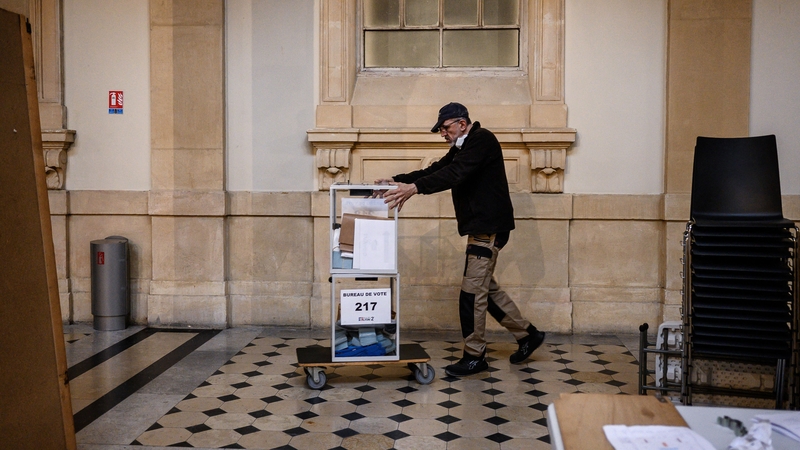
France is preparing for the first round of presidential elections that are projected to produce a run-off rematch between President Emmanuel Macron and far-right leader Marine Le Pen.
The result is predicted to be far tighter than their duel five years ago.
All further political activity by candidates was banned on the final day today before polls open in mainland France at 6am tomorrow, after a campaign overshadowed by Russia's invasion of Ukraine.
French overseas territories will begin voting earlier to take account of the time difference, starting with Saint Pierre and Miquelon off the coast of Canada this morning.
Territories in the Caribbean, the Pacific and finally the Indian Ocean will follow before polling stations open in mainland France.
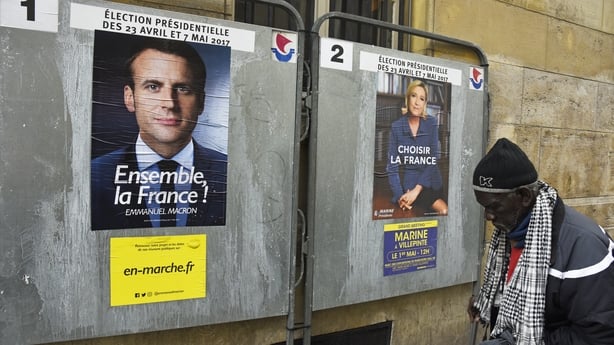
Polls predict that Mr Macron will lead Ms Le Pen by a handful of percentage points in round one, with the top two going through to a second round on 24 April.
But analysts warn that the outcome remains highly volatile with uncertainty remaining over turnout and some observers fearing a quarter of the electorate may stay away in a possible record boycott of the vote.
Far-left candidate Jean-Luc Melenchon is snapping at their heels in third and still fancies his chances of reaching the second round at the expense of Ms Le Pen or even - in an extraordinary upset - Emmanuel Macron himself.
Although her opponents accuse her of being an extremist bent on dividing society, Ms Le Pen has sought to show a more moderate image during the campaign.
President Macron by contrast has campaigned relatively little, by his own admission entering the election campaign later than he would have wished due to the war in Ukraine.
If Mr Macron and Ms Le Pen reach the second round as forecast, analysts predict that their clash will be far tighter than in 2017 when the current president thrashed his rival with 66% of the vote.
"There is an uncertainty ahead of the first round," said French political scientist Pascal Perrineau, pointing to unprecedently high numbers of voters who were still undecided or who had changed their minds during the campaign as well as absentee voters.
The stakes of the election are high for Mr Macron, who came to power aged 39 as France's youngest president with a pledge to shake up the country.
He would be the first French president since Jacques Chirac in 2002 to win a second term and thus cement a place in the country's history.
If he wins he would have a five-year mandate to impose his vision of reform which would include a crack at reducing the pension age in defiance of union anger.
He would also seek to consolidate his position as the undisputed number one in Europe after the departure of German chancellor Angela Merkel.
A Le Pen victory would however be seen as a victory for right-wing populism and send shockwaves across Europe and markets.
