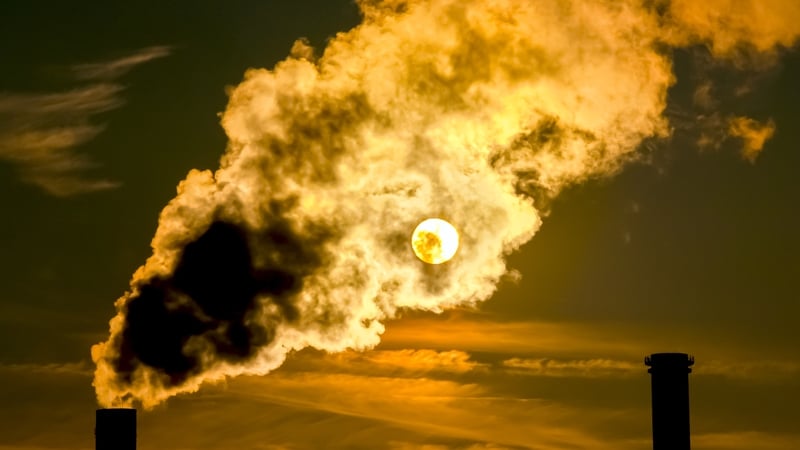

The World Meteorological Organization (WMO) has warned that the Earth's climate is more out of balance than at any time in observed history, as greenhouse gas concentrations drive the continued warming of the atmosphere and ocean and the melting of ice.
Launching its latest State of the Global Climate report, the WMO said these rapid and large-scale changes have occurred within a few decades but will have harmful repercussions for hundreds, and potentially thousands, of years.
The report describes a climate in a state of emergency with the Earth being pushed beyond its limits.
The level of carbon dioxide in the atmosphere is at the highest level in the last 2 million years, and methane and nitrous oxide in at least the last 800,000 years.
UN Secretary General Antonio Guterres said humanity has just endured the 11 hottest years on record.
He added that every climate indicator is flashing red, and when history repeats itself 11 times, it is no longer a coincidence but is instead a call to act.
At 1.43 degrees Celsius above pre-industrial times, 2025 was the second or third hottest year on record and triggered extreme weather events around the world.
Yet this record heat that is felt at the Earth's surface represents just 1% of the excess energy trapped by greenhouse gases.
Another 3% of the excess energy warms and melts the ice while 5% is stored in continental land masses.
The remaining 91% is stored in the ocean.
We need your consent to load this rte-player contentWe use rte-player to manage extra content that can set cookies on your device and collect data about your activity. Please review their details and accept them to load the content.Manage Preferences
The rate of ocean warming has doubled in the past two decades and every year for the past nine years has seen a new record set for ocean heat content.
The report says the amount of heat being absorbed by the ocean is equivalent to 18 times the annual human energy use each year for the past two decades.
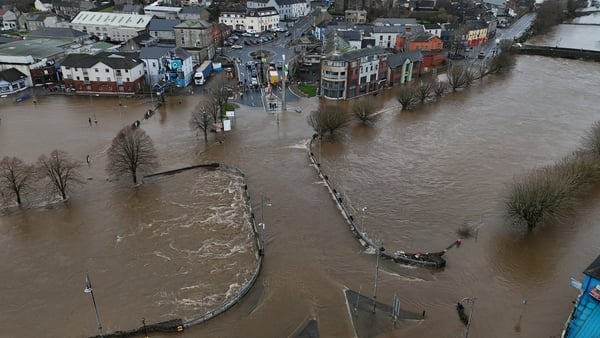
The warming ocean and melting ice are driving the long-term rise in sea levels which is accelerating.
This is damaging coastal ecosystems and results in groundwater salinisation and flooding.
Ocean warming also has far-reaching consequences, such as degradation of marine ecosystems, biodiversity loss and reduction of the ocean carbon sink.
It fuels tropical and subtropical storms and exacerbates ongoing sea-ice loss in the polar regions.
WMO Secretary-General Celeste Saulo said: "Human activities are increasingly disrupting the natural equilibrium, and we will live with these consequences for hundreds and thousands of years."
Extreme weather has cascading impacts on agricultural production.
Climate-driven food insecurity is now seen as a risk, with knock-on effects on social stability, migration and biosecurity through the spread of plant pests and animal diseases.
The WMO report also includes a focus on how climate change and heat impact human health and can amplify the risk of diseases.
It highlights dengue fever as the world's fastest-growing mosquito-borne disease, with about half the world's population now at risk, and cases at record levels.