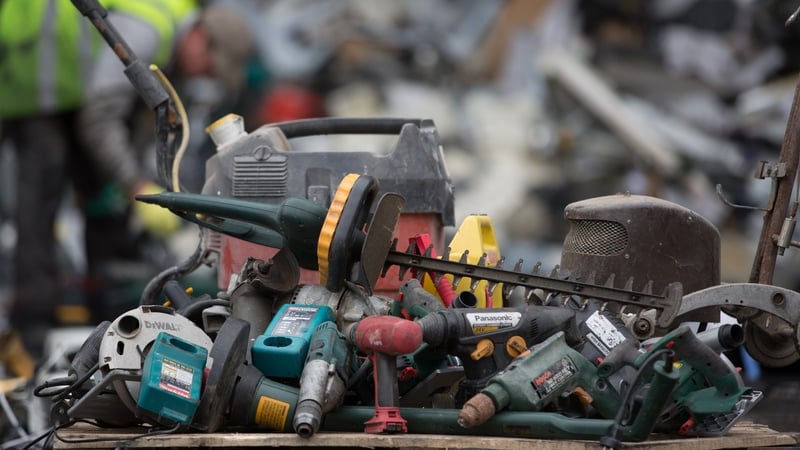

Plans to introduce a National Pilot Repair Voucher scheme are part of a newly-launched Circular Economy Strategy from the Government.
The strategy covers from this year to 2028 and the repair voucher scheme aims to reduce repair costs and increase the perceived value of used devices.
The scheme will be supported by the Circular Economy Fund and rolled out next year.
Behavioural studies have found that the price of repair can be the most important factor influencing a decision to repair consumer products.
The circular economy strategy also includes a commitment to introduce a new Digital Product Passport to help consumers make informed decisions about the products they buy.
This will focus firstly on textiles, furniture, tyres, and mattresses, providing information about the product's sustainability, circularity and regulatory compliance.
Circular economy is about preventing waste by keeping products, and the resources they contain, in use for as long as possible.
This requires reusing, repairing, and recycling wherever possible, as well as remanufacturing products and materials at the end of their life.
The new Government circular economy strategy document, titled 'Accelerating Action', was launched by Minister for Climate, Energy and the Environment Darragh O'Brien and Minister of State with responsibility for the Circular Economy Alan Dillon.
The overall aim is to increase Ireland’s Circular Material Use Rate by 2 percentage points each year, to ensure it reaches 12% by 2030.
Local authorities will be supported to develop reuse, repair, and recycling hubs nationwide.
The strategy document identifies and targets six key sectors for priority action.
These include construction, bioeconomy, retail, packaging, textiles, and electronics.
It commits to publishing a 'Circularity Roadmap for the Construction Sector' this year and agree a sectoral compact partnership between the Government and the construction industry to accelerate circular practices.
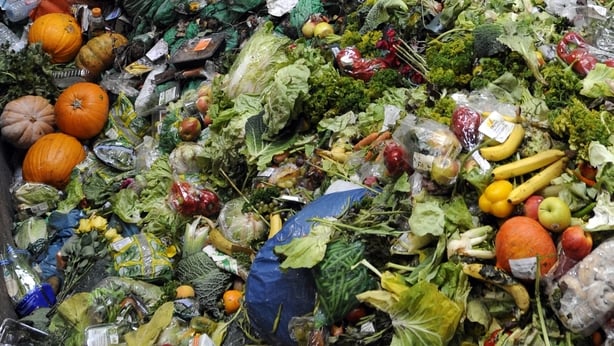
A new National Bioeconomy Strategy and Food Waste Prevention Roadmap will also be published this year to support sustainable biomass use. This will aim to cut food waste by 50% by 2030.
For the retail sector, the document promises greater support for repair, re-use and waste prevention, including Bring Your Own container options in food services starting next year.
The EU Packaging and Packaging Waste Regulation will be implemented. This will aim to achieve a 5% reduction in packaging waste by 2030, and 90% plastic bottle collection by 2029.
A National Policy Statement and Roadmap on Circular Textiles will also be launched this year with full and enhanced separate textile collection nationwide by 2030.
In addition, the EU Right to Repair Directive will be transposed into Irish law while an expansion of Ireland's repair and remanufacturing sector is promised.
Minister O'Brien said: "Every tonne of material that's reused, every product that's repaired rather than replaced, represents carbon that never needs to be emitted.
"That is the power of the circular economy. This strategy sets out how we will harness that power - through innovation, investment, and collaboration."
Minister Dillon said: "This second Circular Economy Strategy places innovation, enterprise, and people at the heart of climate action - cutting waste, creating jobs, and reducing costs for households and businesses.
"Implementation of this strategy will show that circularity is not an abstract idea but a practical, economic, and achievable way forward - one that helps families and businesses get better value, while strengthening Ireland’s competitiveness and resilience."