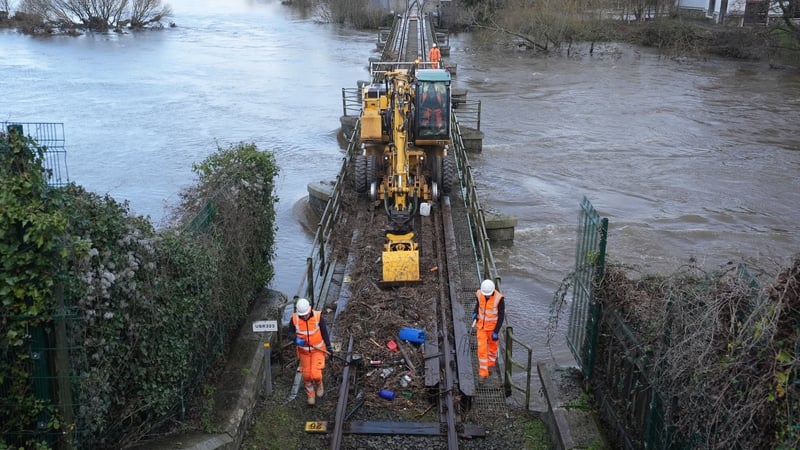

A rapid study of Storm Chandra by climate scientists has found it was the accumulation of rainfall over seven days, including on the day of the storm, rather than the amount of rainfall during the storm, that caused the flooding to be so devastating.
It also found the likelihood of experiencing a similar seven-day amount of rainfall is three times more likely now because of climate change.
The rapid weather attribution study was carried out by climate scientists at the ICARUS Climate Research Centre in Maynooth University, and at Met Éireann.
It says the amount of rain that Storm Chandra brought was not particularly remarkable, with very little change in the likelihood of experiencing a similar one-day event.
However, it was saturated soils and high rivers after several days of high rainfall in advance of the storm that transformed what they say was "otherwise uninteresting rainfall" into a devastating flooding event.
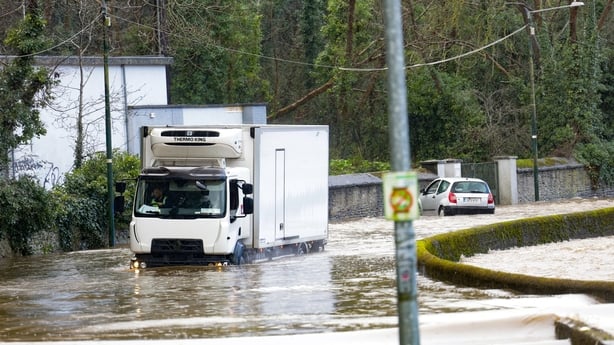
The report highlights that soils have been consistently saturated since early autumn in the east of the country, reflecting very wet and winter conditions.
This meant the environment was primed for potential flooding, and that is what made the storm's impact so unusual, according to the scientists.
Focusing on the seven-day accumulated rainfall, the report says precipitation amounts in Ireland have increased by 9% since pre-industrial times.
In such a pre-industrial climate, it said one might have expected to experience the amount of rain that fell over the past seven days about once every 150 years.
Now however, because of global warming, it will happen about once every 60 years.
The report says that increased rainfall amounts on longer time scales suggest an increased likelihood of soils reaching water capacity in the future.
This means relatively innocuous rainfall associated with winter storms could have more negative effects if it coincides with waterlogged soil.
Read more:
Follow live updates
Vigilance urged amid rainfall warning for 13 counties
Dr Claire Bergin, Researcher for the WASITUS project at the ICARUS centre, said studies show rainfall events in Ireland are becoming heavier, with more rain falling.
"When this is combined with already saturated soils and high rivers there is nowhere else for the water to go, other than to flood on the surface," she said.
Dr Bergin added that the increase in rainfall is directly linked to excess climate pollution caused by humans.
"Not only do we need to shore up flood defences. We also need to reduce global warming," she said.
Fellow author Lionel Swan of the ICARUS centre said it is particularly concerning that it is no longer necessary to experience a remarkable single-day rainfall extreme for it to cause devastating effects.
"As we continue to warm the planet, we are seeing evidence that longer duration rainfall events, such as the seven-day accumulation shown in our study, are becoming far more intense and frequent, leading to a greater flood risk," he said.