
A new report from the Sustainable Energy Authority of Ireland (SEAI) says that although energy related emissions in Ireland have fallen by 16% since 2018, the country has not broken the link between economic growth and fossil fuel use in a meaningful way.
The SEAI says Ireland needs to double down on decarbonisation, especially in transport, which is still 93% powered by fossil fuels.
Ireland is legally obliged to cut greenhouse gas emissions by 50% by 2030.
SEAI Energy in Ireland 2025 report notes total energy-related emissions have fallen to the lowest level in over 30 years.
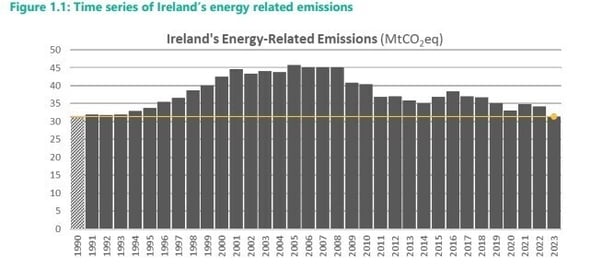
This has been despite a 10% growth in the population, 18% growth in electricity demand, and strong growth in the economy.
However, it warns this is not enough to achieve the 2030 targets.
The average fall in emissions is just 2.7% per year but needs to be 5% to reach the target.
Read the report in full here
Heat pumps
The SEAI says the key levers for faster progress include more wind and solar, heat pumps, home energy upgrades, expanded public and active travel, district heating and a strengthened electricity grid.
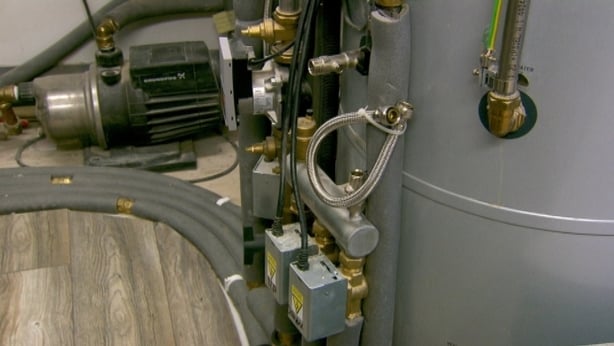
The report shows that heat pumps in Ireland delivered more renewable energy last year than all solar farms and rooftop solar panels combined.
Greenhouse gas emissions from transport are down 5.3% compared with 2018.
That is an average of 0.9% per year which is well below the reduction rate needed to stay on target.
SEAI says a significant shift from private car use to active travel and public transport is needed, particularly for shorter journeys.
It notes that positive progress has been made in public and active transport infrastructure, with the rollout of cycleways, Local Link, BusConnects, and the sign-off of DART+ and the Luas extension.
It says this investment needs to continue with the delivery of further projects, including the long-awaited MetroLink.
The biggest and fastest reductions in greenhouse gas emissions have been delivered by the electricity generation sector.
We need your consent to load this rte-player contentWe use rte-player to manage extra content that can set cookies on your device and collect data about your activity. Please review their details and accept them to load the content.Manage Preferences
The phasing out of peat, coal and significant volumes of gas-fired electricity, have all been made possible through increased renewable generation as well as an increase of almost 55% in net imports of electricity from the UK last year.
The data shows that Ireland imported net 10% or more of its gross electricity supply in 23 of the 24 months between October 2023 and September 2025.
In June 2025, net imports accounted for almost one quarter of Ireland's utility-scale gross electricity supply.
In May 2025, net imports accounted for more electricity supply than was generated by wind.
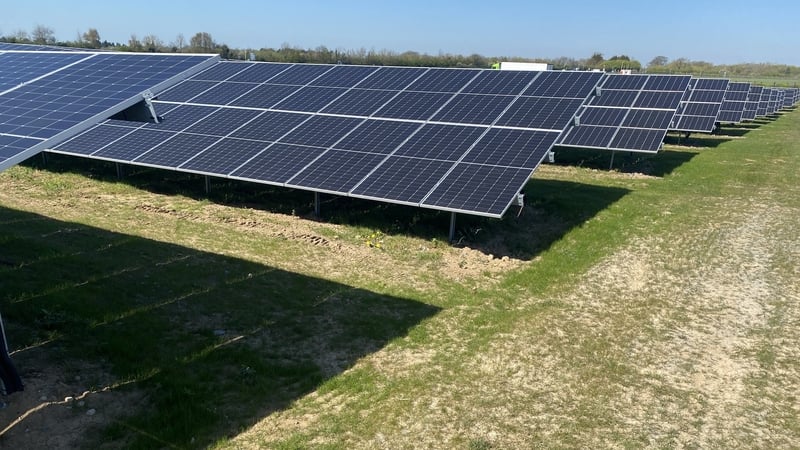
The report highlights the rapidly growing impact of solar farms and rooftop solar panels which delivered a 70% increase in solar electricity last year.
Overall, 41% of electricity now comes from wind, solar, and other renewables.
The report highlights that by moving away from fossil fuels, Ireland is moving towards a more secure, healthier, more competitive economy and society.
SEAI Chief Executive William Walsh said everything Ireland wants to achieve flows from the energy it uses, and today's results show what is possible.
"We're making progress, and by accelerating delivery - in grid investment and offshore wind infrastructure in particular, we can do a lot more to secure affordable energy for homes and businesses across Ireland," he said.
"Our National Retrofit Programme upgraded around 60,000 homes this year, making them warmer and more comfortable to live in, while also helping with energy bills," he added.
Data centres
Ireland's electricity demand has grown every year for the last decade, and data centres have been the key factor driving the extra demand.
They have been responsible for 88.2% of the increase in electricity used in Ireland’s between 2015 and 2024.
Last year alone electricity usage by data centres was up 10%.
They now account for 21.2% of all electricity demand in Ireland.
This is a seven times greater proportion than the EU average, which according to the European Commission, is 3%.
Speaking on RTÉ's Morning Ireland, Mr Walsh said: "We have a significant amount of opportunity that exists with data centres in terms of waste heat.
"So, we have an opportunity there to deploy district heating networks."
Mr Walsh said the regulator issued guidance or regulation around future connections to data centres, putting new requirements in for them, which he described as helpful in terms of their impact and their capacity to support the grid and support the electricity system.
"There will be a requirement for energy across the system. There's demand for energy, for housing, for economic growth and for data centres.
"So, what's important is we take a strategic view as to how we grow our energy demand," he added.
Without the growth in data centres, net electricity demand in Ireland would have been relatively constant, up only about 5% over the past nine years.
Including the data centres however, the overall growth in annual electricity demand over the past nine years in Ireland has been about 27%.
2015 was the first year for which the CSO publish metered electricity consumption of data centres.
Mr Walsh said one of the reasons why our emissions have been reduced is because we have interconnection.
"Interconnection is a very healthy thing to have in an energy system and we're fortunate to have European partners, indeed the UK, to interconnect too.
"But there's also significant elements of renewables that have been installed on our electricity grid in the form of wind and solar that have led to those reductions as well," he said.