After more than three weeks of campaigning, seemingly endless hours of debating of the issues and dozens of babies kissed and cuddled, the finish line for hundreds of candidates in 39 constituencies around the country is hoving into view.
Here at Campaign Daily, we've been taking a look back at the key points and some of the memorable moments of the campaign in Election 2020.
To change or not to change
This has been the overarching defining theme of the election. Sinn Féin, pitching itself as the true agents of change, juxtaposing the party against its two big rivals, who between them have governed either alone or in coalition since the establishment of the State.
Fianna Fáil presented itself as the party that can take back control of an improving economy and make sure that the benefits are felt by a wider cohort of society.
And Fine Gael, loosely posing the question - "do you really want to give control of the economy back to that lot?" Leo Varadkar in his pre-prepared debate zinger, summed the party's view by saying: "It would be like asking John Delaney to take over the FAI again in nine years time."
We need your consent to load this rte-player contentWe use rte-player to manage extra content that can set cookies on your device and collect data about your activity. Please review their details and accept them to load the content.Manage Preferences
The issues that failed to get a look in
Fine Gael hoped that in some regards the election would be a referendum on its handling of Brexit. That was clear from the ministerial lineup it was keen to push out at every opportunity. Simon Coveney, Paschal Donohoe, Helen McEntee and Heather Humphreys - all closely associated with the Brexit negotiations - featured prominently throughout.
The party was keen to emphasise that we're only at "half time" when it comes to Brexit, and to change the team now would be a highly risky strategy. Not so, said Fianna Fáil; the entire team in Europe has changed in the last few months and the process goes on seamlessly.
The Green Party hoped this would be the climate change election. And given the high profile billing the issue got in the run into the campaign - with Climate Change activist Greta Thunberg stealing the limelight at the World Economic Forum - they had very good reason to believe that it would be to the fore in voters' minds.
However, just 6% of people polled by Ipsos MRBI for the Irish Times said climate change should be a priority for the next government - just 3% opted for Brexit.
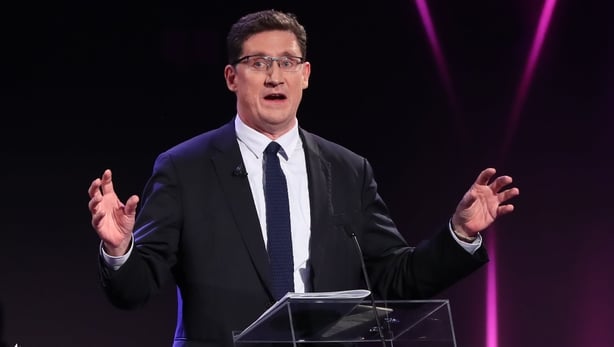
The Greens, nonetheless, have been polling consistently throughout the campaign and they're expecting a Green Wave to wash in over Ireland, coming predominantly from the West where Eamon Ryan is expecting seat gains for what he referred to as the party's 'Wild Atlantic women.'
Don't offend your leader
One of the standout moments of the campaign was arguably Catherine Noone's spectacular foot-in-mouth moment.
A Fine Gael candidate for Dublin Bay North, Ms Noone was recorded by The Times newspaper describing the Taoiseach as "autistic" while summing up his performance during the first TV debate of the campaign. She immediately apologised to Mr Varadkar, and to those who have autism, and blamed tiredness for her comments.
The Taoiseach accepted the apology and in some ways turned the situation to his advantage, making it about people with autism rather than being about him. "I just think that we all need to be very aware and very respectful of people who have autism, people who are on the autism spectrum and we need to understand that those terms should never be used," he said.
The polls
Normally fodder for political anoraks, opinion polls come into their own during election campaigns, and this campaign has produced some genuine cliffhangers. Politicians love to tell us that they're just a "snapshot in time", but in reality they're taken incredibly seriously by the parties, to the extent that they consistently carry out their own internal polling.
The story of the opinion polls in Election 2020 has been the rise and rise of Sinn Féin. The party's support base - as captured by the polls - went from 11% in the Red C poll for the Business Post to 19% as soon as the campaign got under way. It then rose to 24% - level with Fianna Fáil - in that same series of polls. A later Ipsos MRBI poll for the Irish Times suggested support for Sinn Féin was at 25% - making it the most popular party in the State for the first time since the party re-entered the Dáil with the election of Caoimhghín Ó Caoláin in 1997.
The smaller parties performed consistently in the polls. Labour, who hope to have a role role as king maker in the next government, failed to get the bounce that they might have expected.
However, as party leader Brendan Howlin repeatedly says, the party tends to perform better in terms of seat numbers than the polls suggest. The Social Democrats - despite staying below 5% - are also hoping to confound expectations adding seat numbers in this election. And Solidarity-People Before Profit have been consistent in their message that half of voters won't vote for either Fianna Fáil or Fine Gael. It's appealing to the electorate to vote for 'progressive left wing parties.'
The debates
Sinn Féin's standing in the polls, together with a number of other factors, saw RTÉ changing its position on confining the Prime Time Leaders' debate to just Leo Varadkar and Micheál Martin. Mary Lou McDonald was invited to take part.
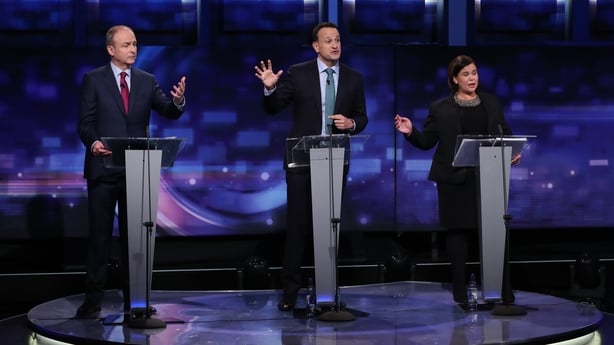
A sure-footed performer, Ms McDonald was not concerned about taking on either of her opponents, but the question hangs as to whether a true victory for her and her party would have been her exclusion from the debate. In many ways, it was hers to lose. Ms McDonald's performance was strong, but a question as to what her party colleague in the North, Conor Murphy, had said or didn't say regarding a man who was viciously beaten to death more than 12 years ago dominated the campaign in its closing days.
Asked about comments made by Sinn Féin MLA Conor Murphy after the murder of Paul Quinn, @MaryLouMcDonald says Mr Murphy apologises for those remarks, he withdraws them, and will speak directly to Paul Quinn's mother and family | Live #GE2020 blog: https://t.co/mjahvjVWlx #rtept pic.twitter.com/f6tEkJ2R8H
— RTÉ News (@rtenews) February 4, 2020
Another debate on Virgin Media was memorable for the tone set by one of the presenters who accused the seven party leaders in front of him as being a "bunch of charlatans and chancers" and characterising their spending plans as "dishonest."
The Irish Times described the debate as "suffering an identity crisis: it couldn't decide whether it wanted to be Love Island or Fight Club."
Indeed, it was as entertaining as either, but the debate generated more heat than light.
The silences
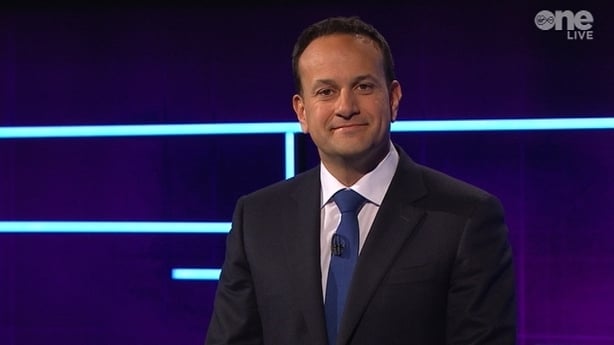
Amidst all the shouting and some ill-tempered debating, there were two long silences that made memorable moments in Election 2020. The first came courtesy of Leo Varadkar. When asked by Pat Kenny on Virgin Media television about his personal drug consumption, he paused for an uncomfortably long time - all of 12 seconds - before he referenced a previous interview he had carried out with Hot Press magazine in which he admitted to having taken drugs at college.
The second silence to puncture the noise of the campaign came in a last minute interview with Fianna Fáil leader Micheál Martin on Newstalk. Talking to Ivan Yates, he was asked to describe Leo Varadkar in one word.
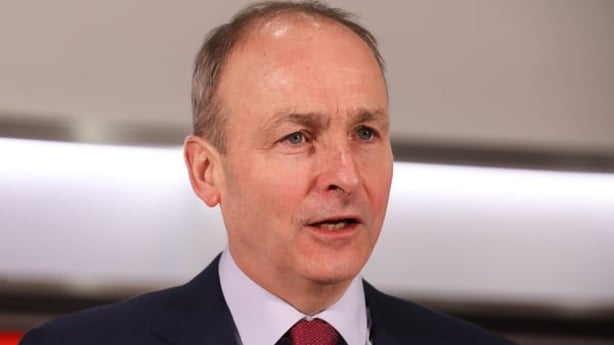
After approximately 30 seconds of pondering - interrupted by a few oohs and ehms - the Fianna Fáil leader landed on the word "spin".
Fair?
The electorate will get the opportunity to cast its verdict tomorrow.