


"A time of national stocktaking, as well as for trying to look ahead into the mists of the future."
That was how Taoiseach Seán Lemass described 50th anniversary commemorations of the Easter Rising in 1966.
Fifty years on – as we fast approach the Easter 1916 centenary commemorations – Lemass's line still holds some truth in the context of Election 2016.
It is a time for national stocktaking after the worst economic crash in the State's history – and a time for looking to the future.
By Conor McMorrow, RTÉ Political Staff
Fine Gael and Labour continually remind us that they were at the helm when Ireland exited the Troika bailout and a litany of economic indicators now point towards recovery.
They will use the campaign to tell the electorate it has a choice between "economic stability" and the "chaos" that would ensue should any of the Opposition parties seize power.
The Opposition parties will argue that, so far, the recovery has been unequal. It has not been felt across the large swathes of society that have been wounded by austerity policies.
They will point to the water charges debacle, the housing crisis and ongoing difficulties in the health service as blotches on the Coalition copybook.
The 31st Dáil returned on Wednesday 13 January for the last time. Political observers will have noticed the life went out of the place many months ago as most politicians’ focus switched to Election 2016.
It is five years since the watershed election of 2011 when, for the first time, Fine Gael returned as the largest party, Labour the second largest and Fianna Fáil was reduced to a rump of just 20 TDs.
Five tumultuous years on and the tectonic plates on which Irish politics are grounded have moved again. So here is a look at the political scene ahead of Election 2016…
A changed political landscape
Last time around, Fine Gael won 76 seats on the back of 36% support. The party has crept over the all-important 30% mark in opinion polls of late and is hoping to capitalise on positive economic indicators such as job creation.
There are murmurs among some party figures that it could tag on another four to five percentage points in the campaign. That would signify a very good election.
Fine Gael’s coalition partners in Labour are scratching their heads a little as they do not appear to be reaping the benefits from all the positive economic news.
With 19% in 2011, the "Gilmore Gale" brought in 37 TDs. Fluctuating between 6% and 10% in opinion polls for the last few years, Labour looks poised for widespread seat losses – barring a resurgence in the campaign.
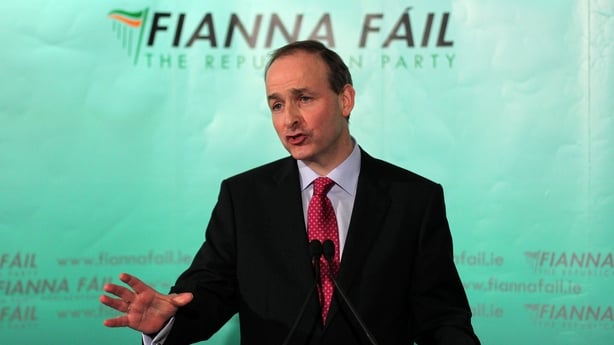
Fianna Fáil’s support collapsed in 2011 to just 17% and 20 Dáil seats. The party's support had imploded from over 40% and 78 seats in 2007.
However, Fianna Fáil won the most amount of seats to become the largest party in local government after the 2014 local elections.
This should bode well for Election 2016 but the party still has serious issues rebuilding in Dublin and a Red C/Sunday Business Post opinion poll from December 2015 saw the party stand at 17% – the same as the general election result in 2011.
Fianna Fáil’s recovery – if it is to happen – has been stymied in no small part by the rise of Sinn Féin. Gerry Adams was among his party’s 14 seat winners in 2011 on the back of 10% of the vote.
Strong performances from figures such as Mary Lou McDonald, Pearse Doherty, Peadar Tóibín and Pádraig Mac Lochlainn have contributed to opinion poll showings of above and below the 20% mark.
A gain of ten seats appears to be within the party's reach in Election 2016.
One of the most striking changes to the political landscape over the past five years has been the rise in support for independent candidates.
Disenchantment with the traditional parties has seen Independents generally garner between 25-30% support in opinion polls.
A disparate group of Independent candidates consisting of TDs such as Finian McGrath, Shane Ross and John Halligan have come together under the Independent Alliance umbrella for this election.
Some "hard Left" candidates will contest Election 2016 under the Anti-Austerity Alliance-People Before Profit banner.
This group has grown, over the last five years, on the back of public anger over the housing crisis and "austerity measures" such as the introduction of domestic water charges.
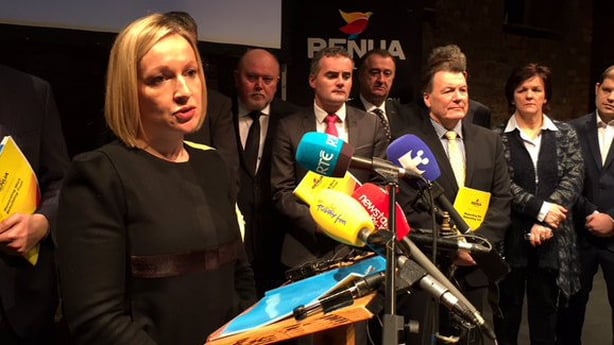
Former Fine Gael minister of state Lucinda Creighton – along with ex-Fine Gaelers including her husband Senator Paul Bradford and TDs Terence Flanagan and Billy Timmins – set up a new party called Renua Ireland in March 2015.
Like Renua Ireland, another new party – the Social Democrats – will contest its first general election this spring. In what must be a first in Irish politics, the party, which was founded in July 2015, has a shared leadership of three TDs – Catherine Murphy, Stephen Donnelly and Róisín Shortall.
Following the wipeout of all of its TDs in 2011, former cabinet minister Eamon Ryan will lead his Green Party into Election 2016 with the best chance of a seat being in Dublin Bay South.
Fewer seats
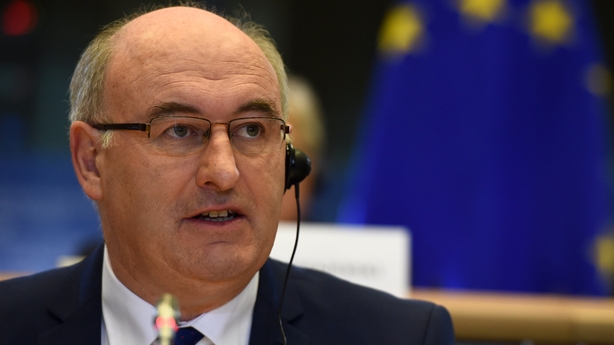
Current EU Agriculture Commissioner Phil Hogan's tenure as environment minister may forever be associated with the water charges debacle but he is also responsible for fewer seats being up for grabs in this election.
In May 2011 he unveiled plans to reduce the number of TDs in the next Dáil.
The independent Constituency Commission decided to cut the number of seats from 166 to 158.
The commission’s 2012 report found that any greater reduction would bring the ratio of Dáil members to population close to the constitutional limit of 30,000 per member.
Fewer constituencies
There were 43 constituencies but this has been reduced to 40. The changes recommended for Dáil constituencies by the 2012 Constituency Commission report mean that the number of five-seat constituencies, at 11, remains unchanged but that the number of three-seat constituencies will be 13 instead of 17 and the number of four-seat constituencies will be 16 instead of 15.
The 11 constituencies that remain unchanged for Election 2016 are: Carlow-Kilkenny (five seats), Clare (four seats), Longford-Westmeath (four seats), Cork East (four seats); Cork South West (three seats), Dublin Mid-West (four seats); Louth (five seats), Meath East (three seats), Meath West (three seats), Wexford (five seats) and Wicklow (five seats).
But the commission made historic changes in a few major constituencies, meaning there are no longer two Kerrys, two Donegals and two Tipperarys.
For details on all the boundary changes, click here.
