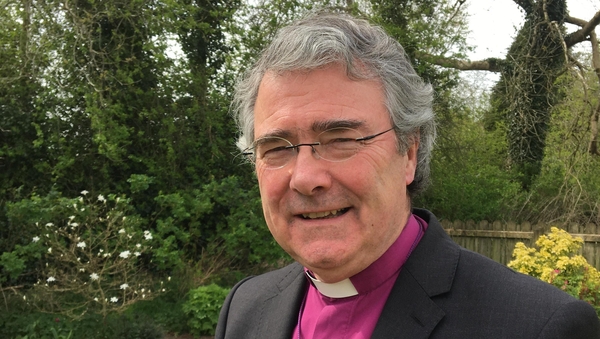

The narrative on Catholic schools is "ill-informed and false", according to the Catholic Bishop of Meath.
Bishop Tom Deenihan has said the "discourse" on Catholic schools depicts them as "grim places of indoctrination" that children are "forced to attend" by Church and State.
The Catholic Bishop of Meath, who is chair of the Council for Education of the Irish Bishops' Conference, was speaking at the 50th anniversary celebration of St Oliver's primary school in Navan.
Bishop Deenihan said that rather than focusing on well supported schools that are "genuinely inclusive" the discourse and narrative was "ill-informed and false".
The Bishop's comments come two weeks after the results of a national survey by the Department of Education and Youth were published.
It showed that 40% of parents of children attending Catholic or other religious denomination primary schools, would prefer their child to attend a multi-denominational school.
Of those who participated nationally, 60% of parents in denominational schools wish to retain that ethos.
Bishop Deenihan said various groups, supported by funding from ideological philanthropical entities - mainly, he said, from outside the State - continue to lobby politicians and media with "a rather narrow, nuanced and distorted narrative".
We need your consent to load this rte-player contentWe use rte-player to manage extra content that can set cookies on your device and collect data about your activity. Please review their details and accept them to load the content.Manage Preferences
"We have had the survey on divesting. We have achieved a result. Granted, it is not the result that some predicted or would have wished for.
"But democracy, maturity, pluralism, respecting parental choice and even inclusion itself, demand that we accept the result of that survey," he said.
St Oliver Plunkett school has almost 400 pupils from 12 different denominations, as well as non-faith backgrounds. 40% of the school's parents were not born in Ireland. Bishop Deenihan is patron of the school.
He said the school welcomed and catered for all students and "strives to make Jesus known and loved", and recognised that its students were "made in the image and likeness of Christ".
He cited St Oliver's as an example of a Catholic school that welcomed all local students - caring for them, allowing them to reach their full potential and catering for many and varied needs.
Catholic schools account for more than 90% of all primary schools across the country.
Two weeks ago, when it published the survey results, the Department of Education described the level of engagement from 41% of all households with children of primary school-going or pre-school children as exceptionally high.
However, the Bishop of Meath noted that 60% of parents did not participate in the survey, which he said suggested "a greater likelihood" that most of these would also be satisfied with the status quo, because he said those who want change are more likely to vote.
Parents were asked for their preferences regarding school ethos, and also whether they wanted education through English or Irish, or single-sex or mixed.
The preliminary findings, published on 7 April, related only to responses received from the parents of children currently enrolled in primary school.
The remaining findings from the department are much anticipated.
A school divestment programme, aimed at reducing Catholic Church patronage to increase multi-denominational education, which has the support of Catholic Bishops, has been under way for a number of years.
The aim is to reach 400 multi-denominational schools by 2030, but only a small number of schools have transferred to date.
Acknowledging that there had been shameful atrocities, the bishop said independent and reputable research had indicated that Catholic schools are the most inclusive.