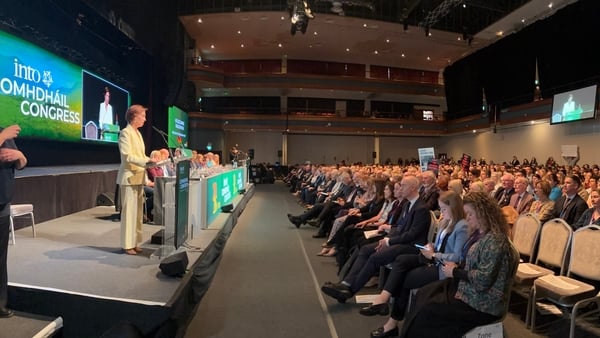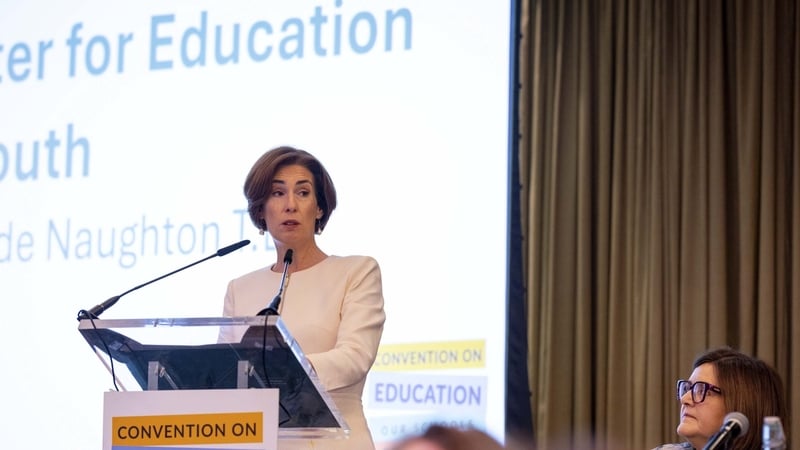

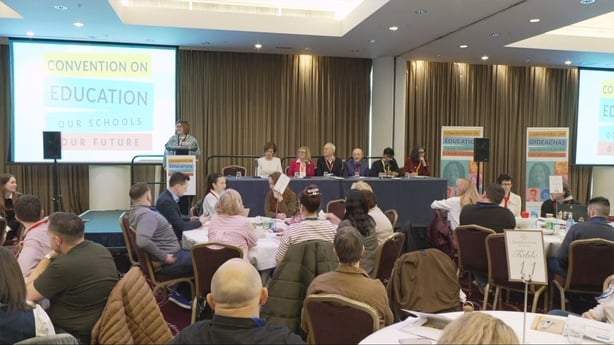
A national convention on education is holding its first sessions in Athlone, Co Westmeath, this weekend.
More than 30 years since the last convention of this kind was held, recommendations arising from the convention will contribute to the development of education policy for the decades ahead.
One hundred and fifty people have been chosen from the general population to sit as members of the convention. They were drawn from 5,200 people who applied and include 32 students - between eight and 24 years of age.
The last convention on education took place in 1993.
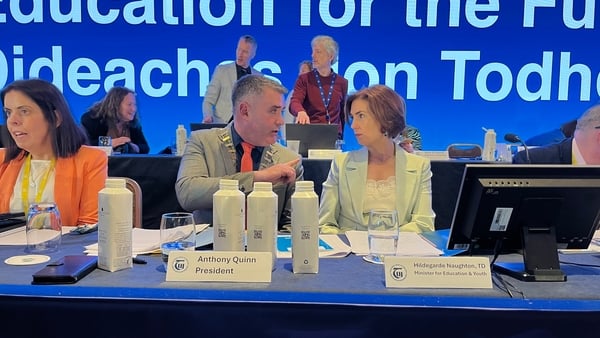
"That was before Riverdance," Minister for Education and Youth Hildegarde Naughton reminded members as she addressed them this morning. "We had no Facebook, no Snapchat or TikTok. We didn't have smart phones or mobile phones", she added.
"We were monolingual for the most part, and we were monocultural," convention chairperson convention Professor Anne Looney said.
Prof Looney said the makeup of this convention is very different to the last one, when all participants were people working within the school system or members of education organisations, and there were no students.
"This time we have the full range of people in the room. We have children and young people with special needs. We have children and young people who are the children of immigrants. We have parents from a whole range of cultural and ethnic backgrounds. [Convention members] represent the Ireland that we have and they're looking to design the system that will match that Ireland into the future", she said.
The convention will produce a report with recommendations for the minister and for the Government.
Prof Looney said the Government had committed to a follow-up strategy. "I’m very optimistic that the work that these people will do will make a difference to the school system," she said.
"We are living in a very different world and we need to be able to imagine what the education system will look like out to 2050 and beyond," Minister Naughton said, adding, ""and it’s so important to have the voices of young people.
"I and my department are working on a longer-term strategy for education and the outcome of this convention [will be] a set of recommendations that I and the Government will consider."
While educational disadvantage was a central focus of the last convention 30 years ago, Prof Looney predicted that inclusion would be important issue for this one.
Calling the opening of the convention "a historic moment", Minister Naughton said: "It’s a once in a generation opportunity for us to really imagine what our education system should look like."
The convention was shown the findings of an online survey, as well as meetings conducted by the department with students, parents and school staff.
42,568 people responded to the survey.
Concern around a system with too strong a focus on exams or points emerged as the top issue for students, with 47% who responded highlighting this.
Other top student concerns were 'feeling lonely or disengaged', and the volume of content on the curriculum, with 41% of student participants in the survey noting these.
Among parents and school workers the top issue was that of supports for students with additional needs, with 35% and 48% respectively highlighting the issue.
Speaking as the convention, INTO said it was eager to ensure that both the urgent and long-term priorities of its members were articulated.
"This includes the immediate need to reduce class sizes and invest in inclusive education through adequate training, resources and support measures to boost special education and tackle disadvantage", its president Anne Horan said.