
Disability organisations have strongly criticised the Department of Education for failing to consult with them before making changes to how special education teacher hours are allocated to schools.
Last month, the department told schools that the number of pupils in a school who have complex needs would no longer be a criteria for calculating the level of additional teaching hours that schools require.
Children with complex needs are typically those with autism or a disability such as Down Syndrome.
The decision has been met with great concern by the families of children with complex needs as well as by primary school principals.
This morning, Adam Harris of autism charity AsIAm told the Oireachtas Committee on Education that the decision had been made without any forewarning, engagement or consultation with families or the organisations representing them, and that the previous allocation model, which was based on policy advice from the National Council for Special Education (NCSE), had been "deviated from behind closed doors".
He said the lack of consultation with those "who must be at the heart of decisions which affect them" had led to a communications crisis for families, with schools telling them as a result that they can no longer be assured of a place for their child come September.
AsIAm, along with Down Syndrome Ireland and Integration Ireland, have asked the Department of Education to pause implementation of the model, but the Department of Education has declined to do so.
Mr Harris said the Department's contention that the change was necessary because HSE data on children with complex needs was incomplete, amounted to "asking children to conform to a broken system" when it should be the other way around.
He said the charities acknowledged that the Department was not removing resources, but he said increased investment was not keeping pace with what was needed.
'Potentially devastating effect'
Fidelma Brady of Down Syndrome Ireland told the Oireachtas Committee on Education that her organisation was "gravely concerned" by the changes which "will have a potentially devastating effect on many pupils with Down Syndrome and their educational attainment".
Outlining the multi-faceted nature of the needs of children with Down Syndrome, which stem both from their intellectual disability but also their chromosomal disorder, Ms Healy said many pupils with Down Syndrome "will not thrive if their complex needs are not addressed".
She said the majority of those children now attend their local primary schools, but since last month’s announcement of the change in the allocation model "many parents are now expressing their concern and their intention to move their child into a special school".
She said children with Down Syndrome had a right to be educated in their local school and it was not unreasonable to expect that additional resources would be provided.
Fidelma Healy said her organisation was also "concerned and disappointed with the complete lack of consultation".
"Had we been involved, the concerns we are raising today would have been raised then and we would not now be in a position where parents are urgently contacting their local representatives in an attempt to safeguard their children’s futures," she said.
'Obligation to consult with the people'
Derval McDonagh of Inclusion Ireland said the content of the circular issued last month was not compliant with the UN Convention on the Rights of People with Disabilities, to which Ireland is a signatory.
She said the state had an obligation to consult with the people most affected by any proposed policy but that the state had failed to do this.
Referring to what the Department of Education often points to, the fact that there has been a large increase in the budget for special needs, Ms McDonagh said there was a mismatch between funding and outcomes. "It is important to note that the impact [of the funding] is not monitored," she said.
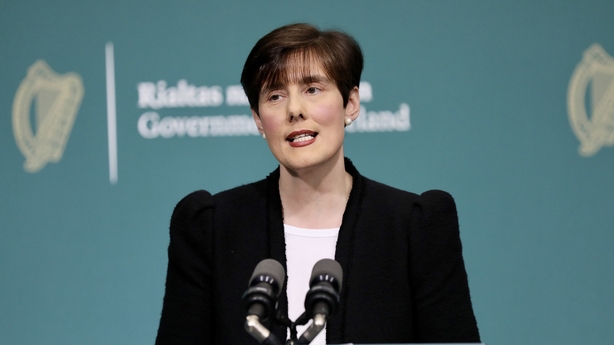
Defending the change today, Minister for Education Norma Foley characterised as "misinformation" claims that complex needs had been removed as a criteria for assessing school allocations.
She said that was "categorically untrue".
Ms Foley said that complex needs were being given maximum weighting using school data.
Saying the HSE data previously relied on was "erratic", Ms Foley said the new system would place the pupils who need maximum support at its centre.
"The NCSE trialed this model and it had 92% accuracy," she said, adding that a review system would be easy to access and urging principals to engage with it if they feel that their school's needs are not being adequately supported.
"Change is not comfortable, but I am asking people to work with us," the minister said.
According to the circular issued to schools, from September, the department will no longer assign hours based on the number of children in a school deemed by the HSE to have "complex needs".
Instead, the circular states "this value" will be reapportioned "at individual school level across the remaining pillars with an emphasis on the literacy and numeracy category which demonstrates where additional teaching supports are required".
But disability organisations and primary school principals are adamant that a school's literacy and numeracy levels do not best reflect the presence of children with complex needs.
In advance of today’s Oireachtas hearing, the three disability organisations conducted a snap poll of parents which received more than 1,300 responses.
Of those surveyed, 85% stated they had a child currently receiving special education teaching support in school.
The charities said the results highlight the impact of a lack of consultation and communication with families.
They said while 74% of those surveyed said they did not have a good understanding of the changes proposed, 96% were concerned that the change would see their child’s school lose resources.
Last week more than 700 primary school principals signed a National Principals Forum petition calling for the decision to be reversed.