Managers of the country's primary schools have appealed for additional funding so that they can meet significant increases in energy, insurance, cleaning and waste disposal costs this winter.
State capitation funding for schools was increased last year by 40%.
The measure was billed as a 'once off' cost of living increase, but primary schools say they will need this and an additional 10% rise in this year’s Budget so that they are not totally dependent on voluntary contributions from parents to provide basic requirements, such as heat, light, and water.
In a joint statement, the country’s seven primary school management bodies have said while last year’s 40% increase has been critical in assisting schools to maintain financial solvency, schools’ finances remain "extremely challenging".
They have warned that the continuing cost of living crisis is not just an issue for individuals but for entire school communities.
Principal Richie Ryan of Castleconnell National School said: "40% looks like a decent increase but when you compare it to our bills it is nowhere near enough."
At the school, Mr Ryan showed RTÉ News electricity bills that reveal an almost four-fold cost increase since 2019, and oil bills that indicate a rise of between 70% to 120%.
He says IT maintenance has risen by about 60% and the labour costs associated with cleaning a school have risen by about 40%.
The cost of hiring a bus has risen by 25% compared with pre-pandemic times. Insurance has rocketed too, and just last week the school was notified of one more price rise when the cost of emptying its bins was increased by 76c per lift.
"My remit as a principal is supposed to be leading teaching and learning", Mr Ryan says before he goes on to describe all the desperate measures he has personally taken to try to raise funds from the school's parent body to bridge the gap between State income and expenditure.
"We’ve tried everything. I ran in a dress at one stage. At the end of the month at our family fun day the children will pay €2 to throw wet sponges at me. Fundraising events should be about bringing the community together but they have turned into 'how much money can we squeeze out of this?’"
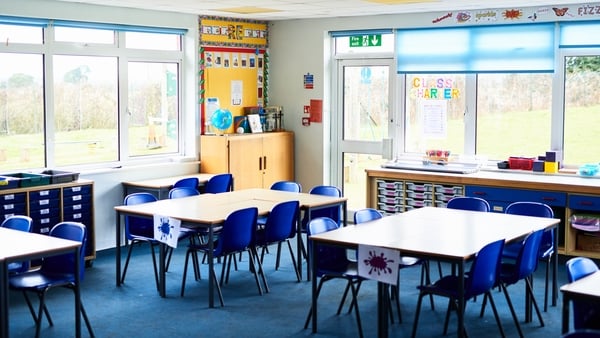
Castleconnell National School was built in the 1960s, then in the 1980s, two wings were added on. The school is clean and welcoming and well-kept, but it still looks tired and there is a slight smell of must.
Old 80s kitchen unit doors hang crookedly on old hinges in one classroom. It is clear from their peeling veneer surfaces that they have long had their day.
The same could be said of the old carpet tiles in another classroom, puckered and pushing up at the edges as if in protest.
Mr Ryan explains that most classrooms still only have one plug point. The school’s flat-felt roof with no insulation doesn’t help either when it comes to heating bills.
"It costs a lot to run and maintain an old building like this", Mr Ryan explains.
Primary Management Bodies including An Foras Pátrúnachta, the Catholic Primary School Managers Association (CPSMA), and Educate Together have called for an immediate increase in the basic capitation rate to €275 per pupil (that is an increase of €17 on last year). They want a 10% increase across all other capitation grants.
They are also looking for extra funding for cleaning to replace a Covid cleaning grant that has been discontinued and they want the restoration of annual ICT funding they say has been scrapped.
They are also calling for more certainty around when various grants are paid to schools so that schools can plan.
General Secretary of the CPSMA Séamus Mulconry said schools need help "immediately".
"Schools can no longer count on a bailout from the bank of Mum and Dad. Government must fulfil its constitutional obligation to provide free primary education now."
He called for a "modest increase" of €9m in capitation funding for primary schools.
The cost of living crisis has not gone away and inflation is now built into the system, Mr Mulconry said.
Speaking to RTÉ's Morning Ireland, Mr Mulconry said: "Two years ago, we looked at the electricity bill for a very large school, it was €21,000. This year, to date, it's €68,000. We looked at water and refuse it was €3,000.
"This year, to date, it's €10,500. So the cost of living increases haven't gone away and inflation is now built in the system. So we do need the funding to be able to deal with that."
Mr Mulcronry said that he was aware of some schools that are already experiencing cashflow problems while others are "eating into their reserves".
He added he was hopeful that the schools would continue to keep an increase that was secured last year.
CEO of Educate Together Emer Nowlan said last year’s increase had just about enabled most schools to keep their heads above water.
"Chronic underfunding is now at crisis level, and this is hitting disadvantaged communities and developing schools hardest - the government must build on last year’s budget to ensure all schools have the basic funds they need."