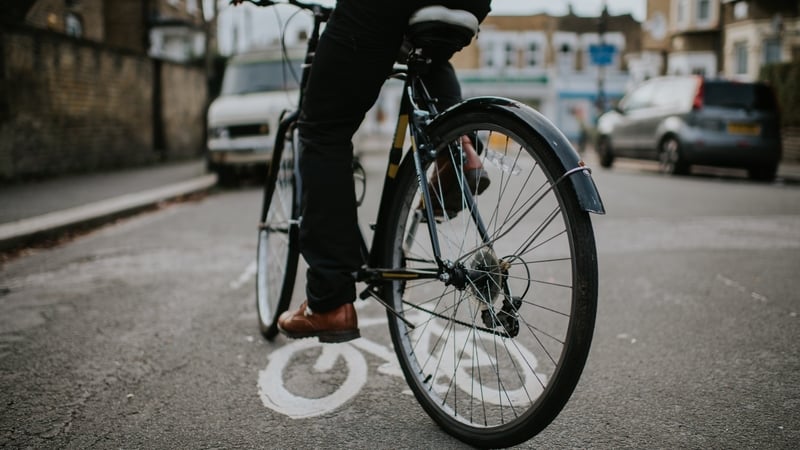

A new report on active travel in Dublin shows that more than half a million journeys are being made every day by people walking, wheeling or cycling instead of using a car.
More than €600 million has been spent on active travel schemes in the Dublin metropolitan area over the past five years and while the number of journeys by bike are up, the overall number of cyclists has not increased.
A Fine Gael TD has said she would like to see a cost-benefit analysis of active travel spending to see if the investment in the infrastructure is paying off.
The National Transport Authority's Walking and Cycling Index for 2025 found every day, up to 510,000 non-leisure return walking, wheeling and cycling trips are made in the Dublin metropolitan area by residents who could have used a car.
Wheeling is defined in the report as the use of a wheelchair or a mobility scooter by those who do not identify with the terms walking and the report's margin of error is plus or minus 3%.
We need your consent to load this flourish contentWe use flourish to manage extra content that can set cookies on your device and collect data about your activity. Please review their details and accept them to load the content.Manage Preferences
The survey also found that the number of adults living in and around the capital who are cycling at least five or more days a week has increased by half over a two-year period from 8% in 2023 to 12% in 2025.
The number of overall cycling journeys, which includes cycling for leisure, has also grown from 85.9 million to 92 million in a two-year period.
However, the overall number of residents cycling has not increased - the figure fell slightly from 36% to 34% - the number of people cycling once a week stayed the same at 25% and the number of adults with access to a bike is also down marginally from 58% to 55%.
When it comes to journeys for things such as commuting or shopping, 66,000 return trips were cycled daily by residents who would have used a car, down from 71,000 in 2023.
The report said there was an increase in overall walking or wheeling journeys, including those for leisure, to 779 million last year compared to 752 million two years before.
However, it also shows that the 450,000 return trips walked or wheeled every day by those who could have used a car was down 20,000 from the numbers recorded in 2023.
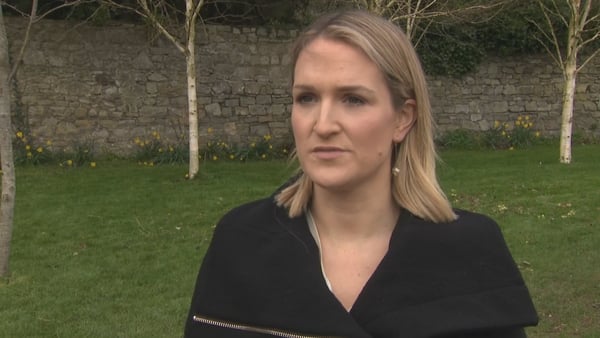
Fine Gael TD for Dublin Rathdown Maeve O'Connell said the Comptroller and Auditor General should carry out the audit.
"The National Transport Authority's annual Canal Cordon Survey 2024 tells us that compared to 2019, nearly 3,000 less people are cycling into the city centre.
"Not only have the number of cyclists decreased, so too has the overall number of bicycle journeys decreased, albeit marginally, from 6% to 5.5%.
"Bus usage is increasing gradually, which is a positive signal as it’s taking more cars off our roads, but if we are to reach our Climate 2030 targets, it’s essential that all Active Travel infrastructure is paying its way and delivering results," she said.
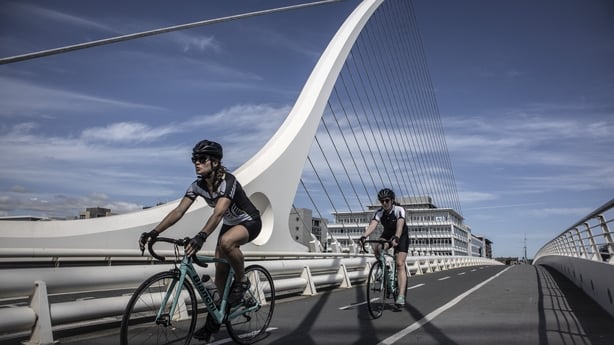
"Since 2022, we have allocated over €580 million towards constructing active travel infrastructure across the four Dublin local authorities. This investment in segregated cycle lanes, pedestrian friendly footpaths and secure bike parking was made to provide a viable and safe alternative to private car use."
"The benefits of these projects must justify the costs so it is concerning to see reports of reducing numbers using these routes," said Ms O’Connell, adding that she would like to see a broader audit of Active Travel infrastructure undertaken."
The National Transport Authority research shows that across the country, up to 660,000 cars are taken off the road each day in Ireland’s five largest metropolitan Areas due to walking, wheeling and cycling.
The assessment of active travel journeys covers the Dublin, Cork, Galway, the Limerick/Shannon and Waterford metropolitan Areas, representing 42% of the State's population and is published in conjunction with reports into 17 city regions in the UK including Liverpool, Manchester, and Glasgow.
Overall, it found the number of people walking or wheeling in the Dublin metropolitan region five days a week has dropped marginally from 71% to 70%.
The number of people travelling five days by bike has risen by half from 8% to 12%, the numbers using public transport are up from 16% to 18% and the numbers driving are down marginally from 47% to 46%.
It also found that 66% of Dubliners want more investment in walking and wheeling, 55% want more in cycling and 36% want more in driving.
It says the annual economic benefit of people walking and wheeling in and around the capital is €1.8 billion, while the number of cycling trips benefit the economy by almost €400m a year.
Walking and wheeling save the HSE €46.5 million a year while cycling saved €9.2 million.

Finola O'Driscoll, Senior Programme Manager for Active Travel with the National Transport Authority, said the overall picture from the results in positive but that it will take time for the Active Travel Network to grow.
"The big picture is really positive that across all our metropolitan areas, which accounts for 40% of the population of the State, saw an increase in walking, wheeling and cycling. People choosing to do that contribute hugely to our cities environmentally by taking cars off the road and to our economy in terms of health," she said.
"We want to see the proportion of people using Active Travel Schemes growing but that network is going to take time. It could take a good few years to get there but it is infrastructure for the future and we take real encouragement from the figures of people using it so far and their support for more investment," Ms O’Driscoll added.
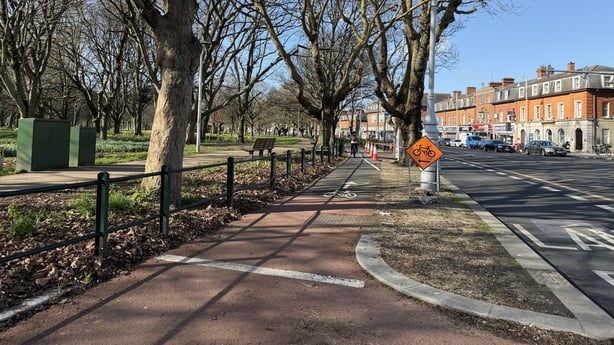
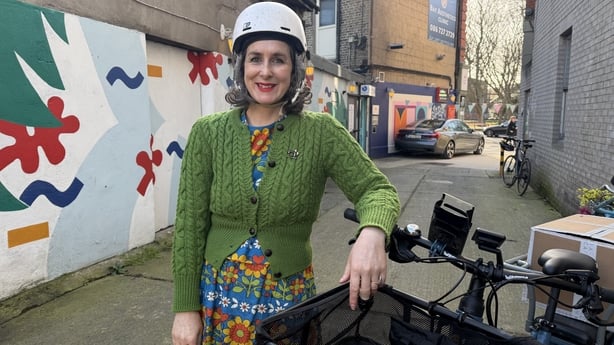
A boutique owner in Fairview in north Dublin who does local deliveries by cargo bike says the Active Travel Scheme on her doorstep has made the task easier.
The €70 million Clontarf to City Centre Active Travel Scheme opened over a year ago and Deirdre Mahon, owner of Quack & Dirk in Fairview, uses it daily to bring parcels to her local customers.
"It makes it so much easier when you're working from your bike. Life is just nicer. Coming to work and leaving from work with my packages, I don't have to go across three lanes of traffic to try and take that turn," she said.
"I'm already in a cycle track, and I feel so much safer delivering my parcels, rather than the way I would have felt before this infrastructure was put in."
Minister for Transport Darragh O’Brien said the increase in active travel has a number of benefits "not only for individual health and well-being, but also for the wider community through decreases in congestion levels and transport emissions."
The NTA says working with local authorities nationally it invests on average €260 million a year in walking and cycling infrastructure and that it has delivered 1,077km of active travel infrastructure since 2020, around 60% of which is pedestrian infrastructure.
In the Greater Dublin Area (which includes Kildare, Meath and Wicklow and accounts for over 40% of the population), the NTA said it has spent an average of €127 million a year in the same time period and have delivered nearly 220km of pedestrian infrastructure and 255km of cycle infrastructure.
We need your consent to load this rte-player contentWe use rte-player to manage extra content that can set cookies on your device and collect data about your activity. Please review their details and accept them to load the content.Manage Preferences