Uisce Éireann has announced the completion of a €550 million upgrade of the Ringsend Wastewater Treatment Plant in Dublin.
This enables the plant to treat the wastewater from 2.4 million people in the Greater Dublin Area.
It will also ensure that as much as 97% of Ireland's wastewater will now comply with the European Urban Wastewater Directive, up from 49% before the plant was upgraded.
Prior to the upgrade, the Ringsend plant was operating well above its built capacity and failing to adequately remove nitrogen and phosphorus from the wastewater it treated.
Uisce Éireann said the completion of the project will enable sustainable development across the Greater Dublin Area, and support housing and economic growth.
It will also protect the environment by ensuring cleaner water for fish, wildlife, and everyone who uses Dublin Bay.
As much as 40% of all wastewaters in Ireland flows into the Ringsend Wastewater Treatment plant.
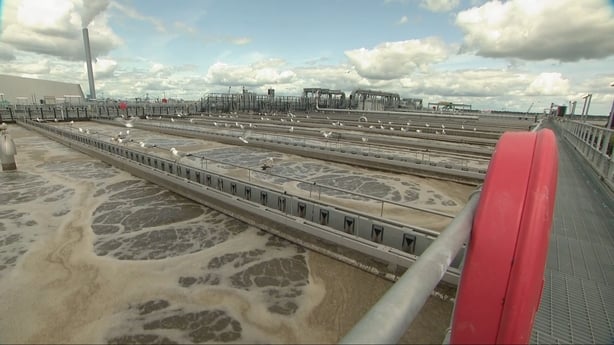
It comes from parts of counties Wicklow, Kildare, Meath and all of Dublin.
The plant was last upgraded in 2005, delivering secondary treatment for the equivalent of 1.64 million people.
Since then, rapid population growth, economic expansion, and intensified development have placed substantial pressure on the plant.
The upgrade delivers advanced nutrient removal and significantly improves the quality of the receiving waters of the Lower Liffey Estuary and Dublin Bay.
It also means that, at 97%, Ireland’s compliance with the EU Urban Wastewater Directive will be well above the average compliance in the European Union, which is 76%.
Uisce Éireann carried out the upgrade project in two phases, beginning in 2018, allowing the plant to remain fully operational throughout construction.
Uisce Éireann Chief Executive Niall Gleeson said that with further investment over the next few years the utility will probably be able to create enough additional capacity at Ringsend to handle wastewater for another 100,000 people.
He underscored however, that because the plant is in a confined location, there are limits to what can be achieved after that.
"There's nowhere to go outside of this area. That's why we need to build the Greater Dublin Drainage Project in Clonshaugh next.
"That will give us the capacity equivalent for another 500,000 people on the north side of Dublin and facilitate growth there for the next few decades," he said.
Minister for Housing says upgrade will help in delivery of more homes
Minister for Housing, Local Government and Heritage James Browne praised the fact that the €550 million upgrade project was delivered at scale, in budget, and on time.
He described it as a critical piece of infrastructure for the environment, for ensuring wastewater is treated correctly, and for the delivery of more homes.
"This is the State’s largest-ever investment in wastewater treatment and directly responds to the demands of a growing population as well as to EU obligations and environmental needs.
"It not only enables compliance with our EU obligations, but also ensures that communities, homes, and businesses across the Greater Dublin Area can continue to grow sustainably," he said.
Lord Mayor of Dublin, Councillor Ray McAdam, said: "The completion of the Ringsend Wastewater Treatment Plant is a milestone for our city - protecting Dublin Bay, supporting sustainable growth, and strengthening the foundations of a cleaner, greener, more resilient Dublin.
"This investment reflects our shared commitment to safeguarding the environment for future generations while ensuring our capital continues to thrive."