


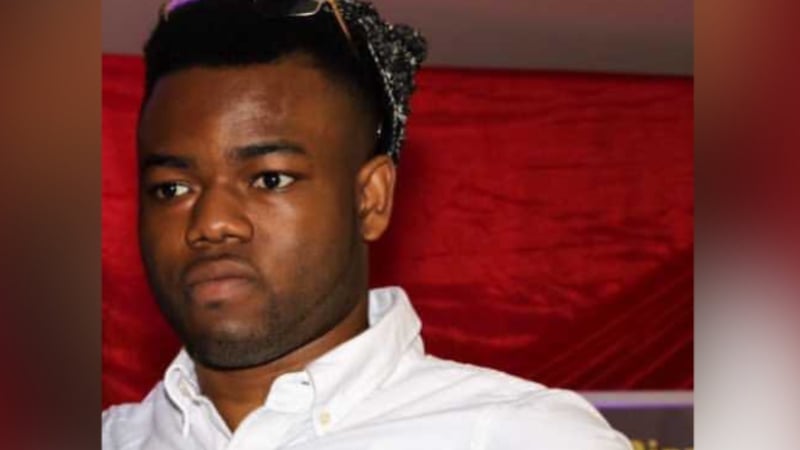
A jury has returned a narrative verdict at the inquest into the death of George Nkencho, who was shot and killed during a stand-off with gardaí five years ago.
The 27-year-old was shot six times by a member of the Armed Support Unit outside his family home in Clonee on 30 December 2020.
The ASU member, referred to as Garda A, said he was in fear for his life as Mr Nkencho lunged at him with a knife, ignoring pleas to drop it.
During three weeks of evidence at Dublin District Coroner's Court, the inquest heard that George Nkencho had been suffering with mental health issues.
The jury had two verdicts open to them to choose from today: death by misadventure or a narrative verdict.
Death by misadventure is an unintended outcome of an intended but lawful action.
Coroner Myra Cullinane told the jurors if they felt a "one phrase verdict" was insufficient to capture the complexities of the case they could give a narrative verdict, recording the circumstances of what happened.
After around five hours of deliberations today, the nine jurors returned with a narrative verdict outlining how George Nkencho had punched a shop worker in an unprovoked attack before walking around brandishing a knife.
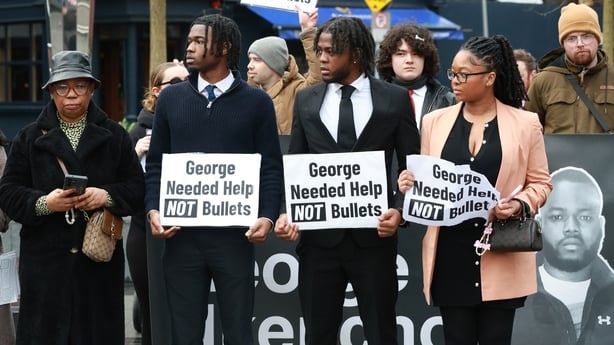
The emergency services were called and George Nkencho was followed by a "moving cordon" while shouting at Mr Nkencho to drop the knife.
The jury said when the Armed Support Unit arrived, Garda A and Garda B followed Mr Nkencho into the garden of a private home where he lashed out with a knife, ignoring demands to drop it.
George Nkencho continued to move in "an erratic manner with the knife" despite three taser deployments and pepper spray and Garda A fired six shots at Mr Nkencho, who was lunging at him with the knife.
The jury said it was satisfied that the cause of death was from multiple gunshot wounds.
A number of recommendations were made including that all armed gardaí wear body cameras and members of the ASU should have ones that start recording on initiation of calls as opposed to when they arrive at the scene.
The jurors also recommended that quarterly checks of pepper canister sprays should be carried out.
The jury also recommended that gardaí should have easier access to non-lethal weapons to use at the scene of a critical incident.
They advised that armed engagement near occupied buildings should be kept to a minimum; there should be dedicated training for gardaí who are dealing with and responding to a wide spectrum of individuals with mental health conditions.
The jury said that key information sent over the dispatch radio should be verbally confirmed by gardaí on the scene; local gardaí should step back when the Armed Support Unit arrives so there is less noise and confusion.
The jury concluded their remarks by expressing their condolences to the family and members present in the court raised their hands in a gesture of gratitude.
Ms Cullinane joined the jurors in offering condolences to the family saying they showed such dignity during the inquest.
She acknowledged how hard it must have been to hear the evidence and see the videos from the day and it was clear how distressing it was.
Speaking after the verdict, the Nkencho family said the last few weeks have been very tough.
George Nkencho's brother Emmanuel said they have "had to relive the trauma of the events that occurred on the 30th of December".
He said today represents "some form of closure for my family".
"At the end of the day, my brother shouldn't have died, but we're grateful to the coroner and the jury and for everyone who has supported us," he said.
Mr Nkencho said the family hopes that the inquest will lead to meaningful change and that something similar won’t happen to another family.
