


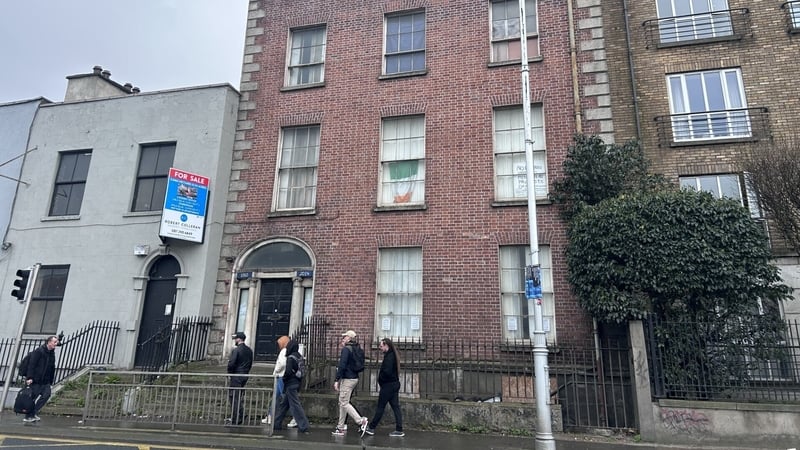
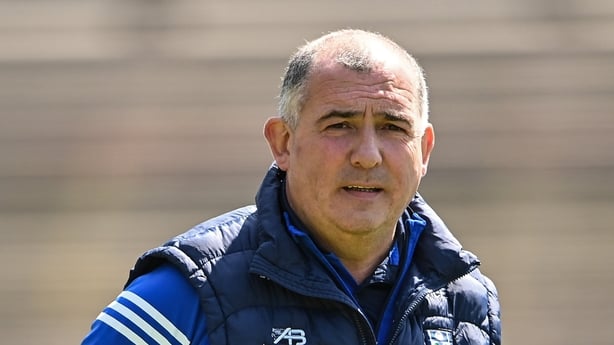
A firm owned by former Monaghan senior Gaelic football manager Séamus 'Banty' McEnaney has secured the green light to convert the building where James Joyce's The Dead was set into apartments.
Dublin City Council granting planning permission to Mr McEnaney's Brimwood UC for the apartments after Brimwood reduced the scale of its plan at 15 Usher's Island, Dublin 8.
However, last month Mr McEnaney told RTÉ News that if the Arts Council or the Government are interested in purchasing the property, he would be a willing seller.
The house is currently being occupied by anti-immigration protestors.
Last July, Brimwood initially proposed ten apartments, made up of seven one-bed units and three studios, and reduced the number of units to seven after council concerns.
The council has now reduced the number of apartments further by granting planning permission for six units "to protect the residential amenity of future residents" in the revamped building.
The ten-page planner’s report which recommended that planning permission be granted concluded that "the proposed development would not seriously injure the residential amenities of neighbouring dwellings or the amenities of the area".
Last month, in revised plans lodged, Brimwood reduced the number of units to seven and in the council planner’s report, it stated that "the revisions are largely positive".
However, it recommended the omission of a further apartment by amalgamating two units at first floor level into one apartment unit.
The council report states that "this will facilitate the potential to provide a high quality two-bedroom unit which shall ensure that the development shall be aligned with a conservation-led approach in conserving the building's architectural, artistic and cultural special interest".
In response to its original ten-apartment scheme lodged, An Taisce contended that the building "is of too great a cultural heritage importance for conversion to multiple apartments".
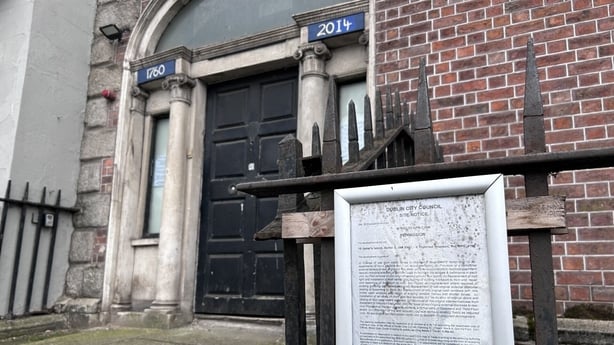
Along with the An Taisce submission, a submission by Zoe Obeimhen, accompanied by a petition signed by 1,675 people, was also calling on the council to refuse planning permission.
Requesting a reduction in the number of units, the council told Brimwood last September that some of the units were sub-standard in terms of apartment minimum floor areas and individual room areas and widths.
As part of one of the conditions attached to the planning permission, the council has ruled that all works shall be carried out in accordance with best conservation practice and any repair works shall retain the maximum amount of surviving historic fabric in situ.
The council states that this condition is required in order to protect the amenity, setting and curtilage of the Protected Structure at 15 Usher’s Island, and to ensure that the proposed works are carried out in accordance with best conservation practice.
Accompanying the revised plans, planning consultant Kevin Hughes for Brimwood stated that the amalgamation improves the overall quality of the units, ensuring compliance with Dublin City Development Plan and Ministerial Guidelines, ‘Design Standards for New Apartments’.
Mr Hughes states that the revised layout also addressed fire safety and building control regulations, minimising the impact on the protected structure.
In An Taisce’s submission, the organisation's Dublin City Planning Officer, Kevin Duff, said refusal is recommended "in order to find a way forward and secure the future of this key cultural building of Dublin".
There have long been calls for the building to be preserved and used as a museum or literature hub.
The Georgian house, which was built around 1775, was the home of Mr Joyce's maternal great aunts in the 1890s.
The women, who occupied the upper floors and ran a music school from the building, held Christmas parties which provided the inspiration for 'The Dead' - the final short story in Mr Joyce's famous book Dubliners.
The five-storey red brick building, which faces the James Joyce Bridge, was damaged by fire in the 1990s and remained derelict until the year 2000.
It was bought and refurbished by a barrister and was used for some Joyce-related events until its owner filed for bankruptcy in the UK in 2012.
In 2019, plans by its owners to convert it into a 54-bed hostel resulted in a campaign involving more than 100 people from literature, academia and the arts, including Colm Tóibín, Sally Rooney and Anjelica Huston, calling for it to be preserved.
Last year, plans by Mr McEnaney to convert the property into apartments re-ignited the debate about its future but in recent weeks it emerged that the building has been occupied by anti-immigration campaigners.
The group, which calls itself 'Independent Minds', has posted notices in several of the building's windows alongside an Irish tricolour.
It said that since 2024 the building "has been under civil occupation by an independently minded group of people from all walks of life".
The group added: "We collectively want to see other persons and groups come forward with regards to all types of corruption and the homeless issue from all over the country.
"We also want to see this building restored and handed over to the Dublin people as a museum to James Joyce and his work 'The Dead'".
Reporting by Gordon Deegan and Samantha Libreri
