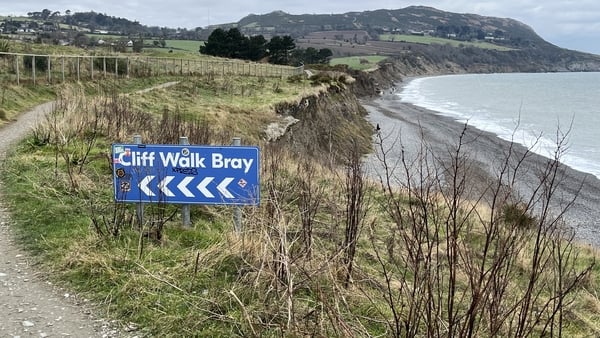
Residents of Portrane in north Co Dublin have expressed concern about the speed of coastal erosion there, after beach side properties experienced significant damage during the most recent storm.
A large piece of decking at the rear of a property that backs onto Portrane beach is dangling between the sand dunes and the shore after being dislodged during Storm Kathleen.
Locals said that the large wooden structure, which has a shower and inflatable hot tub attached to it, is the latest example of the accelerating costal erosion they have experienced in the area since 2011.
Louise Duffy, whose family have had a house in Portrane for 45 years, said that the disappearance of the shore in front of her home is terrifying
"I can remember as a child there was 30 metres of sand dunes in front of us. And you can see today now there's no sand dunes left at all. They're all gone," she said.
"We have absolutely no protection from the sea. It's terrifying to be honest.
"A lot of people think it's lovely to live by the sea. But when this is getting as close to your home, as it is for us, you just wake up at night and you can hear the tide crashing and you know that the coast has been eaten away and that it'll be in your front garden soon."
"It's very, very distressing for everyone."
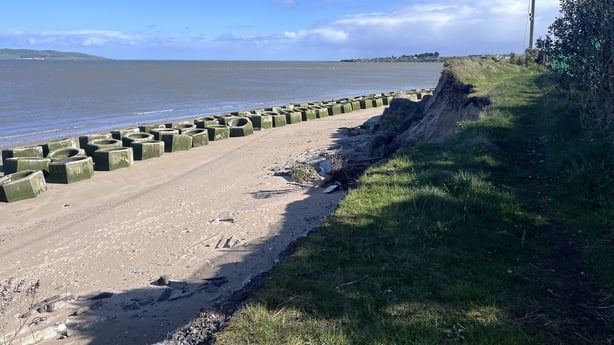
Ms Duffy said it is only a matter of time before they are homeless because of the coastal erosion.
"We're not at risk of becoming homeless. We are going to become homeless. It's just a matter of time," Ms Duffy said.
"So I suppose that's the very worrying part that faces us, that we have to look for alternative options for somewhere to live. It's extremely stressful. That hanging over you, but it's that emotional attachment as well and all the memories we have.
"It's such a beautiful place and just to be washed away and no reinforcements put in place. It's very, very distressing for everyone."
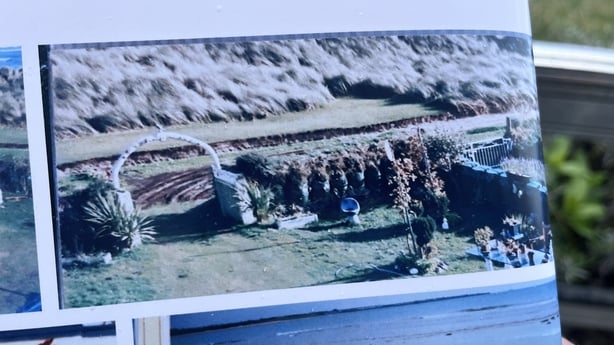
Tom Barton said that he has lost about 20 metres of his back garden to erosion since he moved to the area almost three decades ago.
He said that if the rate of erosion continues, he believes his home will collapse into the sea in the next year.
"Really aggressively over the last two or three years, it's really hit us bad. But this year was really bad," Mr Burton said.
"I've lost five or six metres maybe in the last storm that just went so like its serious."
He points to corrugated iron and hedging that, just over a week ago, was on his property, but since the cliff was washed away in Storm Kathleen, now lies mangled on the beach below.
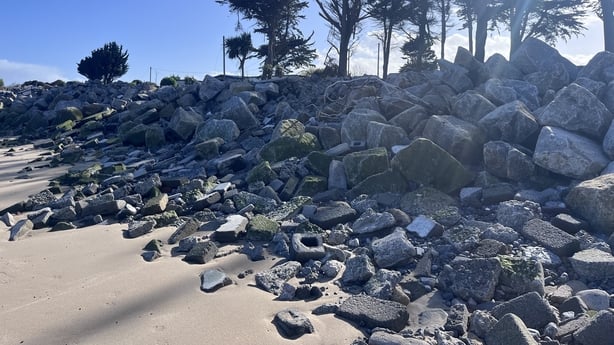
Fingal County Council said it has put emergency interventions in place while it awaits planning permission for longer term measures to prevent erosion.
Locals said that the large concrete structures, known as Sea Bees, are not doing enough to stem the tide of coastal erosion and have called for the local authority and Minister for Housing and Local Government Darragh O'Brien, who is also a TD for the area, to take urgent action.
In a statement, Mr O'Brien said that he was aware of the devastating impact coastal erosion is having on communities in north Dublin and that his department is driving the national response needed to coastal change.
"The Department of Housing, Local Government and Heritage has now been designated as having the lead coordination role to promote a joined-up, whole of Government response to coastal change by all relevant departments/agencies having regard to their existing policy remits," the statement said.
"In October 2023, the Government published the Report of the Inter Departmental Group on National Coastal Change Management Strategy. The report contains a range of recommendations, structured across three strategic pillars.
"They are centred on developing management responses to coastal change over the short, medium and longer terms and providing a comprehensive whole of Government approach to the development of the range of policy responses that the challenge of coastal change encompasses."
The statement said that the minister and the department "are playing a key role in coordinating and driving this essential work".
"Having witnessed some of the devastating impacts of coastal change alongside residents in North County Dublin, Minister O'Brien is very much aware that a structured, planned and evidence-based approach to dealing with the matter is vitally important," it said.
Speaking on RTÉ's Six One News, Associate Professor of Geography at Trinity College Dublin, Mary Bourke, said the majority of the Irish coast is made of "soft highly erodible sediment".
She said coastal erosion is a "massive problem" and it "does seem to be getting worse".
"Houses are going to go into the ocean, there is nothing we can do effectively long term to stop that happening," Ms Bourke said.