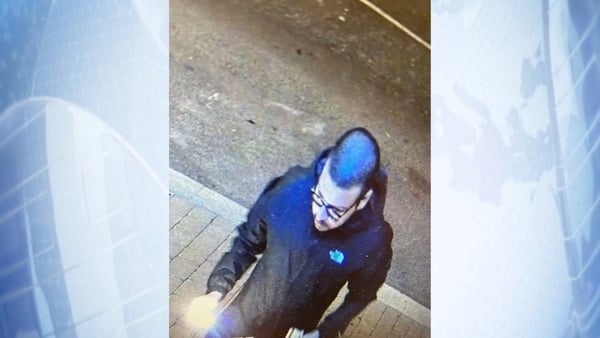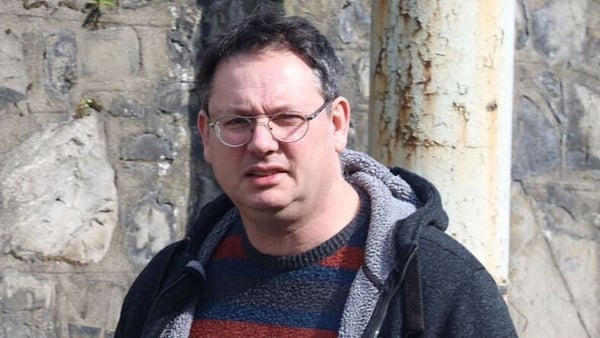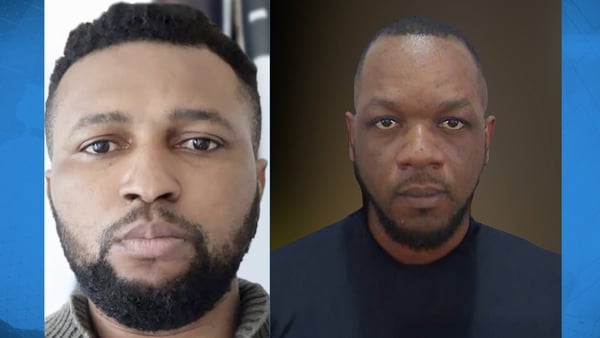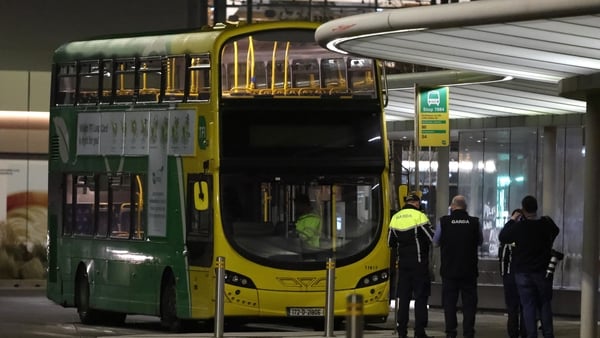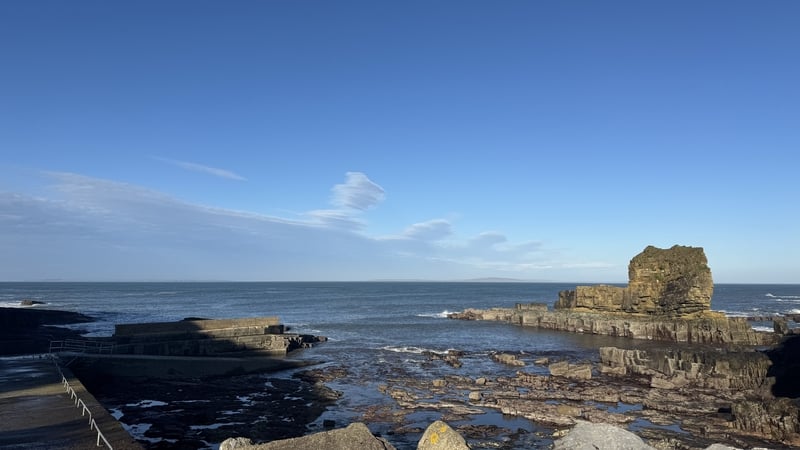

Seven men who conspired to import over 600kg of cocaine worth an estimated €42m into Ireland have all been jailed for between ten and 12 years by the Special Criminal Court.
Three of the men were Filipinos on board a ship containing the drugs that travelled from the Amazon and docked off the coast of Co Clare.
Four others, with addresses in the UK, were part of "a landing cell" that was intended to collect the drugs via an inflatable boat and transport them to a location in Co Kerry.
The three Filipino men who arrived on the boat are 36-year-old Hanz Pangahin, 44-year-old Christopher Ampo and 29-year-old Feljon Lao.
They were all sentenced to ten and a half years in prison.
'Full force of Irish State against' drug trafficking
The other four, whose role was to land the drugs, are 46-year-old Miljan Koprivica of Bollin Drive in Manchester, who was sentenced to 12 years; 31-year-old Conor Costello of Earhart Park, Madamsbank Road in Co Derry, who was sentenced to ten and a half years; 40-year-old Gary Monks of Amulree Place, Glasgow in Scotland, who was sentenced to ten years; and 32-year-old Ryan Watson of Mailerbeg Gardens, Modiesburn in Glasgow, who was also sentenced to ten and a half years.
All seven pleaded guilty to conspiracy to import drugs between 18 December 2024 and 15 January 2025 and were operating in "structured and organised" cells under the control of others.
Det Insp Boyce said the ship subsequently anchored in the Shannon Estuary on 12 January.
As it was sailing to Irish shores, Watson, Monks, Costello and Koprivica arrived into Ireland at separate dates after 6 January.
On 12 January, these men were arrested on a "RIB", a rigid inflatable boat, at Meenogahane pier in Co Kerry after collecting the cocaine from the MV Royal and dropping it to Carrigaholt Pier in Co Clare.
Their phones were seized and examined, which led gardaí to identify the MV Royal.
On 15 January, a team from Revenue and Customs working with gardaí boarded the ship and arrested Lao, with Pangahin and Ampo arrested two days later.
They were a transport cell and had loaded the drugs onto the boat in Brazil.
The cocaine was in 24 bags secured in the front of the ship, which sailed under a Maltese flag.
Analysis of encrypted EncroChat mobile phones seized from the men showed that Lao, Pangahin and Ampo were each to be paid Philippine pesos equivalent to the sum of €138,558, if the operation was successful.
Gardaí also discovered a WhatsApp group involving someone known as "Emaar Boss", who had a Finnish SIM card and claimed to be based in Dubai, who was controlling the "cell" of three men on board the MV Royal, issuing instructions as to their arrangements to meet Watson, Monks, Costello and Koprivica in the RIB.
Costello and Watson had maritime experience. Monks was a former British soldier who suffers PTSD after serving in Afghanistan and Iraq.
The four men, who were "the landing cell", were communicating with a person in charge known as "Albert", a pseudonym, who had an Argentinian SIM card.
"Everything they were doing was clearly under instruction," Det Insp Boyce said, adding that someone known as "Danny Greene" was also issuing instructions to the landing cell, sending them the coordinates of the MV Royal on 9 January, as the ship was sailing up the west coast of Ireland.
Det Insp Boyce said that messages from Costello to "Danny Greene" showed there were "hierarchical powers in charge of these cells".
Greene outlined the roles of those in the cells.
He also told them to "dump all electrics" after the job so there was no information on phones to link them to the drugs.
Ms Justice Karen O'Connor said the men were part of a sophisticated international drug smuggling operation with cell structures and connections to Dubai, Afghanistan, Brazil and the UK.
The encrypted devices used she said were "the blue riband" of criminal security.
Each of the seven men came to Ireland as part of a conspiracy trafficking up €42m worth of drugs was successfully brought into the country.
She said it was impossible to estimate the damage that amount of cocaine has done.
All were caught red-handed, but all had pleaded guilty, which was significant because she said a trial would have been complicated and gone on for some time.
The sentence hearing outlining the case after they had admitted their guilt took three days.
The judge described it as a sophisticated international drugs cartel operation which involved considerable planning, extensive funding and careful recruitment.
Ms Justice O’Connor said that the availability of drugs is a scourge on society and is fuelled by the worst forms of criminality.
She added that all seven men were carefully recruited for their skills.
Ms Justice O’Connor said Conor Costello suffers from PTSD and was at a high risk of reoffending. He was sentenced to ten and a half years in prison.
Ryan Watson was said not to be at the top of those working with the crew but was recruited because of his knowledge of boats and had a drug debt.
He is considered to be at a moderate risk of reoffending but is attending school and working in prison. He was also sentenced to ten and a half years in prison.
Gary Monks suffers from PTSD after his time in the army and is also considered to be at a high risk of reoffending. He was sentenced to ten years in prison.

Miljan Koprivica is a father of two with no previous convictions and a very strong work ethic.
He has a history of cocaine and alcohol use but is engaged in education and training with the Red Cross and is at a medium risk of reoffending.
However, the Encrochat device was found in his pocket and he was the conduit between the cells. He was sentenced to twelve years in prison.
Feljon Lao worked as an ordinary seaman for nine years and is said to be at the lowest rank in relation to his role on the ship.
He has no previous convictions, is an enhanced prisoner working in the prison laundry and is considered to be at a low risk of reoffending.
He is also remorseful and his two young children await his return. He was sentenced to ten and a half years in prison.
The court was told that Christopher Ampo is "deeply ashamed" of what he has done, which has "put an end to his career".
He is an enhanced prisoner with no previous convictions and considered to be at a low risk of reoffending. He was sentenced to ten and a half years in prison.
Hanz Pangahin also said "I am guilty" from an early stage and took responsibility for his role.
He apologised and expressed his fears of "an illegal drug lord".
Pangahin has no previous convictions and has a wife and two young children who live with his parents.
He has worked in the maritime industry and was due to be promoted when he was caught. He was sentenced to ten and a half years in prison.