
The UK's highest court has upheld an appeal against a decision to release sensitive security information to the family of a Catholic man murdered by loyalists in west Belfast in 1994.
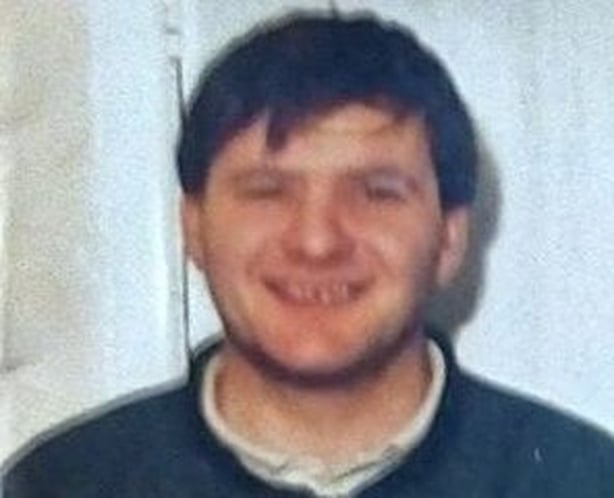
Paul 'Topper' Thompson was shot dead by the UDA as he sat in a taxi just metres from a so-called peace line dividing Catholic and Protestant areas.
His family has insisted there was state collusion in his murder, which happened close to a British Army watchtower.
Northern Ireland's coroner had wanted to provide the family with what is called a gist of information about the killing when the British government introduced a law that meant the inquest into his death could not be completed.
One of the issues the inquest was not able to consider was whether the security forces had received information from an informer or other sensitive and secret information in connection with the murder.
The gist would have included information the British government did not want disclosed.
The decision to release the information was backed by Northern Ireland's High Court, and again by the Court of Appeal.
But Northern Ireland Secretary of State Hilary Benn appealed those judgements to the UK Supreme Court.
He argued that disclosing the documents "would be contrary to the public interest in protecting national security".
British government lawyers argued that providing the information would be contrary to its long standing policy of Neither Confirming Nor Denying (NCND) the use of informers or other secret sources of information.
That same policy has been cited as the reason the identity of a British Army agent within the IRA codenamed Stakeknife has not been officially confirmed, despite it being widely known that he was former west Belfast man Freddie Scappaticci.
The UK Supreme Court this morning announced that it had unanimously allowed the Secretary of State's appeal and said the coroner had made errors when considering whether the information should have been disclosed.
The judgement also says the High Court and Court of Appeal "fell into error" by failing to recognise those mistakes.
Apology to brother acknowledged RUC and PSNI failings
Paul 'Topper' Thompson's brother Eugene, who campaigned for decades for an inquest and investigation into the circumstances of the murder, died in late July, just days after receiving a death bed apology from PSNI Chief Constable Jon Boutcher.
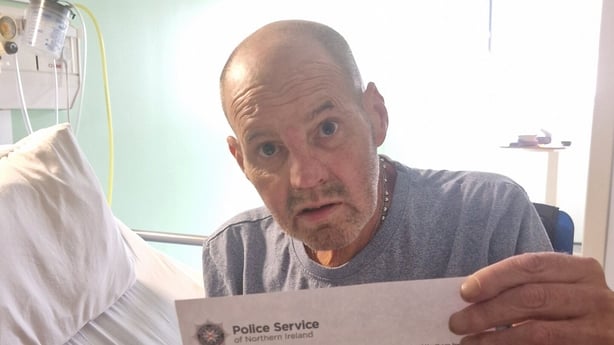
The apology acknowledged RUC and PSNI failings in relation to the murder, including an admission that steps could have been taken that may have prevented it.
Amnesty International and two human rights groups have expressed concern about the judgement.
They said it could enable the British government to conceal the involvement of state agents in killings during the Troubles.
Director of the Committee on the Administration of Justice Daniel Holder said: "Three UN experts have already highlighted that a national security veto power in Northern Ireland legacy legislation breaches international law. Families have a right to know whether the state was involved in the killing of their loved ones."
He added: "CAJ is concerned that this ruling in practice could enable a Secretary of State to conceal the involvement of state agents in killings and other violations during the Northern Ireland conflict.
"The ruling itself implies that doing so is an appropriate application of the Governments' Neither Confirm Nor Deny (NCND) policy.
"This is despite ministers being ultimately responsible for the security agencies that were running the agents."
Northern Ireland Deputy Director of Amnesty International UK Gráinne Teggart, said "today is a grim day for truth" and that "national security cannot be a blank cheque to conceal state wrongdoing or human rights violations".
"NCND is policy, not law. The Government’s misuse of this policy continues to block truth, rather than deliver it," she said.
"The Thompson case epitomises everything that is broken in the UK’s legacy approach: secrecy, endless delay, and a state closing ranks against a family seeking answers. When multiple government departments line up against one grieving family, it tells victims exactly where they stand.
"Truth should not depend on how hard families are prepared to fight, or how long they can survive the process."
While CEO of Relatives for Justice (RFJ) Mark Thompson said the case has "demonstrated beyond doubt that Paul’s murder involved state agent/s at some level".
"The questions have been about the extent of and how far that involvement went. It was hoped that the publication of the gist would, in part, seek to address these concerns. For the family today’s ruling has reinforced the view that those running agents/informers remain unaccountable, above and beyond the law.
"Yet again the clear message from this ruling is that the government will do everything within its power to cover those handling and running agents even in circumstances involving murder. This does not bode well for any new legacy arrangements," he added.