


A Dubliner who sped into another motorist at a complex junction, causing him a traumatic brain injury which required him to relearn how to walk, has been jailed for 27 months.
Jake Walsh was estimated to be driving at 129km per hour as he approached the junction of the Naas Road and Long Mile Road in Dublin - a 60km per hour zone.
However, investigators found that the injured party was confused and drove through three red lights accidently before approaching the roundabout at the time of the incident.
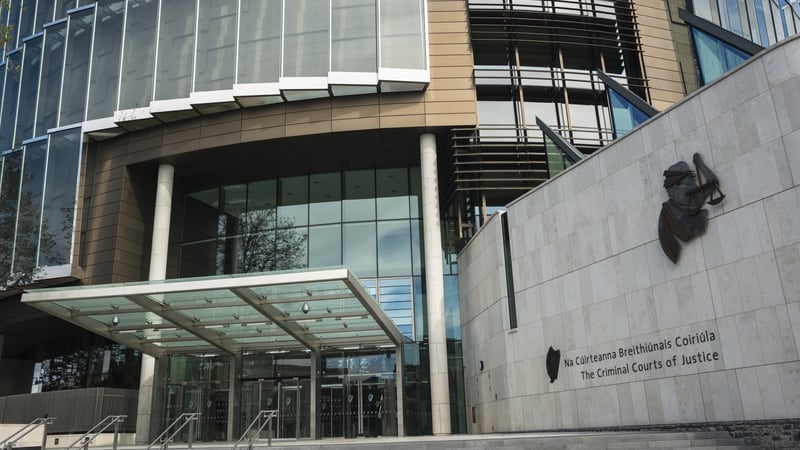
Walsh, 28 and with an address at Landen Road in Ballyfermot, pleaded guilty at Dublin Circuit Criminal Court to dangerous driving causing serious harm at the junction on 30 October 2021.
Detective Sergeant Aisling Dillon told the sentence hearing that Walsh was driving two passengers outbound on the Naas Road that day.
The injured party, who is from the UK and was working here at the time, was driving another car through the junction and was 'T barred' by Walsh’s vehicle.
Both cars were extensively damaged and Walsh’s vehicle ended up on fire, but he and his passengers escaped with only minor injuries.
The injured party was unconscious and had to be removed from his vehicle. Walsh was arrested at the scene.
A forensic collision report described the junction as a complex junction, with a gyratory layout.
CCTV footage showed that the injured party had stopped at a red light with another vehicle.
The green light came on for the vehicle beside him, but he is presumed to have believed it was also for him.
The injured party went through a total of three red lights, and Det Sgt Dillon said that it appears to have been inadvertent on his behalf. He does not recall the incident.
The layout is confusing, especially for those unfamiliar with it, she explained.
Gardaí found that Walsh had gone through an amber light, on the verge of turning red, and was travelling at approximately 110km per hour at the point of impact. It was estimated that he was possibly travelling at 129km per hour before this. The limit there is 60km per hour, said the detective.
His speed was found to be the main factor in in the incident, she said, but the injured party’s car should not have been where it was either.
It would not have been visible to Walsh until the very last minute, the court heard.
The injured man was initially taken to St James’ Hospital and then Beaumont, spending eight weeks in hospital here, before being transferred to a rehabilitation centre in the UK, where he spent another ten months.
He suffered a traumatic brain injury, a liver laceration, several fractures and had to relearn how to walk.
Det Sgt Dillon said that while the man in his early 30s has now physically recovered, he has lifelong mental difficulties, including issues with fatigue and memory.
His family have to check on him daily and help him with shopping and maintaining his house. His partner was expecting a baby at the time, and he cannot mind the baby alone. He also can no longer hold a driving licence.
The court heard Walsh had previous convictions for road traffic offences, including for driving past a red light, careless driving and speeding.
Under cross-examination by Dominic McGinn SC, defending, the detective sergeant agreed that the investigation found that had the injured party not driven past the three red lights, the accident would not have happened.
Driver distraction or fatigue may have been a factor in this, it found.
While Walsh’s maximum speed was estimated to be 129 km per hour, it was apparent he had engaged the brakes just before going through the traffic lights, which would have slowed the vehicle a little.
Had he been driving at the speed limit, the incident would not have occurred, the investigation found.
The court heard the injured party has made a remarkable recovery and is currently preparing to run a marathon.
Mr McGinn told Judge Martin Nolan that his client’s intention was never to injure someone else.
"He recognises he shouldn’t have been driving at anywhere close to that speed, notwithstanding that (the injured motorist) wouldn’t have been expected to be there at that time," he submitted.
He said that Walsh had been a constructive member of society, and handed in various letters describing him as a man of integrity and strong moral character.
He said that his client had expressed remorse. Walsh is an apprentice plumber and has ambitions to become a firefighter and paramedic, giving back to society, counsel said.
"He’s not an inherently bad man, or a hardened criminal," counsel submitted. "He was driving incredibly dangerously and incredibly fast."
Counsel said that disqualification would be a punishment and that a custodial sentence hanging over him would be a reminder to lead a law-abiding life.
Sentencing Walsh, Judge Nolan said the injured party had suffered devastating injuries and that Walsh was driving at over twice the speed limit at the time.
He noted this speed was an aggravating factor, along with the fact that Walsh has previous convictions for road offences.
He accepted Walsh is remorseful, had entered guilty pleas and has a good work history.
Judge Nolan handed down a sentence of 27 months and also disqualified Walsh from driving for a period of five years.
