
A teenager said he posted a video of a murder he committed last year on Snapchat to alert gardaí to what he had done, the Central Criminal Court heard.
Over 100 people, all his contacts, had access to the video he told the gardaí, but he took it down when they arrived.
The boy, who is under 18 and cannot be named under the Children Act, has pleaded guilty to the murder of Lorna Woodnutt on 29 September 2023.
Gardaí subsequently found the video and "a selfie" a photograph he took with the victim after the murder on his phone.
He also admitted to the gardaí that he "did it" and had attacked Ms Woodnutt with a sledgehammer, a lump hammer and a knife.
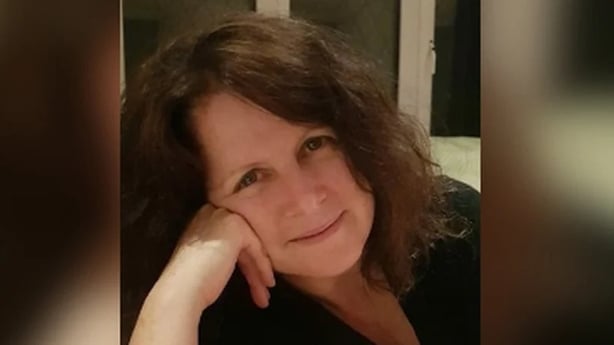
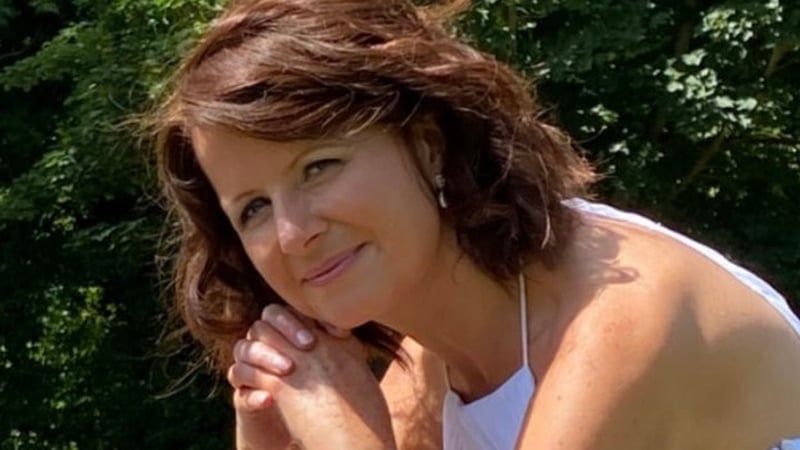
The details of the murder of the 51-year-old laboratory technician were outlined at the Central Criminal Court.
The Court was told that another boy who was a contact on the teenager's phone opened a snapchat video before lunchtime that day and could see a body on the floor.
The video of the murder scene was 17 seconds long with the camera focusing on a sledgehammer with blood on the handle, a smaller hammer on the floor covered in blood and pans from the victim who can be seen lying on the floor to a blood-stained knife on the counter.
The boy rang his father who contacted an off-duty garda who was first to arrive at the scene.
The court was told that when the off-duty garda met the boy, he nodded and said "her, I did it".
The post-mortem showed that Ms Woodnutt died from blunt force trauma to the head and chest, had sustained severe facial injuries and had been mutilated. She also had defence injuries on the back of her hands and forearms.
We need your consent to load this rte-player contentWe use rte-player to manage extra content that can set cookies on your device and collect data about your activity. Please review their details and accept them to load the content.Manage Preferences
The boy was arrested and questioned in the company of his solicitor and a responsible adult.
The court was told he had been diagnosed with autism from the age of 18 months, was linked in the Youth Diversion Project and had presented with challenging behaviour in the months leading up to the murder.
Detective Inspector Diarmuid Lawlor told the court that because of his autism and his age, special measures were taken in the garda station.
An interview room was converted into a bedroom with a mattress and the corridor closed off to create a quiet zone.
He told the gardaí that he "lost the head" and that "now I regret it because I’m stuck here".
"I got the hammer from the shed. I went after her and started whacking her with it.
"She held up a chair to protect herself. I pulled it off her. I hit as hard as I could, 20 or 30 times. I wouldn’t normally do this. It really isn’t me."
He also said he should not have done it because it was wrong.
"I put the video on my Snapchat story because I knew the gardaí wouldn’t want me to do that," he said.
He added that he did that to get the attention of gardaí because he had made two 999 calls, and he did not think they believed him.
When gardaí arrived, he said, he took the video down. He had a "three digit" number of contacts in his phone.
Gardaí secured production orders from the District Court to Google to get access to a number of the boys accounts.
His phone was examined and there was evidence that the TOR internet browser had been used. TOR is designed to facilitate anonymous access to the internet.
They identified the last 30 searches and took photos to capture them. The court was told the download did not contain that search history as it had been deleted from the phone.
Det Insp Lawlor told the Court the last search was at 12.15pm on the day of the murder and was "what if you’re hit on the back of the head with a hammer?"
Other searches carried out on that morning included "how to knock someone out with a hammer", "how to stop Guards tracking my phone?", "how long after a crime can you be charged?, "how long is life in prison in Ireland?," "will a murderer be immediately detained after a murder?" and "why does sociopath bite their lips?"
Other searches displayed an interest in the behaviour of sociopaths and psychopaths including "why do psychopaths land on their feet?", "how do they feel during an argument?", "do they hold grudges?", "how do they argue?", "why does depressed person sleep so much?" and "why do psychopaths want power?"
A selfie that had been posted on Snapchat and the video made in the aftermath of the murder were also found on the phone.
A clock on wall behind shows 12.36pm.
Victim impact statements were heard from members of Ms Woodnutt’s family.
They described her murder as "a public execution" that "was hosted on social media."
They said, "evil entered the sanctity of our family that day." They also asked that "Lorna not be defined by the grotesque way she was murdered, mutilated, faceless."
Her brother expressed sympathy for all those who saw the video, which he said was "a living nightmare at the back of their minds."
Her sister described how Ms Woodnutt had secured two golden tickets to see Taylor Swift for herself and her niece which should have happened but did not.
"Our biggest fear would be of his video to reappear on social media in the future," she said.
Her niece said she will be "forever devastated by the loss of Lorna" and that she was at home alone when she saw the video online.
"I received a video which I could only describe that a terrorist could create," she said.
"I could not possibly identify her from what I had seen in that video. I was distraught, in a state of denial."
She said she rang the local garda station to check on Ms Woodnutt and found she was her "living in my worst nightmare" with a "clear disturbing image in my mind from the video. I only clicked into it to see if it actually was my auntie."
Mr Justice Paul McDermott said he would give the space as requested for the probation service to complete its report and has adjourned the case until 3 October.
He remanded the teenager in continuing detention to Oberstown detention centre.