The Court of Appeal is likely to give a decision next month on an application by one of two boys convicted of the murder of schoolgirl Ana Kriégel in 2018 to introduce fresh evidence at his appeal against his conviction.
Lawyers for the boy, known as Boy B, who was 13 at the time of the murder, told the court their expert analysis suggested the interviewing of the boy by gardaí was inadequate and inappropriate.
They want the reports by the experts in forensic psychology to be admitted as evidence in Boy B's appeal.
The application was described by the Appeal Court President, Mr Justice George Birmingham, as "remarkable" and "pretty extraordinary" as the admissibility of the interviews was not raised at the trial of the boys in 2019.
Boy B's counsel, James Dwyer, said the prosecution case against his client was built on the suggestion that Boy B had lied throughout his garda interviews and that those lies proved his guilt.
The eight garda interviews were shown to the jury during the trial.
Mr Dwyer said two experts had carried out an analysis of the evidence, although neither had met Boy B in person.
Professor Susan Young gave an opinion that the garda interviewing was inadequate and inappropriate, under headings such as the duration, the techniques used, manipulation and pressure, repetition, cumulative impact, ineffective advice and the overriding of the caution given to him in the context of him being a 13-year-old boy.
Professor Gisli Gudjonsson, acknowledged as an renowned expert in the area, suggested that the mind of the boy had been "substantially overborne" in the interviews.
He said the fact that he was unforthcoming was driven more by immature emotional processing than deliberate and callous motivation.
Prof Gudjonsson said because of the techniques used by the gardaí combined with his young age, the boy may have given some misleading and incriminating details of what happened in the abandoned house in Lucan.
Mr Dwyer acknowledged that the issue of the admissibility of the garda interviews was never raised at the original trial of the boys, but he said it was a remarkable and unusual case. He said there would have been almost no evidence against Boy B without the interviews.
He said the expert opinions they wished to have considered related to the core of the prosecution case and was of very high quality.
Mr Dwyer said this was an allegation of murder against a 13-year-old boy and it was the defence case that the prosecution characterisation of Boy B as an articulate, capable and intelligent child was a misinterpretation of his demeanour. He said he was mindful of the need to get certainty and finality in the case.
'Extraordinary application' says DPP
Counsel for the DPP, Brendan Grehan, said the application was extraordinary on many levels and did not address certain realities.
He said the experts had never interviewed the boy. Boy B, he said, had never disputed the admissions he made in his final interview with gardaí and there was no suggestion that he was now claiming that what he told the gardaí was not correct.
Mr Grehan said he stood 100% behind the two gardaí who conducted the interviews. The interviews had been played to the jury almost in their entirety, with the consent and agreement of the defence who were quite clearly acting on Boy B's instructions.
He said Boy B believed his final account showed that he was simply an innocent bystander to the vile acts of Boy A.
But Mr Grehan said his account showed that he lured Ana Kriégel from her home and took her to a dirty dark derelict house under the guise that there was to be a romantic liaison with Boy A.
He said Boy B provided builder's tape used to strangle Ana and had remained and voyeuristically watched as Boy A beat and sexually assaulted her. He said he took part in a very extensive cover up and lied repeatedly and had done this knowing that Boy A had expressed an intention to kill Ana a number of weeks previously.
Mr Grehan said gardaí and the trial judge went out of their way to respect the fact they were dealing with children.
He said the boy's story kept changing and the gardaí had implored him to tell the truth. There had not been a hint from the defence during the trial that the interviews were in some way unfair, involuntary, or oppressive.
The fact that the jury took the interviews in combination with the other evidence and convicted Boy B, did not give a springboard for a new legal team to now try to challenge their admissibility. He said the application was unsustainable.
Mr Justice Birmingham said the court hoped to give its decision on the application before the end of the current legal term in July.
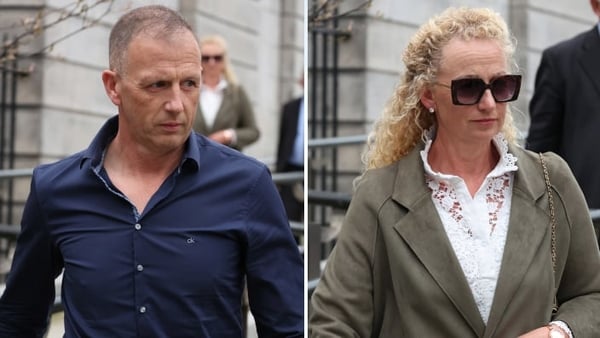
The boy's parents were in court although he himself was not.
Ana's family were not present. Her father Patrick died at the weekend.