


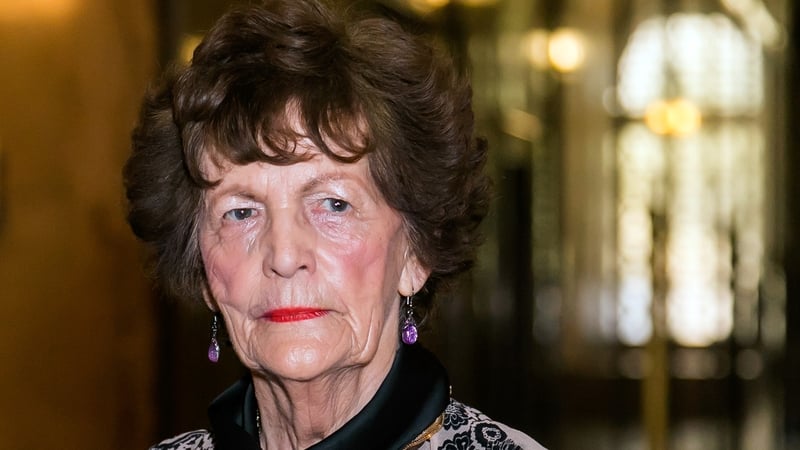
Retired nurse Philomena Lee, whose life was the subject of a book later made into a film, has brought a High Court challenge aimed at quashing parts of the final report of the Commission of Investigation into Mother and Baby Homes.
Ms Lee, who is 88 and living in England, claims sections of the report do not accurately reflect her evidence to the commission.
She became pregnant when she was 18 and was sent to the Sean Ross Abbey mother-and-baby home in Roscrea in Co Tipperary. Her son was sent for adoption by a US couple, when he was three years old.
The book, 'The Lost Child of Philomena Lee' by Martin Sixsmith, set out her 50-year search for her son. It was later made into the film, 'Philomena', starring Judi Dench and Steve Coogan.
In her challenge, Ms Lee says she is readily identifiable in the commission's report, despite not being named.
She says she was entitled to be given an opportunity to make submissions on the sections relating to her before the report was finalised. She says her constitutional rights and rights under the European Convention have been breached.
In a sworn document submitted to the court, Ms Lee's solicitor, Wendy Lyon, noted the findings of the commission that there was no evidence for the opinion of some women that their consent to the adoption of their children was not full, free and informed.
Ms Lyon said Ms Lee's evidence was that she was not given any time to consider a document which she was told to sign and which relinquished her rights to her son.
Ms Lyon said the commission's finding directly contradicted Ms Lee's sworn testimony, even though it purported to be "the definitive, official objective account of a distressing chapter in the State's history". It had failed to explain why it was not prepared to believe her testimony about her treatment and had also failed to record the efforts of Ms Lee and her son to find out about each other.
The court granted Ms Lee permission to bring her challenge. Four other women were also given permission to bring separate, similar challenges.
Two of the women cannot be identified by court order, due to their vulnerability.
The third woman, Mari Steed, from Virginia in the United States, who was born in Bessborough mother-and-baby home in Cork in 1960 and adopted by an American family in 1961, claims her rights were damaged by being subject to the Quadrivax trial while in the home.
Again, her lawyers claim she is identifiable in the report and should have been given an opportunity to address the commission's finding that there was no evidence of injury to the children as a result of the vaccines.
The fourth woman, Mary Isobelle Mullaney of Blackrock in Dublin, says she would also have made submissions that various findings in relation to her situation were not correct if she had been given a copy of the draft report.
All of the cases have been adjourned until next month.
