



A High Court judge has said his interpretation of reporting restrictions in relation to child victims of crime differs from a recent Court of Appeal judgement.
Speaking in the case of now adult victims of child abuse who wish to have their rapist named, Justice Tony Hunt said that his own interpretation of the law "must yield to that of the higher court".
He was commenting on section 252 of the Children Act 2001, which provides mandatory and automatic reporting restrictions in the case of "any proceedings for an offence against a child".
Last month, the Court of Appeal found that these prohibitions extend to children who had died or turned 18.
The Court of Appeal was ruling in an appeal by the media against restrictions imposed on the naming of a child and her mother.
The woman was found not guilty by reason of insanity of killing her three-year-old daughter.
Justice Hunt said that in his view "the natural and ordinary meaning of the term 'child' does not encompass a deceased child or an adult".
He said: "On that interpretation the operation of section 252 would automatically cease when the child concerned either died or became an adult.
"In either of those events there would no longer be any child to which any protection conferred by the act might apply."
Mr Justice Hunt said he did not believe this interpretation "would have been either contrived or artificial".
In the case before the Central Criminal Court, lawyers for a 56-year-old convicted child rapist had previously submitted to Mr Justice Hunt that their client cannot be identified because of the Children Act.
The man pleaded guilty in 2015 at the Central Criminal Court to the repeated rape and sexual assault of his wife's two sons at his Co Wicklow home over a ten-year period.
The victims were under ten years old when the abuse started in 1993 and the attacks continued for a decade.
In March 2016, Mr Justice Hunt imposed a prison term of 21 years, with the final five years suspended.
At that sentencing, the victims, who are now adults, told the court they wished to waive their statutory anonymity so their step-father can be named publicly.
However, because there were related cases to be prosecuted at Wicklow Circuit Criminal Court, Mr Justice Hunt placed a stay on the waiving of the anonymity.
These cases have now finished and the Director of Public Prosecutions (DPP) is seeking, on behalf of his two victims, to have this stay lifted so that the convicted rapist can be identified.
This morning, Mr Justice Hunt said while the Court of Appeal ruling means the section 252 prohibitions apply, there is still scope in that section to lift the restrictions where the court "is satisfied that it is appropriate to do so in the interests of the child".
He accordingly made an order lifting all reporting restrictions in the case, saying he considers this was "in the public interest".
But he placed a 28-day stay on his order pending an application to the Court of Appeal by the defendant.
Mr Justice Hunt said that, having reviewed the testimony of the victims and their repeated assertions that they wish to be identified, he was satisfied that he should lift these prohibitions.
He said that "the act of a victim in publicly speaking out about their experiences can assist the victim in recovery from the effects of the crime" and can also encourage others in their position to come forward.
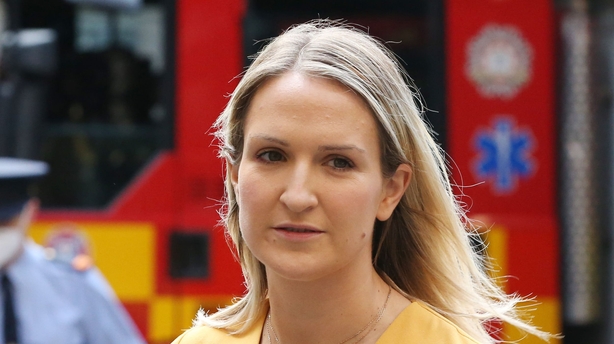
This evening, Minister for Justice Helen McEntee said the period for leave to appeal the ruling had not yet passed and the case was still before the courts.
She said she had asked her officials to study the Court of Appeal's judgment so she would be in a position to consider the need for legislative change, subject to the final outcome of the court process.
She said she was committed to finding suitable means to progress any necessary legislative changes as expeditiously as possible, in order to respond to concerns raised.
She said she sincerely appreciated any person affected by the ruling, particularly a bereaved parent or family member, taking the time to share their perspective with her.
She said any such correspondence would be given the utmost consideration and would feed into considerations on the appropriate action to be taken in due course.
She said she had so far received one such letter from a member of the public.
A bereaved father of three children has said that he wrote to the minister to express his concerns about the ruling.
The children's mother is accused of murdering the children and will stand trial next year.
