

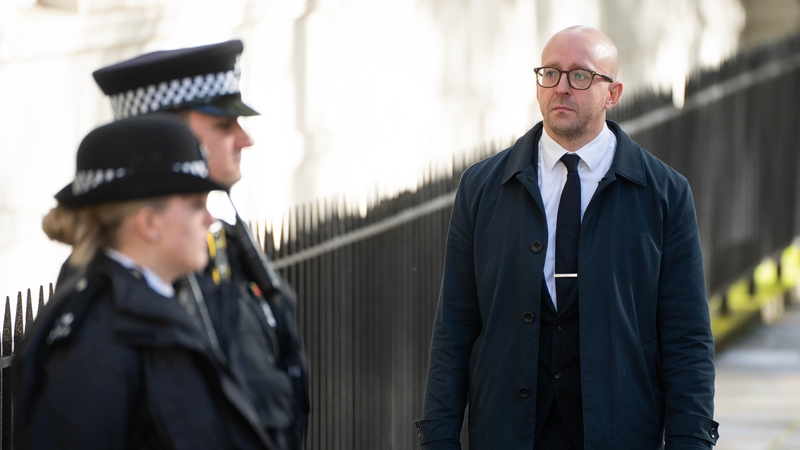
The handling by Downing Street of the fallout from his trip to Barnard Castle was an "absolute car crash", Dominic Cummings has told the UK Covid-19 Inquiry.
Boris Johnson's then chief adviser took a "short drive" to the town in April 2020, about 25 miles away from where he was isolating, on his wife's 45th birthday, saying he was testing his eyesight after it was affected by Covid-19, to "see if I could drive safely".
He was questioned about the high-profile controversy and the impact it had on confidence in the government, during his appearance at the inquiry.
He said Downing Street's handling of the matter "did cause a lot of people pain".
Mr Cummings said: "It was certainly a disaster, the whole handling of the situation.
"But there were other factors involved with it all as well - testing and PPE and many other things were all going haywire at the time."
Mr Cummings said it was "completely reasonable" for security reasons to move his family out of his house, but on the Barnard Castle disclosures he said the way it was "handled, it was an absolute car crash and disaster and did cause a lot of people pain".
But he added: "In terms of my actual actions in going north and then coming back down I acted entirely reasonably and legally and did not break any rules."
At the time, Mr Cummings declined to apologise, saying his actions were "reasonable in these circumstances", adding: "I don't regret what I did" - something which he reiterated to the inquiry.
Durham Police previously said officers had concluded "there might have been a minor breach of the regulations that would have warranted police intervention", but did not intend to take "retrospective action".
In March 2020 Mr Cummings also made a controversial 260-mile drive from London to Durham with his wife, journalist Mary Wakefield, and their four-year-old son, to stay on his parents' farm while strict travel restrictions were in place.
In an extraordinary press conference in the 10 Downing Street garden in May of the same year, he said his journey to Durham was justified as he sought to protect his family's health.
Presented with 'wrong crisis'
Boris Johnson was presented with the "wrong crisis" as British Prime Minister in coronavirus as he frustrated advisers by oscillating between decisions, the official inquiry was told this morning.
Mr Johnson dithered between wanting a lockdown and adopting his Mayor of Jaws "routine", advocating keeping the country out of lockdown, the inquiry heard.
Lee Cain, his long-term adviser who served as No 10's communications director in the pandemic, said Mr Johnson's erratic decision-making was "rather exhausting".
Messages between Mr Cain and Mr Cummings, who served as the then-prime minister's chief adviser, showed them venting their frustrations on WhatsApp.
"Get in here he's melting down," Mr Cummings wrote on 19 March 2020, days before the first lockdown, adding that Mr Johnson was "back to Jaws mode".
"I've literally said same thing ten f****** times and he still won't absorb it," he added.
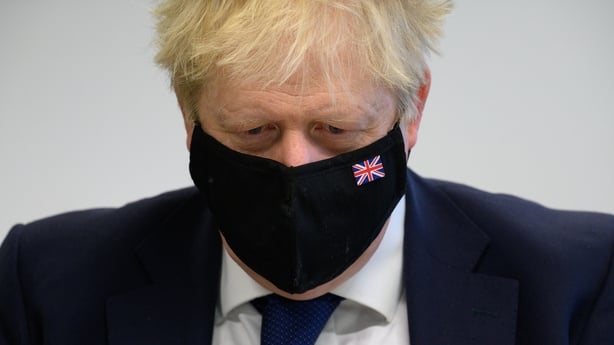
Explaining the Jaws reference, Mr Cain told the inquiry that Mr Johnson would refer to the mayor from the Jaws film "who wanted to keep the beaches open".
"I think he had a routine from previous in his career where he would use that as a joke from one of his after-dinner speeches," he said.
"The mayor was right all along to keep the beaches open because it would have been a long-term harm to the community - so it's a sort of sub-reference to that."
Mr Cain was more cautious than Mr Cummings by avoiding saying their old ally was not up to the job as prime minister.
"I think at that point - and it's quite a strong thing to say - what would probably be clear in Covid is it was the wrong crisis for this prime minister's skillset," Mr Cain said.
"Which is different, I think, from not potentially being up for the job of prime minister."

Mr Cummings will also face questions at the inquiry. He was Mr Johnson's top political aide in Downing Street from July 2019, having previously led Vote Leave in the Brexit referendum and worked on the Conservatives' 2019 election campaign.
He was asked to leave government by then-prime minister Mr Johnson in November 2020, months after it emerged he had taken a lockdown-breaking trip to Durham with his family.
Mr Cummings made the journey by car from London at the end of March 2020, when the government had instructed people to stay at home.
He returned in April after driving to Barnard Castle in Durham, amid concern that catching Covid had affected his eyesight.
Lee Cain, the former Number 10 director of communications who left government a day before Mr Cummings, will also appear at the inquiry alongside his close ally.
The two men will give evidence a day after Martin Reynolds, the civil servant dubbed "Party Marty" due to his role in the partygate scandal.
Speaking yesterday, Mr Reynolds apologised and said that government protocols were "inadequate" and "grossly deficient" in the early days of the pandemic.
He said there was an "unusual dynamic" in Downing Street during that period, and he turned on the "disappearing message function" on a WhatsApp group titled "PM Updates" in April 2021 because of concerns about potential leaks.
Mr Johnson meanwhile came in for criticism from the UK's top civil servant, Simon Case, who vented that he "cannot lead" and was making government "impossible" in WhatsApp messages given to the inquiry.
Extracts from the notebook of Patrick Vallance meanwhile showed the chief scientific adviser considered the former prime minister to be weak and indecisive.
He also believed senior officials in Number 10 had tried to "strong arm" him and Professor Chris Whitty into appearing at a press conference around the time it was disclosed Mr Cummings had gone to Barnard Castle.
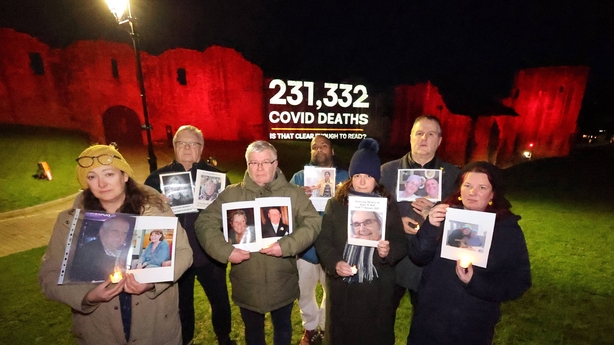
Some of those bereaved in the pandemic will be standing outside the inquiry ahead of Mr Cummings' appearance, holding pictures of loved ones who died.
