

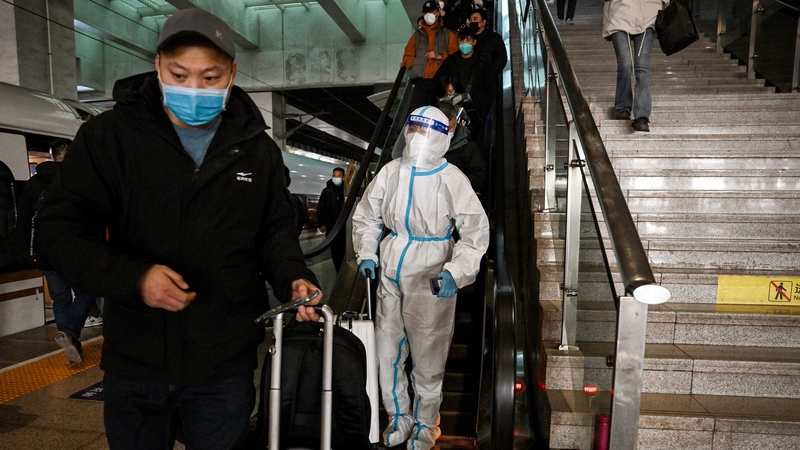
The United States will impose mandatory Covid-19 tests on travellers from China, US health officials have said, joining India, Italy, Japan and Taiwan in taking new measures after Beijing's decision to lift stringent zero-Covid policies.
The officials told reporters that beginning on 5 January, all air passengers 2 years old and older will require a negative result from a test no more than two days before departure from China, Hong Kong or Macao.
Passengers who test positive more than 10 days before a flight can provide documentation of recovery in lieu of the negative test result, the federal officials said.
In an abrupt change of policy, China this month began dismantling the world's strictest Covid regime of lockdowns and extensive testing, putting its battered economy on course for a complete re-opening next year.
The lifting of restrictions, following widespread protests against them, means Covid is spreading largely unchecked and likely infecting millions of people a day, according to some international health experts.
Beijing has faced international criticism that its official Covid data and its tally of deaths are inconsistent with the scale of its outbreak.
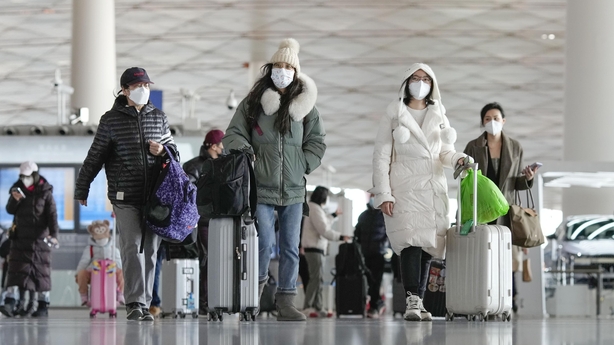
Some global health experts have said the virus could infect as many as 1 million people per day, and international modeling groups have predicted China could experience 2 million deaths or more.
Earlier this week, US officials cited "the lack of transparent data" from China, a persistent complaint from Washington about China's handling of the pandemic, as reason for considering its own travel restrictions.
The US and Chinese approaches to battling Covid have been markedly different throughout the pandemic.
High infection rates in the United States early in the pandemic gave Beijing room to argue its model of strict Covid prevention measures had saved lives.
China has struggled to vaccinate its elderly population and has yet to authorise foreign mRNA vaccines. Its overall vaccination rate is above 90% but the rate for adults who have had booster shots drops to 57.9%, and to 42.3% for people aged 80 and older, according to Chinese government data last week.
The country has nine domestically-developed Covid vaccines approved for use, but none has been updated to target the highly infectious Omicron variant.
In June, the United States rescinded a 17-month-old requirement that people arriving in the country by air test negative for Covid-19.
It still requires most non-US citizens to be vaccinated against Covid to travel to the United States.
Hong Kong scraps most Covid rules
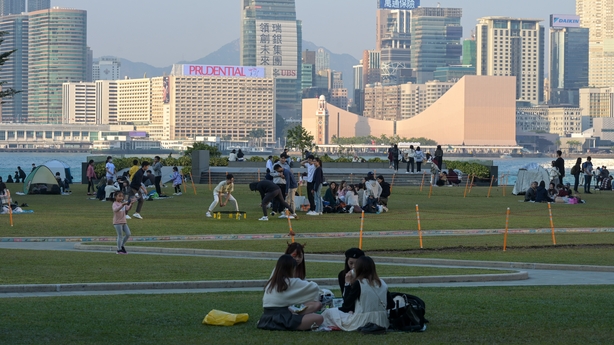
Hong Kong will cancel its stringent Covid-19 rules from tomorrow, city leader John Lee said, meaning that arrivals will no longer need to do mandatory PCR tests while the city's vaccine pass would also be scrapped.
All measures would be cancelled tomorrow, apart from the wearing of masks which still remains compulsory, Lee told a media briefing today.
"The city has reached a relatively high vaccination rate which builds an anti-epidemic barrier," Mr Lee said.
"Hong Kong has a sufficient amount of medicine to fight Covid, and healthcare workers have gained rich experience in facing the pandemic," he added.
Mr Lee said his government is aiming to reopen the borders with mainland China by 15 January and was working with authorities over the border to ensure an orderly re-opening.
He said the authorities have been preparing for the scrapping of all restrictions.
"The time is appropriate for us to do this, having prepared for six months to do this," said Lee. "The whole society is preparing for this. We are doing all this according to our local epidemic situation."
Hong Kong's vaccine pass requirement, which was imposed in February and was a must for people to access most venues in Hong Kong, will end from tomorrow. Social distancing rules such as a cap on gatherings of more than 12 people in public will also be scrapped from tomorrow.
Chinese hospitals 'extremely busy' as Covid spreads unchecked
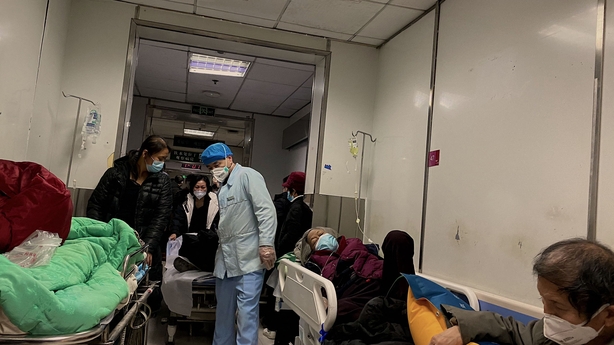
Chinese hospitals are under intense pressure as a surge of Covid-19 infections strained medical resources.
In an abrupt change of policy, China this month began dismantling the world's strictest Covid regime of lockdowns and extensive testing, putting its battered economy on course for a complete reopening next year.
The lifting of restrictions, which came after widespread protests against them, means Covid is spreading largely unchecked and likely infecting millions of people a day, according to some international health experts.
The speed at which China, the last major country in the world moving towards treating the virus as endemic, has scrapped Covid rules has left its fragile health system overwhelmed.
China reported three new Covid-related deaths for Tuesday, up from one for Monday - numbers that are inconsistent with the experience of much less populous countries after they reopened.
Staff at Huaxi, a big hospital in the southwestern city of Chengdu, said they were "extremely busy" caring for patients with Covid, as they have been ever since curbs were eased on 7 December.
"I've been doing this job for 30 years and this is the busiest I have ever known it," said one ambulance driver outside the hospital, who declined to be identified.
There were long queues inside and outside the hospital's emergency department and at an adjacent fever clinic yesterday evening. Most of those arriving in ambulances were given oxygen to help with their breathing.
"Almost all of the patients have Covid," one emergency department pharmacy staff member said.
The hospital has no stocks of Covid-specific medicine and can only provide drugs for symptoms such as coughing, she said.
Zhang Yuhua, an official at the Beijing Chaoyang Hospital, said most recent patients were elderly and critically ill with underlying diseases.
