


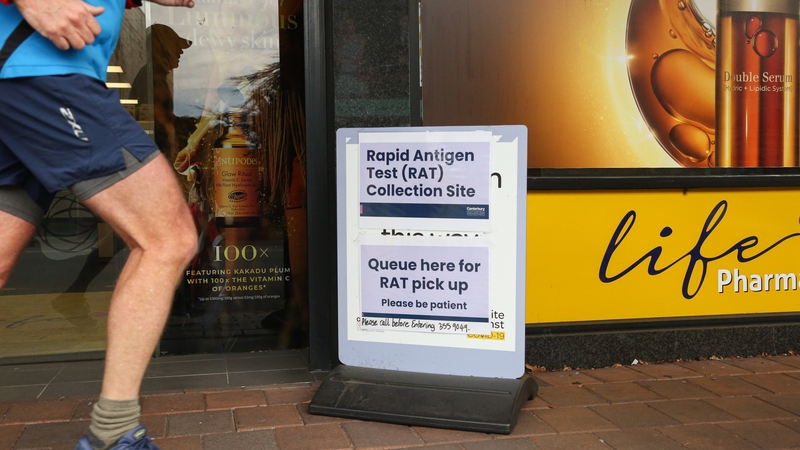
New Zealand's government has said that new Covid-19 cases were trending down and it looked likely the country would avoid a feared worst-case scenario of 20,000 infections daily.
In the last seven days there were on average 8,111 new cases daily, down from a seven-day rolling average of 9,367 new cases in the week prior, according to Health Ministry data.
Currently 808 people were in hospital with Covid-19, which was also a lower number than earlier, data showed.
Dr Ashley Bloomfield, director general of health, said case rates were trending down and this shift was supported by waste-water testing and a fall in the number of people testing positive on arrival at hospital.

"What is apparent is that the worst-case scenario that our modellers had suggested a couple of weeks ago with up to 1,200 beds occupied and over 20,000 cases a day is now highly unlikely. And I'm sure we're all relieved to see this," said Dr Bloomfield.
The Omicron BA.5 sub-variant is driving the current wave in New Zealand, which has 5.1 million people.
There have been 56,750 active cases in the past seven days, although authorities say many infections are unreported.
Once regarded as a model for preventing Covid infection, New Zealand's swift response to the pandemic and its geographic isolation kept it largely free from the virus until the end of last year.
New Zealand has recorded a total of about 1.6 million infections in total and 1,427 deaths, according to the latest data.
The deaths are roughly a third lower than previous numbers as the ministry had changed how it classifies virus-related fatalities.
Under the new classification, deaths will be recorded as Covid-related if they are attributable to the virus, rather than a death within 28 days of testing positive for the virus.
New Zealand closed its border in early 2020 as the coronavirus was spreading around the world and imposed lockdowns and strict social distancing to keep its infection low.
It began re-opening its border in February and will lift the last restrictions at the end of this month.
The news conference was Dr Bloomfield's last in this role. The director general, who has led New Zealand's response to Covid, steps down from his post on Friday.
North Korea holds mask-free veterans event after flagging near end of Covid crisis
North Korea has held a large mask-free public event for the first time since declaring a Covid-19 emergency in May, honouring veterans of the 1950-53 Korean war just days after saying its coronavirus crisis was nearly over.
Photos released by state media showed thousands of participants at the annual ceremony without masks, including senior ruling Workers' Party officials and elderly uniformed veterans.
The reclusive country said earlier this month it was on a path to "finally defuse" its first publicly declared Covid-19 crisis, even as Asian neighbours battle a resurgence in infections driven by Omicron subvariants.
The official KCNA news agency today reported 18 new fever cases for Monday, the third straight day the tally has held below 100 after topping 390,000 in May.
It said 99.99% of 4.77 million fever patients since late April have fully recovered.
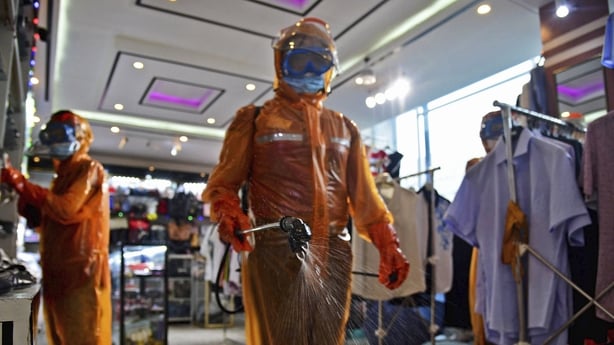
The country has never confirmed how many people have tested positive for Covid-19, apparently lacking testing supplies. The World Health Organization said last month the situation could be getting worse.
The veterans ceremony in Pyongyang yesterday was to commemorate the 69th anniversary of the 27 July Korean War armistice, which left the two Koreas technically still at war.
North Korean leader Kim Jong-un, who gave a speech at the 2020 ceremony, did not attend the event.
He has not been seen in state media since 8 July, marking his longest public absence this year.
Seoul and Washington officials have said North Korea has made preparations to conduct its first nuclear test since 2017.
South Korea's unification minister handling inter-Korean affairs said there was a "possibility" of the test in time for the anniversary.
No new daily Covid cases in Macau for first time in over a month
Authorities in Macau have reported no new Covid-19 infections for the first time since mid-June, after the city's worst outbreak of the disease led to a 12-day closure of casinos and locked down most of the world's biggest gambling hub.
The tally of infections since 18 June stood at 1,816, the government said in a statement, as the city grapples with the fast-spreading Omicron variant for the first time.
"No additional positive cases were reported in Macau within24 hours yesterday," it said on its website.
Macau's casinos re-opened last week, as it began unwinding stringent measures that had shut most businesses and premises. All casinos were shut on 11 July for the first time in more than two years.
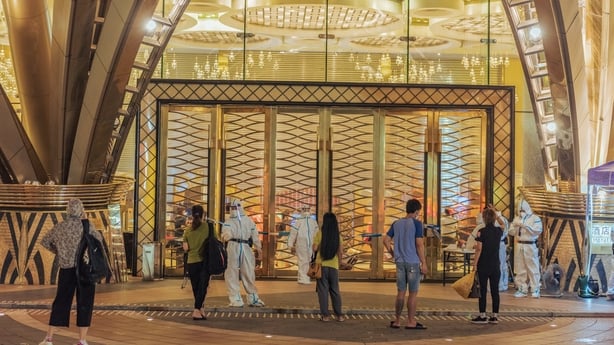
But cinemas, health clubs and beauty salons remain shut, with daily coronavirus tests required of the population of more than 600,000. They must also stay home except for urgent tasks, such as work and shopping, the government has said.
More than 90% of residents are fully vaccinated but authorities are following China's zero-Covid programme of curbing all outbreaks at almost any cost, contrary to efforts in the rest of the world, which is living with the virus.
Casinos, though open, are seeing little business as the curbs unwind slowly.
They are racking up losses ahead of bidding next month for new licenses in an industry that earned revenue of $36 billion in 2019, the last year before Covid curbs.
