


The Department of Health has reported 63,954 cases of Covid-19 since St Patrick's Day.
The HSE no longer issues Covid figures over the weekend or on bank holidays. The figures released today include those reported on St Patrick's Day, the new bank holiday on 18 March, those for this weekend and today's.
The Health Protection Surveillance Centre reported 4,024 PCR-confirmed cases of Covid-19 today. In addition, 10,631 people registered a positive antigen test through the HSE portal yesterday.
Yesterday, the HPSC was notified of 5,067 PCR-confirmed cases. 7,177 people registered a positive antigen test through the HSE portal the previous day.
On Saturday 19 March, the HPSC was notified of 4,787 PCR-confirmed cases and 6,774 people registered a positive antigen test through the HSE portal the previous day.
On Friday 18 March, the HPSC was notified of 5,628 PCR-confirmed cases and 6,313 people registered a positive antigen test through the HSE portal the previous day.
On Thursday 17 March, the HPSC was notified of 5,231 PCR-confirmed cases and 8,322 people registered a positive antigen test through the HSE portal the previous day.
The latest figures come as the HSE chief executive Paul Reid said that people being reinfected with Covid-19 is not an unusual occurrence.
He said: "We are seeing people who may have had Covid in January ... again having Covid, and that's not an unusual occurrence at this point in time."
Mr Reid said the level of vaccination is reducing the severity of illness.
As of 8am, there were 1,308 people with the virus in hospitals, an increase of 123 on yesterday's figure.
The numbers in intensive care remains stable, with 49 in ICUs as of this morning.
Mr Reid said about 50% of Covid hospital admissions have been for non-Covid illnesses, but were subsequently diagnosed with the virus.
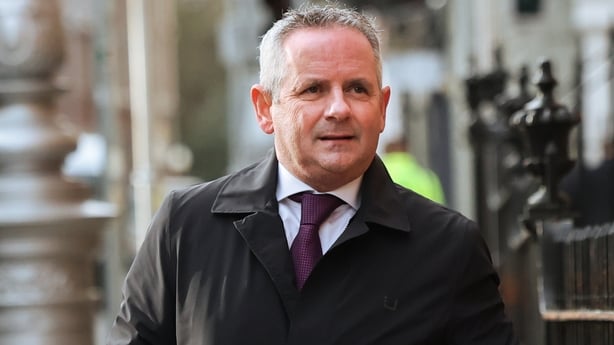
Speaking on RTÉ's Today with Claire Byrne, he said that even though the virus is less severe in terms of its impact on people, the advice is still to wear face masks on public transport and in congregated settings.
He said that previous patterns that have emerged over the past two years in Ireland indicate that after bank holidays, there tends to be increased levels in the community and higher hospitalisations.
This is "likely the trajectory that we will see," he said.
"It certainly feels like from a health perspective, we're entering something in terms of its significant increased impact," he said and that some hospitals have had to cancel elective care
The Mater Hospital in Dublin is today dealing with about 100 Covid positive patients and hospitals in Kerry, Limerick and Letterkenny are experiencing "something similar," he added.
He also said there are currently 300 Covid-19 outbreaks in nursing homes, describing this as a "significant number".
Mr Reid said that the level of staff absences within the health service due to Covid-19 has been increasing over the past two weeks.
He said that as of the end of last week there were 4,200 HSE workers out due to the virus and at various stages during the pandemic that figure was as high as 6,000 and 7,000.
Staff shortages are impacting private nursing homes also, he added.
Mr Reid said that while he does not want to cause undue stress or anxiety, there is a need to create a "heightened level of awareness" about the impact of Covid-19.
There has been a "significant increase" in hospital numbers in the last 14 days and they are still dealing with a "very highly transmissible" virus, he said.
HSE needs to declare emergency over overcrowding - INMO
The Irish Nurses and Midwives Organisation has called on the HSE to declare hospital overcrowding as an emergency.
Latest figures from the INMO show that there are 570 admitted patients waiting for a hospital bed, with University Hospital Limerick the worst affected, with 79 patients waiting.
There were 54 patients waiting for a bed at Letterkenny University Hospital and 40 at St Vincent's University Hospital in Dublin. Eight children are also waiting admission to a bed - three at Children's Health Ireland Crumlin and five at CHI Temple Street.
In a statement INMO General Secretary Phil Ní Sheaghdha said: "We have been ringing the alarm on this situation for far too long.
"We are not in a space in which our health service can cope with 570 patients on trolleys coupled with such high numbers of patients in our hospitals with Covid."
Ms Ní Sheaghdha said the HSE must offer a direction to hospitals to cancel elective procedures and prioritise emergency care.
"Our nurses and midwives have been dealing with overcrowding coupled with Covid transmission and are burnt out and exhausted," she added.
