

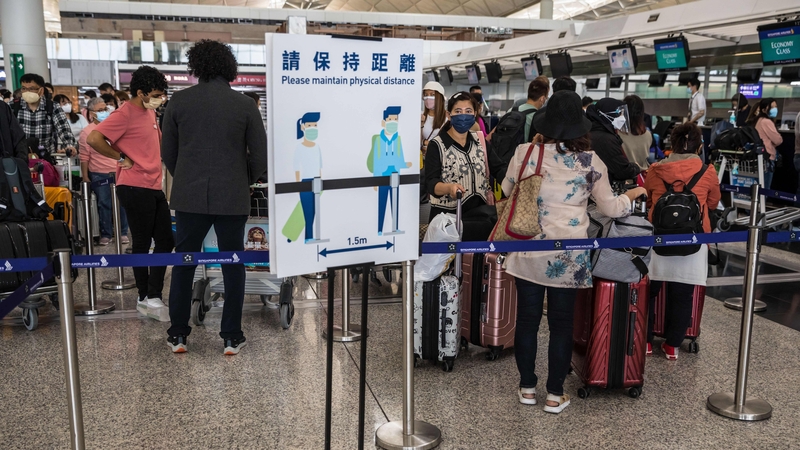
Hong Kong is set to resume international flights from the United States, Britain and seven other countries, the government said as it announced a loosening of some of the world's toughest Covid-19 restrictions.
The finance hub has struggled to maintain China's zero-Covid policy during an Omicron outbreak.
After the highly transmissible variant fuelled a fresh wave of cases in January, authorities quickly put in place flight bans from eight countries deemed high-risk - including the United States, Britain, France and India - and in February added a ninth, Nepal.
But infections climbed rapidly, with Hong Kong recording more than a million cases and 5,600 deaths, with the bulk of the toll among its unvaccinated elderly population.
Hong Kong leader Carrie Lam said starting 1 April, Hong Kong will lift flight bans - referred to as a "circuit-breaker" - for the nine countries.
"The circuit-breaker ... is inopportune now," she said during a press conference.
"The epidemic situations in those countries are not worse than Hong Kong's, and most arrivals did not have serious symptoms. To extend the circuit-breaker will add to concerns and anxieties of Hong Kong residents stranded there."
The quarantine period for vaccinated arrivals will also be reduced to seven days in a designated hotel, followed by another seven days of at-home monitoring - though Ms Lam did not specify what date the change will begin.
Currently, Hong Kong residents trying to return from most destinations face a two-week quarantine stay in expensive hotels.
Ms Lam also announced that starting 19 April, pre-schools, primary schools and international schools will resume in-person teaching.
Beginning 21 April, restaurants may stay open after 6pm for dine-in services - currently banned - while public gatherings can include four people, up from the current two.
Hong Kong currently has one of the highest death rates from Covid in the developed world.
Unclear public messaging from the government over mass testing and city lockdown measures has also fuelled bouts of panic-buying - leaving supermarkets shelves stripped bare.
Hong Kong's deepened international isolation and lack of a roadmap to normality have incited complaints from business and diplomatic communities, even prompting some major international banks to accelerate relocations.
France's Covid-19 infections spike week-on-week following easing of restrictions
France reported an average of close to 90,000 new coronavirus infections over the last seven days, marking a 36% rise from one week ago when most Covid-19 health protocol measures were lifted by the government just ahead of the country's elections.
New cases over the previous 24 hours published yesterday stood at 81,283, pushing a seven-day moving average to 89,002, compared with just over 60,000 average new cases one week earlier.
The number of cases per 100,000 inhabitants also reached their highest value level since 18 February.
The government of President Emmanuel Macron, who will stand for re-election in less than three weeks time followed by legislative elections later this year, decided to lift most Covid-19 restrictions on 14 March, citing a positive trend.
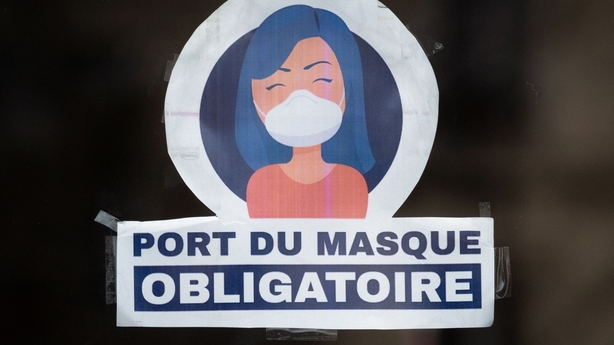
This means people in France no longer have to wear Covid face masks indoors, except for public transport, hospitals and other medical facilities. The government also lifted its Covid vaccine pass requirement in places such as bars and cinemas.
New hospital admissions - seen as a key indicator by France's Health Minister Olivier Veran - decreased by only 1.7% week-on-week, the slowest decline since early February, potentially indicating a reversal of the previous trends.
The recent rise in new infections was particularly strong in France's eastern Alsace region, one of the zones that suffered most during the start of the pandemic, where authorities recorded well over 1,000 new cases per 100,000 inhabitants.
In Germany, new cases have also risen in recent days, reaching a new record of around 220,000 average new cases over the last seven days, according to data compiled by the Robert-Koch-Institute.
Shanghai's Disney resort shut amid record daily local Covid infections
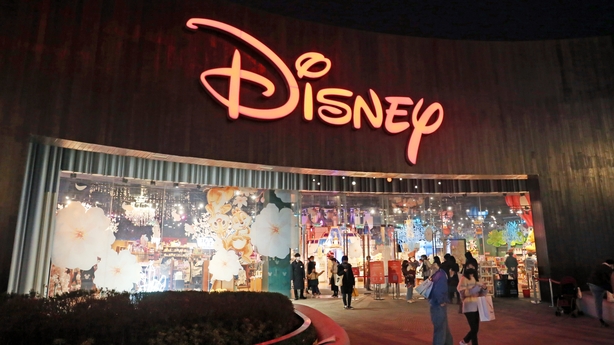
Shanghai has reported a record daily surge in local Covid-19 infections as authorities scrambled to test residents and rein in the Omicron variant, while closing its Disney resort until further notice.
Until recent weeks relatively unscathed by coronavirus, Shanghai reported 24 new domestically transmitted Covid cases with confirmed symptoms for yesterday and 734 local asymptomatic infections, official data showed this morning.
It is the fourth consecutive day that Shanghai's local asymptomatic infections have increased.
Although the tally of infections is tiny by global standards, Shanghai has quickly followed China's "dynamic clearance" policies, shutting schools and testing residential compounds in the effort to limit the spread of the virus.
The severity of outbreak responses by Shanghai's compounds and residential districts varied, with some opting for lockdowns as long as two weeks. Some people in other sealed-off districts said they were not told how long they would have to stay home.
Including Shanghai infections, mainland China reported a total of 1,947 new locally transmitted cases with confirmed symptoms, data from the National Health Commission (NHC) showed.
Vaccine candidates to target Omicron specifically, or among variants of concern, are in studies prior to clinical trials, a national health official said on Saturday, without identifying the companies involved.
S Korea to buy 10 million doses of SK Bioscience's Covid vaccine
South Korea has reached a deal to buy 10 million doses of the country's first experimental coronavirus vaccine, developed by SK Bioscience, authorities saidj.
The South Korean company has since August conducted Phase 3 trials of its vaccine candidate, codenamed "GBP510", jointly developed with the University of Washington's Institute for Protein Design and aided by global drug maker GlaxoSmithKline (GSK).
"They aim to secure formal approval in the first half of this year, and public distribution is expected to begin in the latter half," Korea Disease Control and Prevention Agency (KDCA) director Jeong Eun-kyeong told a briefing.
SK Bioscience said in a statement that it would also supply its vaccine to the global vaccine sharing facility COVAX once authorised.
The drug maker also produces Covid-19 vaccines developed by AstraZeneca and Novavax.
