


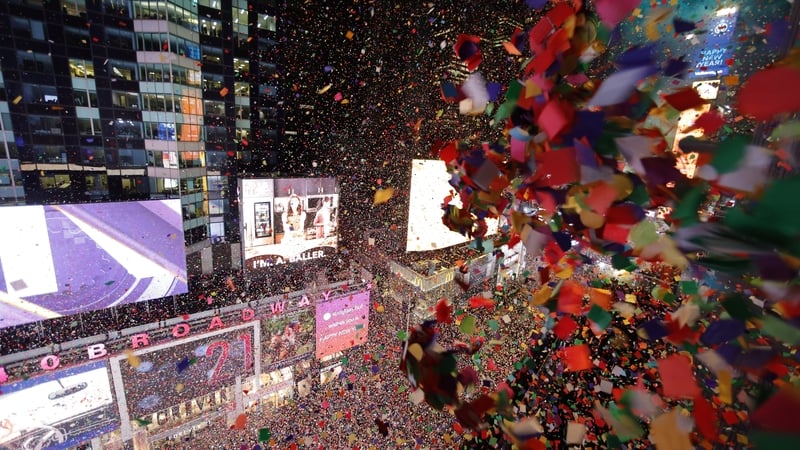
New York City will allow crowds into Times Square on New Year's Eve to ring in 2022, Mayor Bill de Blasio announced, after the pandemic muted last year's celebrations.
Hundreds of thousands of revellers will be able to attend the traditional ball drop at midnight providing they can prove they are fully vaccinated against the coronavirus, Mr de Blasio told reporters.
Attendees who are unable to get vaccinated because of medical reasons will have to show that they received a negative test within 72 hours of the event.
"We want it to be big, we want it to be full of life, we want to be a great New York celebration," the mayor said.
Times Square was largely empty on New Year's Eve last year because of the pandemic.
Only essential workers and invited guests were able to watch the ball drop from socially distanced areas.
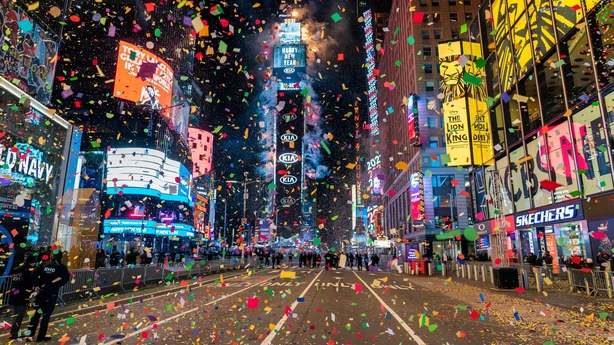
Security checkpoints will be in place to check documentation of those seeking to enter Times Square for the festivities.
"We will require spectators five and older who are eligible to be fully vaccinated," said Tom Harris, president of the Times Square Alliance.
"If you are unable to get vaccinated because of a disability, we will require a proof of a negative PCR test within 72 hours."
Masks will be required for those unable to get vaccinated, he added.
"We can finally get back together again. It's going to be amazing, it's going to be a joy for this city," the mayor said.
Earlier this month, US health authorities authorised the Covid-19 vaccine from Pfizer and BioNTech for children aged 5 to 11.
Beijing tightens Covid-19 entry rules ahead of Olympics
Strict new Covid-19 restrictions have come into force in Beijing for visitors to the Chinese capital, requiring negative tests and dramatically cutting domestic flights as the city raises the drawbridge against the coronavirus ahead of the Winter Olympics.
With less than 100 days to go to the games in February, China is bracing for a challenge to its zero-Covid strategy when thousands of international athletes descend on Beijing after months of strict border controls.
All visitors to the capital must now show a negative Covid test result from the past 48 hours, while flights from higher risk areas within China will be cancelled or limited to one a day at reduced capacity.
"Beijing is the capital and has strong regional and international connections ... The virus must not be introduced into Beijing and it must not spread in Beijing," city spokesman Xu Hejian said at a press conference.
The new restrictions also include Covid tests every three days for the more than 30,000 people working with cold-chain imports in the city.
China has said that earlier outbreaks among Beijing market workers and dock workers in eastern China's Qingdao were linked to cold-chain products.
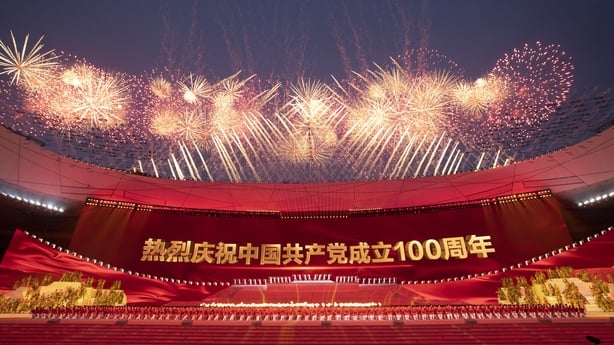
Case numbers in China remain far lower than in most countries, with only eight domestic infections today.
But authorities are taking no chances as international attention focuses on Beijing in the run-up to the winter games.
No spectators from outside China will be allowed to attend the Olympics, which will be held from 4 to 20 February in a "closed-loop" bubble.
The estimated 2,900 athletes must be fully vaccinated or face 21 days' quarantine upon arrival. They will also be tested daily.
China has already imposed extremely strict border controls since last March, leaving families separated and many unable to return to work from outside the country.
This year, rules have eased slightly, but those entering the country still need to undergo weeks of hotel quarantine, monitoring and testing.
New Zealand to ease Auckland domestic border curbs next month
Domestic borders around New Zealand's largest city Auckland will reopen from 15 December for fully vaccinated people and those with negative COVID-19 test results, Prime Minister Jacinda Ardern said.
Auckland is the epicentre of an outbreak of the infectious Delta variant and been locked off from the rest of the country for more than 90 days now.
But with more than 80% of Auckland and the rest of country fully vaccinated it was time to open up the ability to travel again, Ms Ardern said at a news conference.
"Aucklanders can now book summer travel and accommodation with confidence and businesses inside Auckland and around the rest of the country can plan for summer travellers," Ms Ardern said.

Travellers will have to either be fully vaccinated or present a negative Covid-19 test result within 72 hours of departure.
People breaking the rules will face an infringement fine of NZ$1,000 (€620).
Details about easing international border restrictions will be released before the end of the year, Ardern said.
New Zealand only allows its citizens or permanent residents to enter the country, but the returnee numbers are controlled by limiting the spaces available in state quarantine facilities each week, making it hard for many to travel home.
New Zealand had largely successfully pursued an elimination strategy until the persistent Delta outbreak forced Ms Ardern to shift to a focus of living with the virus with higher vaccinations.
She said the cabinet would confirm on 29 November its decision to move Auckland and the rest of the country into the new traffic-light system, which will end lockdowns and use social distancing and other measures to limit the spread of the virus.
Czech Republic reports record daily cases
The Czech Republic has reported 22,479 new coronavirus cases, the highest tally recorded in the country of 10.7 million since the pandemic started.
The daily figure represented a 54% jump from a week ago and surpassed a previous record of 17,778 infections seen in January.
The country tends to report the highest number of cases on Tuesdays as more people test after the weekend.
The soaring figures come as infections are on the rise in a number of European countries, including neighbours Austria, Germany and Slovakia.
The Czechs have had to observe relatively light restrictions in the latest wave compared to previous ones, with the government pledging no school closures or lockdowns, and promoting vaccination.
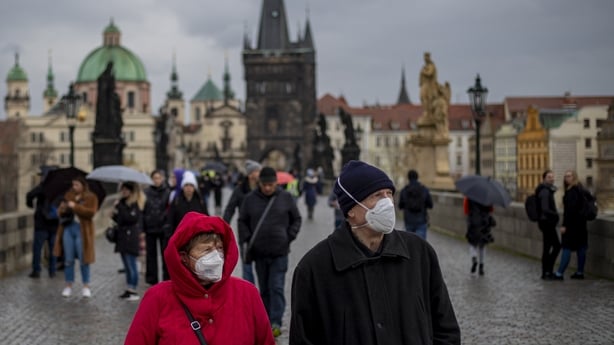
People have to show negative Covid tests or vaccination certificates to enter restaurants and bars and are required to wear masks inside.
The government has resisted tightening rules while in transition to a new administration expected to take office in the coming weeks, but the worsening situation in hospitals has made it consider tighter restrictions on unvaccinated people.
The government is due to discuss various options tomorrow.
The Czech Republic's vaccination rate has lagged those of other countries, with 57.6% of the population fully vaccinated versus an EU average of 64.9%, according to data from the European Centre for Disease Prevention and Control (ECDC).
