

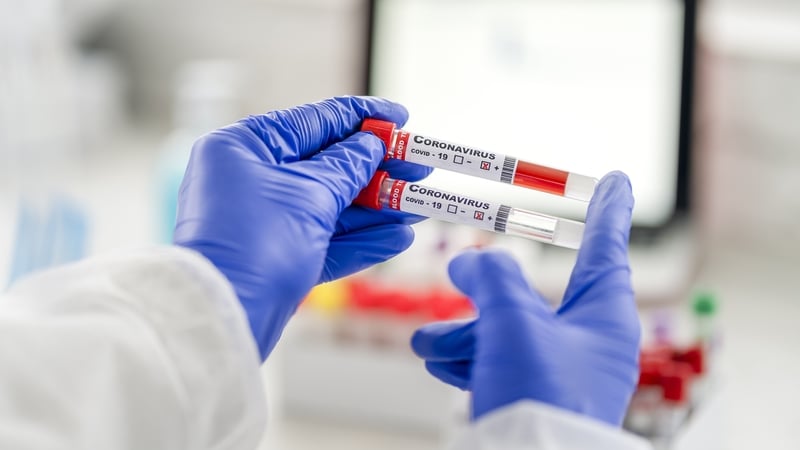
The Department of Health has reported 631 new cases of Covid-19 today.
The number of people with the disease getting treatment in intensive care units is 15, this is two fewer than yesterday.
There has also been a reduction in patients with coronavirus in hospitals - down ten to 50 since yesterday.
This is the highest daily number of new infections since 22 April, when 617 new cases were reported.
Chief Medical Officer Dr Tony Holohan said: "Today we are reporting over 600 confirmed cases of Covid-19 for the first time since late April.
"This is a cause of concern and shows that this disease is prevalent in our communities again.
"We know there is worry and frustration out there, particularly for young people who have had significant parts of their lives put on hold by this disease.
"We ask if you are not yet vaccinated, to hold firm to the public health advice as you await your vaccine. Please continue to manage your contacts, meet outdoors and avoid crowds."
There were 605 new infections reported in Northern Ireland today.
Also today, National Public Health Emergency Team member Professor Philip Nolan warned that Covid-19 case numbers were increasing in Ireland at a rate of about 3% per day.
The chair of the expert modelling advisory group said that hospital numbers were also trending upwards, though "vaccination is offering increasing protection".
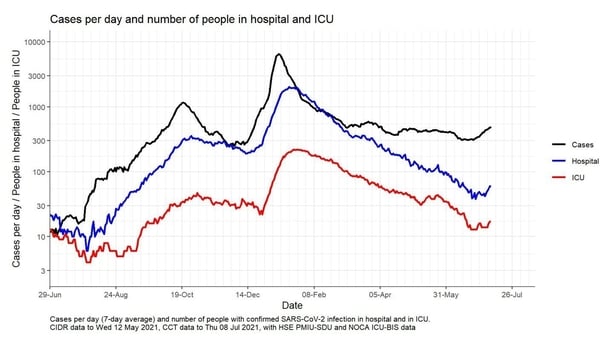
But he added that "we still see severe disease when infection levels grow, especially if we allow a large or sustained increase".
Prof Nolan, in a series of posts on Twitter, said that prior to vaccination, there were 30-50 admissions to hospital per 1,000 cases. It is now down to "around 20 per 1,000".
"We’re partially vaccinated. It’s vital that we keep levels of infection low.
"If we got to 2,000 cases per day we could expect 40 admissions per day and potentially 200-400 people in hospital with Covid-19."
Meanwhile, Taoiseach Micheál Martin has received his second dose of the AstraZeneca vaccine.
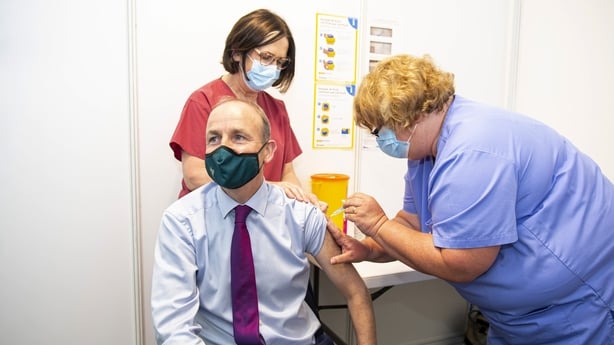
He said it was "great to get" the vaccine today and said the vaccination programme was on track to have everyone aged 60 to 69 fully vaccinated by the end of next week.
Great to get my second #COVIDVaccine today.
— Micheál Martin (@MichealMartinTD) July 9, 2021
Thank you to all the team at Páirc Uí Chaoimh for your amazing efforts.
The vaccine rollout is continuing at pace - we're on track to have everyone aged 60-69 fully vaccinated by the end of next week. pic.twitter.com/jSJIAkvrbM
A number of hospital emergency departments are under "significant pressure", with some seeing record numbers of attendances in recent weeks, according to a consultant in Emergency Medicine at Sligo University Hospital.
Dr Fergal Hickey said there are concerns the spread of the Delta variant of Covid-19 will make the situation "even more difficult".
Speaking on RTÉ's Morning Ireland, Dr Hickey said staff cannot achieve social distancing in most emergency departments.
He said: "It's simply impossible as a result of the numbers, and therefore the situation is dangerous. It will just become more dangerous if we have more patients arising from the Delta variant."
Dr Hickey said overcrowding issues arise when medical staff have finished a patient's emergency care in the ED, but there is no bed for them to go to.
He said there are "a lot more" acutely unwell patients being brought into emergency departments.
There are also patients who have been trying to access their GP services but have not been able to get an appointment, and those who have been referred to emergency departments through their GPs, he said.
"That is adding a burden to emergency departments because we really can't offer them anything," Dr Hickey said, adding that the HSE needs to look at "creating alternative pathways".
We need your consent to load this rte-player contentWe use rte-player to manage extra content that can set cookies on your device and collect data about your activity. Please review their details and accept them to load the content.Manage Preferences
The HSE's Chief Clinical Officer said the recent surge in presentations to EDs are mainly due to an "artificial suppression in presentations" during lockdown and the cyber attack on the HSE's IT systems in May.
Dr Colm Henry said it is still unclear how a rise in Covid-19 cases will translate to increased hospital admissions.
Speaking on RTÉ's Today with Claire Byrne, he said hospitals in England and Scotland are alarmed at the rise in presentations.
However, he said, this is not like previous waves of the virus.
"We are seeing a surge in case numbers, but it is difficult to see how much of that translates to harm. The vaccine programme is offering a floodwall of defence against harm, but if the cases get high enough that flood wall will be breached."
Asked if Ireland is working on a vaccine booster plan in relation to Pfizer and BioNTech's decision to seek regulatory approval for a third dose of their Covid-19 vaccine, Dr Henry said they are "working on all the different scenarios that might play out".
"We're constantly learning because this is a new pandemic", Dr Henry said.
"NIAC (National Immunisation Advisory Committee) may come out and advise on a booster. We know that Public Health England have advised that from September onwards they'll be looking at certain vulnerable populations ... to give a booster dose, and I'd be surprised if we don't go along the same way."
Health Service Executive CEO Paul Reid told a briefing yesterday that the HSE is in a "real race to get the vaccine out ahead of the spread of the Delta variant" and that the modelling demonstrates that the cases of Delta here "will rise during July and probably peak into August".
Mr Reid said the executive is monitoring numbers in hospital "very closely", and said the health service is facing "into Delta from a high base, or hospitalisation perspective".
